Since the onset of its full-scale invasion of Ukraine in February 2022, Russia has become the most sanctioned country in the world. A complex web of restrictive measures has been imposed by a coalition of nations, led overwhelmingly by Western powers, aiming to impose economic and diplomatic costs for its actions.
The data reveals a clear hierarchy in the number of sanctions imposed, highlighting the leading actors in this coordinated international effort.
The Leading Sanctions Enforcers
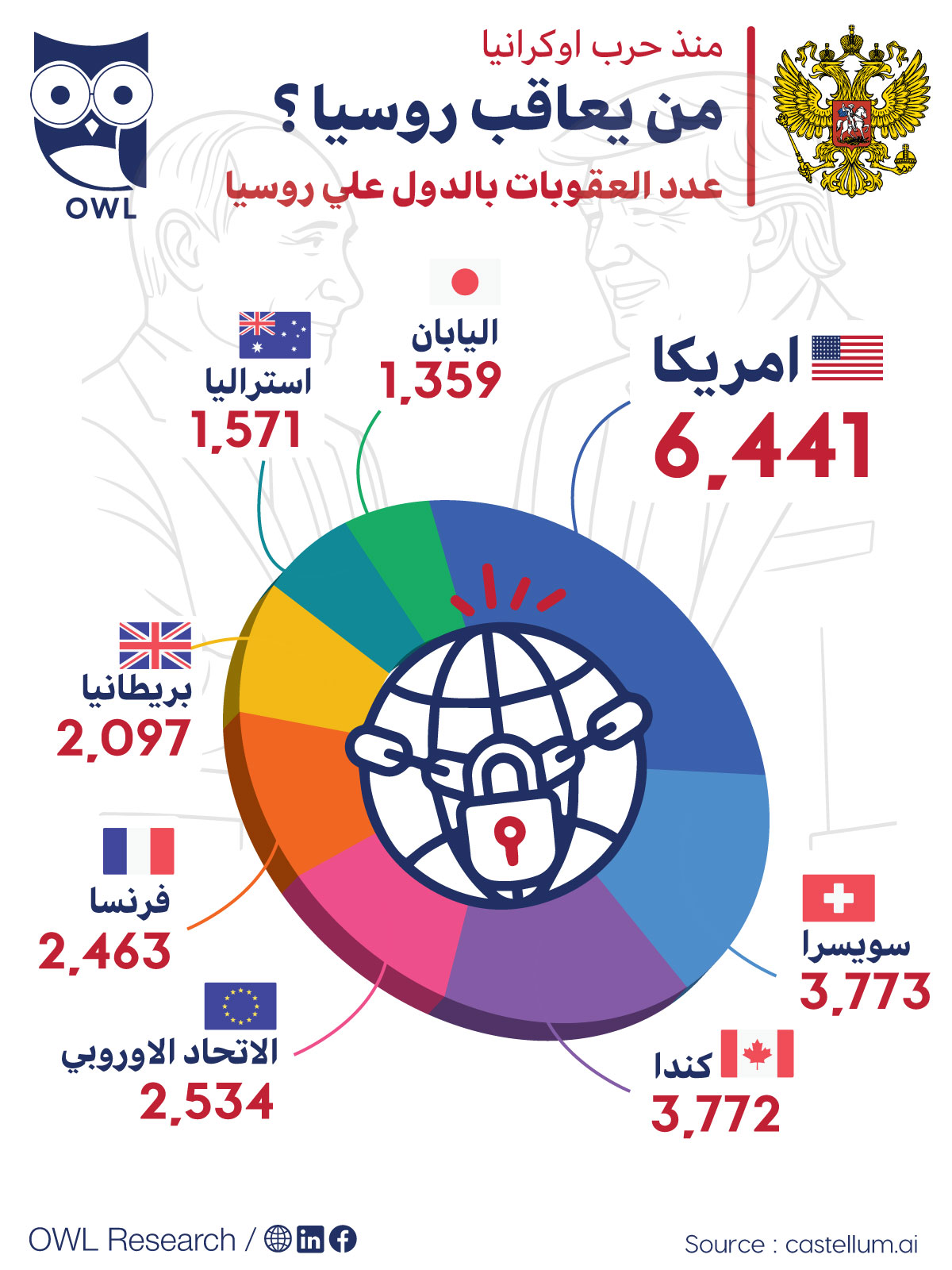
The United States stands as the single largest imposer of sanctions, having levied a total of 6,441 distinct restrictive measures against Russian entities and individuals. This underscores America’s role as the primary architect and driver of the global sanctions campaign.
Following the US, a core group of allied nations has implemented extensive sanctions packages:
- Canada: 3,772 sanctions
- Switzerland: 3,773 sanctions (notably aligning with EU measures despite its traditional neutrality)
- The European Union: 2,534 sanctions (representing a unified bloc-wide policy)
- France: 2,463 sanctions
- United Kingdom: 2,097 sanctions
- Australia: 1,571 sanctions
Implications of the Sanctions Strategy
This unprecedented volume of sanctions—totaling over 20,000 measures from these key actors alone—targets multiple facets of the Russian economy and state. They include:
- Financial sanctions on major banks and state-owned enterprises.
- Asset freezes and travel bans on oligarchs and key political figures.
- Export controls on advanced technology and military components.
- Price caps on Russian oil and gas exports.
The goal of this multi-layered strategy is twofold: to cripple Russia’s capacity to wage war by degrading its industrial and financial base, and to exert long-term economic pressure to alter its strategic calculus.
While the ultimate effectiveness of these sanctions in achieving political change remains debated, they have fundamentally reshaped global trade patterns, triggered significant capital flight from Russia, and marked a new era of economic statecraft.