A Data-Driven Look at Seasonal Traditions and Changing Consumer Behavior
Introduction
Renga and Feseekh are more than just traditional foods in Egypt—they are deeply rooted cultural symbols, strongly associated with Sham El-Nessim and seasonal family gatherings. However, behind this tradition lies a shifting consumption pattern that reflects broader changes in consumer behavior, pricing dynamics, and market accessibility.
At OWL Research, we analyzed consumption trends between 2020 and 2025 to uncover how Egyptians are engaging with these products today.
Key Findings at a Glance
- Renga consumption is steadily increasing year-on-year
- Feseekh consumption remains relatively flat
- A clear substitution effect is emerging in favor of Renga
- Consumption trends reflect risk perception, affordability, and lifestyle shifts
Consumption Trends (2020–2025)
1. Renga: Strong and Consistent Growth
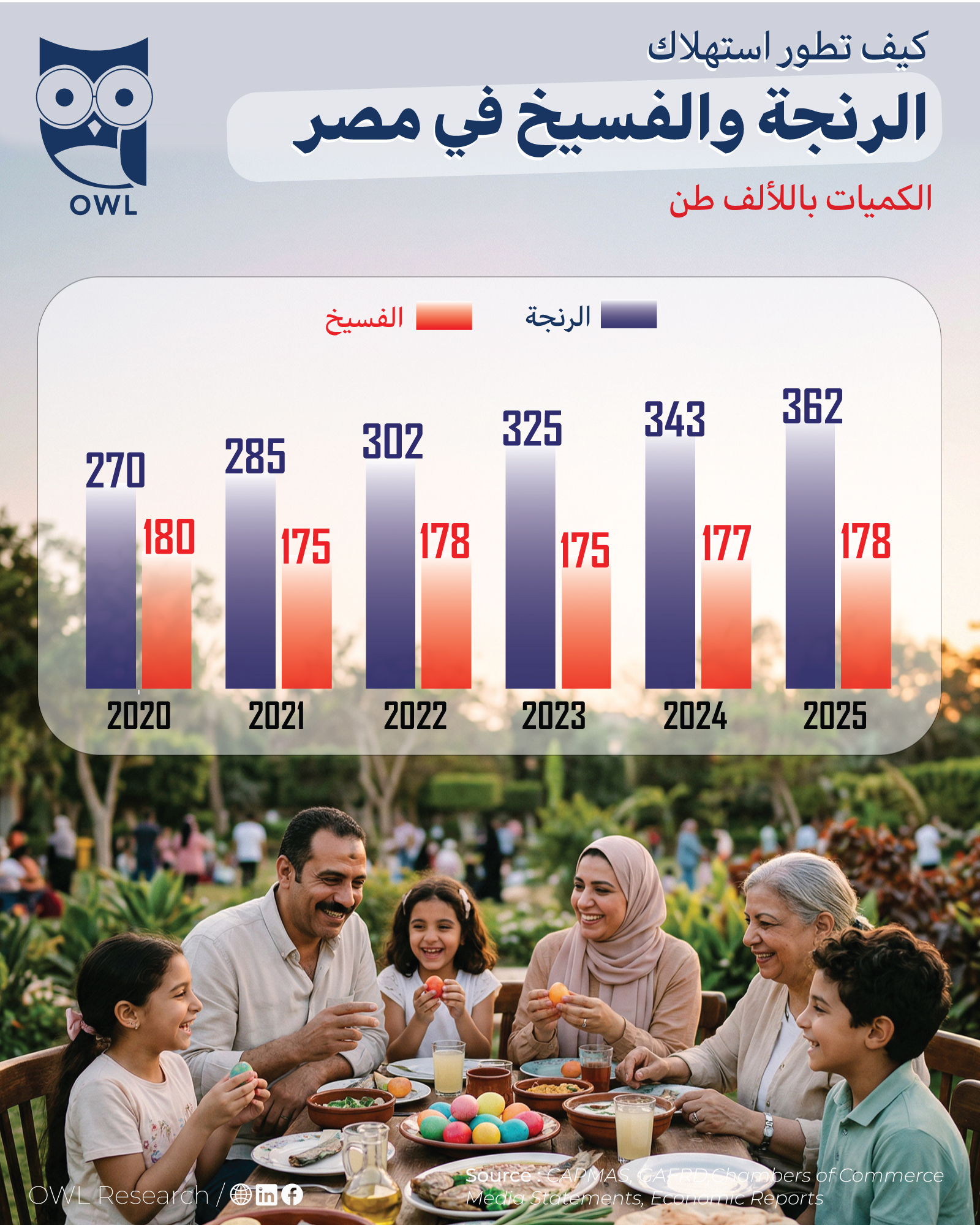
Renga consumption grew from 270K tons in 2020 to 362K tons in 2025, marking a +34% increase over five years.
What’s driving this growth?
- Perceived as safer and less risky than Feseekh
- More accessible across retail formats (supermarkets, packaged goods)
- Increasing availability of ready-to-eat and branded options
- Better fit with modern consumption habits
👉 Insight: Renga is transitioning from a seasonal product into a more mainstream, everyday protein alternative.
2. Feseekh: Stable but Stagnating
Feseekh consumption fluctuated slightly but remained largely stable, hovering between 175K–180K tons across the period.
Key barriers to growth:
- Health concerns and food safety risks
- Strong reliance on traditional vendors
- Limited innovation in product format and branding
- Higher perceived preparation complexity
👉 Insight: Feseekh is becoming more of a ritualistic, occasion-based product, rather than a growing category.
Behavioral Shift: Tradition vs. Modernization
The data highlights a fundamental shift in Egyptian consumer behavior:
| Dimension | Renga | Feseekh |
|---|---|---|
| Consumption Role | Expanding (beyond seasonal) | Highly seasonal |
| Perceived Risk | Low to moderate | High |
| Availability | Widely distributed | Limited/traditional |
| Innovation | Growing (packaging, branding) | Minimal |
👉 Strategic Insight:
Consumers are not abandoning tradition—but they are modernizing how they engage with it.
Market Implications
1. Premiumization Opportunity (Renga)
There is strong potential to:
- Introduce premium packaged variants
- Expand into ready meals and convenience formats
- Position Renga as a healthy, protein-rich option
2. Trust & Safety Gap (Feseekh)
To unlock growth, the category must:
- Address food safety concerns
- Develop certified, branded alternatives
- Modernize distribution channels
3. Seasonal Activation Still Matters
Despite shifts, both products remain heavily tied to Sham El-Nessim, making it a key moment for:
- Promotions
- Brand storytelling
- Family-oriented campaigns
Conclusion
The Egyptian market is witnessing a gradual but clear shift:
- Renga is winning on accessibility, safety, and adaptability
- Feseekh is holding its ground through tradition, but not expanding
For brands and marketers, the opportunity lies in bridging tradition with modern consumption needs—leveraging trust, convenience, and innovation to reshape how Egyptians experience these iconic foods.