Fava beans—known as foul in the Middle East—are more than just a traditional dish. They represent a powerful intersection of culture, affordability, and nutrition. Recent data highlights a fascinating global pattern: Egypt ranks as the world’s largest consumer of fava beans, followed by countries across Africa, Asia, and Europe.
A Global Snapshot
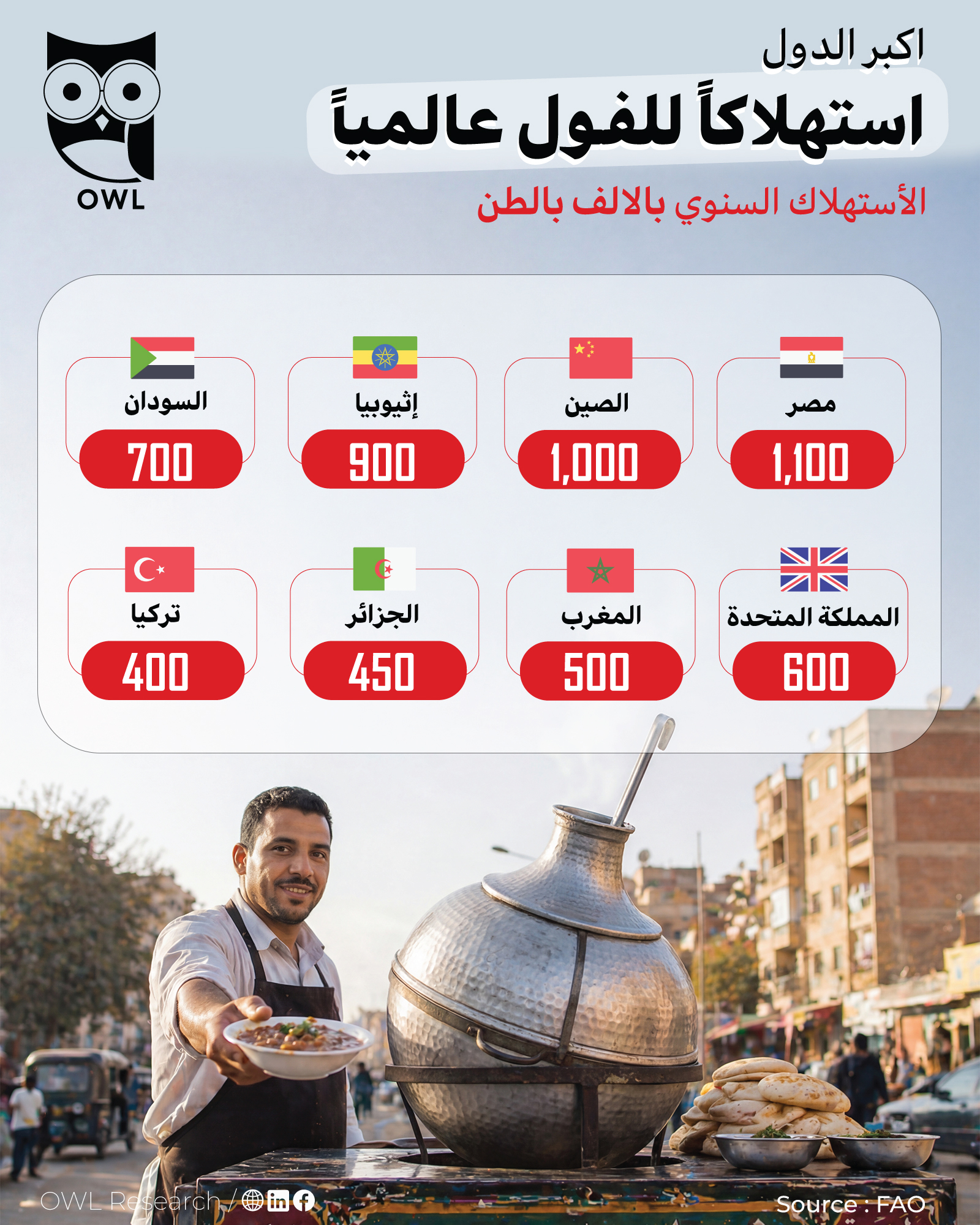
According to FAO-based estimates, annual consumption (in thousand tons) reveals a strong concentration in a few key markets:
- Egypt: 1,100
- China: 1,000
- Ethiopia: 900
- Sudan: 700
- United Kingdom: 600
- Morocco: 500
- Algeria: 450
- Turkey: 400
This distribution tells a deeper story beyond numbers.
Egypt: A Cultural Staple, Not Just a Food
In Egypt, fava beans are not a side dish—they are a daily ritual. From street carts to household kitchens, foul medames is a cornerstone of the Egyptian diet. Its dominance is driven by three core factors:
1. Affordability
Fava beans provide a low-cost, high-nutrition meal, making them accessible across all income segments.
2. Nutritional Value
Rich in plant-based protein, fiber, and essential minerals, fava beans are a practical alternative to more expensive protein sources.
3. Cultural Embeddedness
Unlike many global foods, foul is deeply rooted in identity. It’s breakfast, comfort food, and social tradition—all in one.
Emerging Insight: Consumption ≠ Wealth
One of the most interesting patterns is that high consumption doesn’t necessarily correlate with wealth. Countries like Ethiopia and Sudan rank highly, not because of purchasing power, but because of:
- Agricultural familiarity
- Dietary habits
- Local availability
Meanwhile, countries like the UK appear on the list due to niche consumption patterns and imports, not cultural centrality.
The Health Perception Shift
Globally, there’s a growing re-evaluation of legumes. Foods once considered “basic” are now being reframed as:
- Clean, plant-based protein sources
- Sustainable alternatives to meat
- Key components of healthy diets
This shift positions fava beans not as “cheap food,” but as strategically valuable in modern nutrition trends.
Key Takeaway
Fava beans are a perfect example of how consumer behavior is shaped by culture, economics, and accessibility—not just preference.
For brands, policymakers, and researchers, this highlights a critical insight:
The most powerful products are not always the most premium—
they are the most embedded in people’s daily lives.