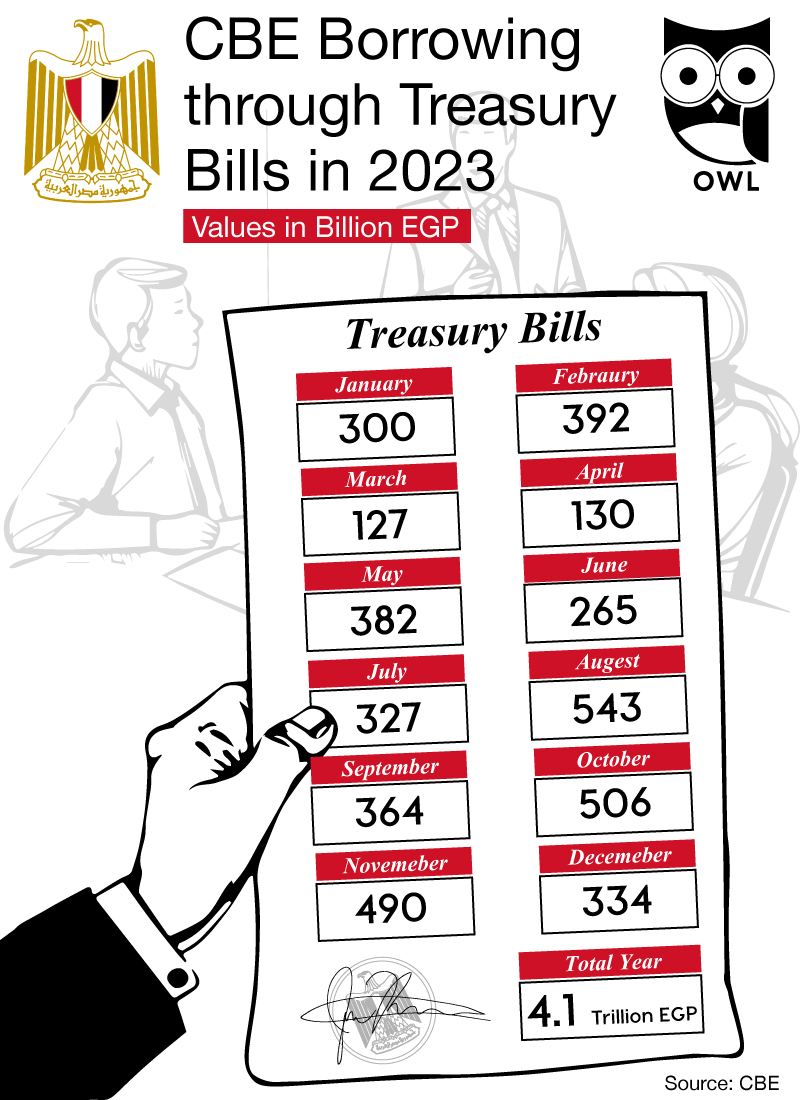
Egypt’s financial landscape has long been shaped by the dynamics of its treasury bill market. As a key component of the country’s debt management strategy, these short-term government securities play a crucial role in shaping economic policies and investor sentiment. This article delves into the intricacies of Egypt’s treasury bill market, exploring the latest trends, regulatory developments, and the implications for both domestic and international stakeholders.
Understanding Treasury Bills in Egypt

Treasury bills, commonly referred to as T-bills, are short-term debt instruments issued by the Egyptian government to raise funds and manage its fiscal obligations. These securities typically have maturities ranging from 91 to 364 days, offering investors a relatively low-risk investment option with the potential for stable returns.
The Role of Treasury Bills in Egypt’s Economy
In Egypt, treasury bills serve as a vital tool for the government to finance its budget deficits and meet its financing needs. By issuing these securities, the government can tap into domestic and international capital markets, diversifying its funding sources and managing its debt portfolio effectively.
Regulatory Framework and Oversight
The issuance and management of treasury bills in Egypt are overseen by the Central Bank of Egypt (CBE), which acts as the government’s fiscal agent. The CBE is responsible for setting the terms and conditions of the T-bill auctions, ensuring transparency and adherence to market-based pricing mechanisms.
Trends in Egypt’s Treasury Bill Market
Over the past decade, Egypt’s treasury bill market has undergone significant transformations, reflecting the country’s economic and political dynamics. Let’s explore some of the key trends that have shaped this evolving landscape.
Increasing Demand and Investor Participation
The demand for Egyptian treasury bills has been on the rise, driven by both domestic and international investors. This can be attributed to a combination of factors, including:
- Stable Macroeconomic Environment: Egypt’s sustained efforts to implement economic reforms and stabilize its macroeconomic fundamentals have bolstered investor confidence in the country’s treasury bill market.
- Attractive Yields: The yields on Egyptian treasury bills have remained relatively high compared to other emerging markets, making them an appealing investment option for both local and foreign investors seeking competitive returns.
- Diversification Strategies: Institutional investors, such as banks and fund managers, have increasingly included Egyptian treasury bills in their portfolios as a means of diversifying their fixed-income holdings and mitigating overall investment risk.
Evolving Auction Dynamics
The auction process for Egyptian treasury bills has undergone several changes in recent years, aimed at enhancing transparency and market efficiency. These include:
- Shift to Competitive Bidding: The government has gradually transitioned from a fixed-rate auction system to a competitive bidding process, allowing market forces to determine the clearing yields.
- Increased Participation: The number of authorized primary dealers and eligible investors participating in the T-bill auctions has expanded, fostering greater competition and price discovery.
- Diversification of Maturities: The government has introduced a wider range of maturities for treasury bills, providing investors with more options to align their investment strategies with their liquidity needs.
Changing Investor Composition
The composition of investors in the Egyptian treasury bill market has evolved, reflecting the growing interest from both domestic and international players. Key trends include:
- Increased Domestic Participation: Local banks, insurance companies, and institutional investors have become more active in the T-bill market, driven by the need to manage their liquidity and meet regulatory requirements.
- Rising Foreign Investor Involvement: International investors, such as global asset managers and sovereign wealth funds, have steadily increased their exposure to Egyptian treasury bills, attracted by the relatively higher yields and the country’s improving economic outlook.
- Shifts in Ownership Patterns: The government has actively sought to broaden the investor base, encouraging greater participation from retail investors and small-to-medium enterprises (SMEs) in the T-bill market.
Regulatory and Policy Developments
The Egyptian government and the Central Bank of Egypt have implemented various regulatory and policy initiatives to enhance the efficiency and resilience of the treasury bill market. These include:
Improving Transparency and Disclosure
The authorities have taken steps to improve transparency and disclosure in the T-bill market, including:
- Enhanced Auction Reporting: The CBE now provides more detailed information on the auction results, including the bid-to-cover ratio, the weighted average yield, and the distribution of successful bids.
- Increased Data Availability: The government has made concerted efforts to improve the accessibility and timeliness of data related to the treasury bill market, enabling investors and analysts to make more informed decisions.
Fostering Secondary Market Liquidity
To enhance the liquidity of the secondary market for treasury bills, the authorities have implemented the following measures:
- Developing Repurchase (Repo) Agreements: The introduction of repurchase agreements has provided investors with a mechanism to access short-term funding while using their T-bill holdings as collateral.
- Encouraging Market-Making Activities: The government has incentivized primary dealers to engage in market-making activities, providing them with the necessary support and infrastructure to facilitate secondary market transactions.
Regulatory Harmonization and Integration
The Egyptian government has taken steps to align its treasury bill market with international best practices and integrate it with regional and global financial systems. These efforts include:
- Adoption of Global Standards: Egypt has made strides in adopting international standards and best practices in areas such as settlement, clearing, and risk management, enhancing the market’s integration with global financial networks.
- Regional Cooperation: The government has actively participated in regional initiatives, such as the Arab Monetary Fund’s efforts to harmonize debt management practices across the MENA region, fostering greater collaboration and knowledge-sharing.
Implications and Outlook
The developments in Egypt’s treasury bill market have far-reaching implications for various stakeholders, both within the country and internationally.
Domestic Implications
For the Egyptian government, the successful management of the T-bill market has been crucial in financing its fiscal obligations and supporting its broader economic agenda. The increasing participation of domestic investors, particularly banks and institutional players, has helped to deepen the local capital markets and provide a stable source of funding for the government.
International Implications
The growing interest of foreign investors in Egyptian treasury bills has enhanced the country’s access to global capital markets, diversifying its funding sources and strengthening its international financial integration. This has also contributed to the broader recognition of Egypt as an attractive investment destination within the emerging markets landscape.
Conclusion
Egypt’s treasury bill market has undergone a remarkable transformation, reflecting the country’s broader economic and financial reforms. The increasing demand, evolving auction dynamics, and changing investor composition have all contributed to the market’s growing significance and resilience. As the government continues to implement regulatory and policy initiatives to enhance transparency, liquidity, and integration, the Egyptian T-bill market is poised to play an increasingly pivotal role in the country’s economic development and its integration with the global financial system.