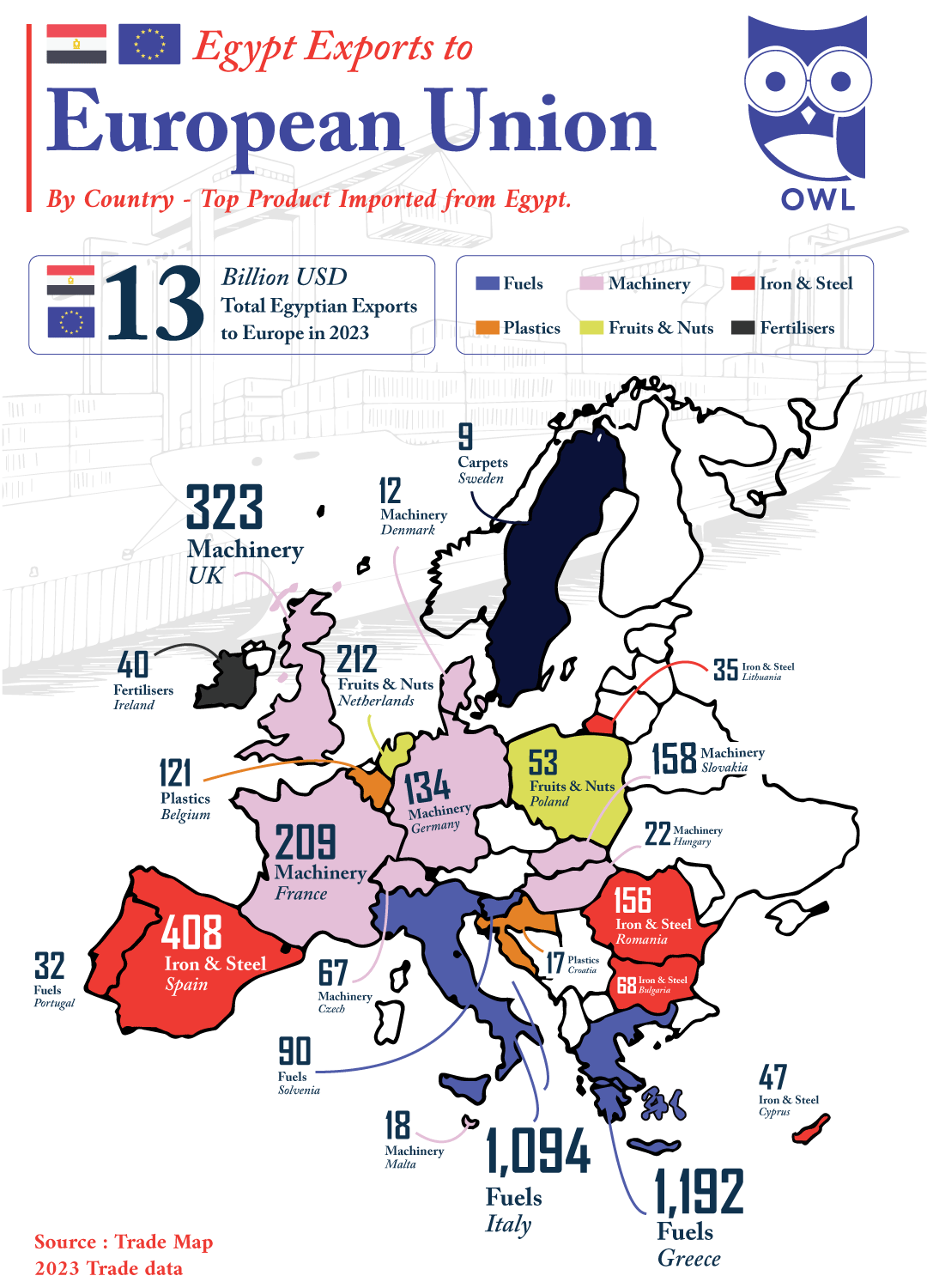
The trade relationship between the European Union (EU) and Egypt has evolved significantly over the years, marked by a series of agreements and partnerships aimed at fostering economic cooperation and regional integration. As one of the EU’s key trading partners in the Southern Neighborhood, Egypt has become an increasingly important player in the global trade landscape, offering a diverse range of products and services that cater to the EU’s diverse market.
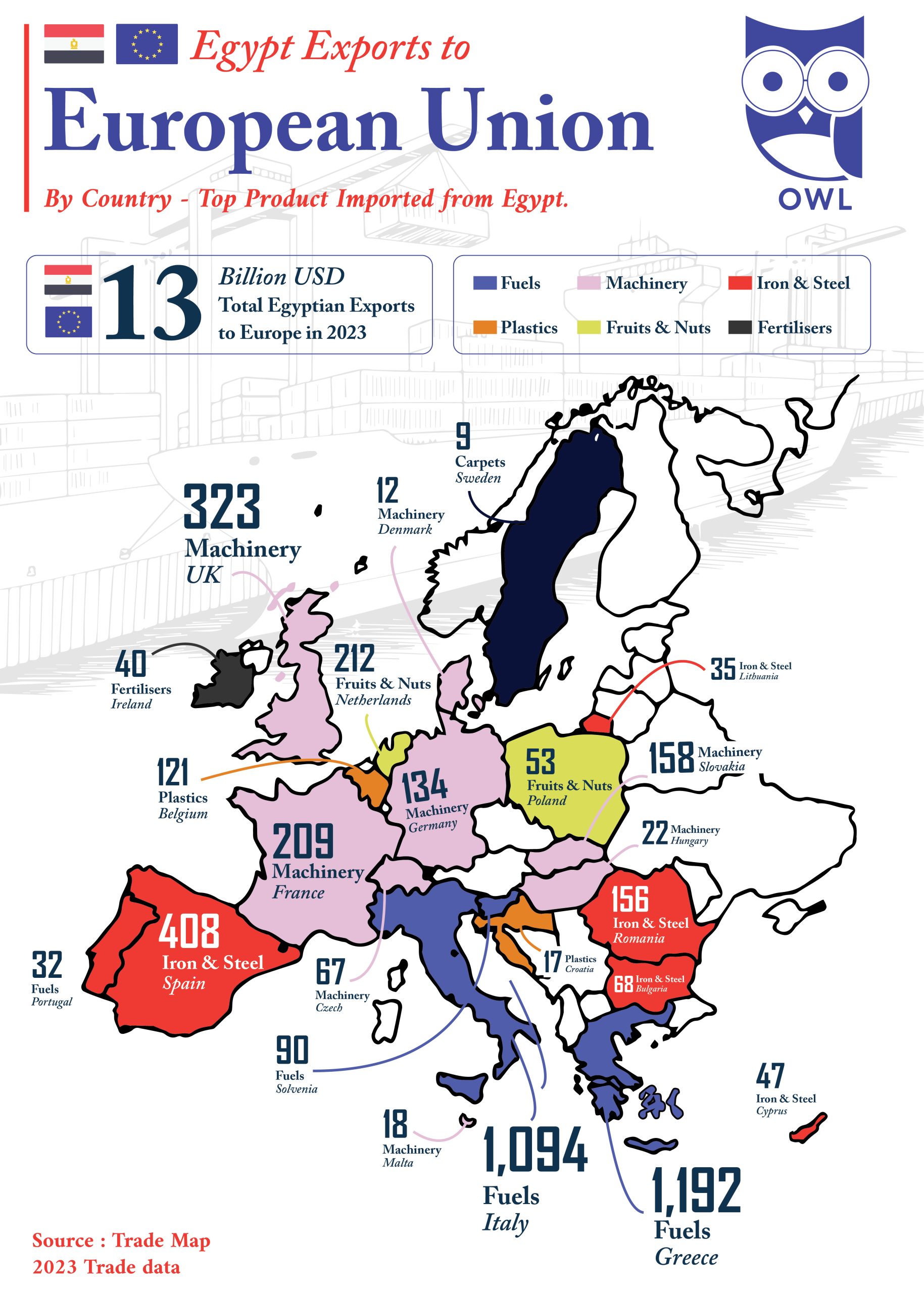
The EU-Egypt Association Agreement: A Foundation for Trade
The EU-Egypt Association Agreement, which came into force in 2004, has been a cornerstone of the bilateral trade relationship. This agreement has created a free-trade area between the EU and Egypt, removing tariffs on industrial products and facilitating the trade of agricultural, processed agricultural, and fisheries products. The agreement has also paved the way for further negotiations, with the EU and Egypt exploring the possibility of a Deep and Comprehensive Free Trade Area (DCFTA) to deepen their trade and investment relations.
Egypt’s Trade Significance for the EU
Egypt is a significant trading partner for the EU, ranking 29th among the EU’s largest trading partners in 2020. The EU’s trade with Egypt accounts for 0.7% of the EU’s total trade in goods with the world. In 2020, the total trade in goods between the EU and Egypt amounted to €24.5 billion, with the EU’s imports from Egypt reaching €6.4 billion.
Key Imports from Egypt to the EU
The EU’s imports from Egypt are diverse, encompassing a wide range of products. In 2020, the EU’s top imports from Egypt were:
- Fuel and Mining Products: Accounting for 37.7% of the EU’s imports from Egypt, this sector includes products such as crude oil, refined petroleum, and natural gas.
- Chemicals: Representing 16.9% of the EU’s imports, this category includes various chemical compounds and products.
- Agriculture and Raw Materials: Making up 16.8% of the EU’s imports, this sector includes agricultural products, raw materials, and other commodities.
- Textiles and Clothing: Comprising 9.9% of the EU’s imports, this category encompasses a variety of textile and apparel items.
Bilateral Trade in Services
In addition to trade in goods, the EU and Egypt have also established a significant trade relationship in services. In 2019, bilateral trade in services amounted to €10.9 billion, with the EU’s imports of services from Egypt representing €6.7 billion and its exports to Egypt amounting to €4.2 billion. The EU’s main service exports to Egypt are business services, while its imports from Egypt consist primarily of travel services and transport.
The Agadir Agreement: Regional Integration Efforts
Egypt’s trade relations with the EU are further enhanced by its participation in the Agadir Agreement, which it signed in 2004 along with Jordan, Morocco, and Tunisia. This agreement aims to remove tariffs on trade between the signatory countries and harmonize their legislation regarding standards and customs procedures. The Agadir Agreement has since been joined by Lebanon and Palestine, demonstrating the regional integration efforts in the Mediterranean.
The Pan-Euro-Mediterranean Cumulation System
The pan-Euro-Mediterranean cumulation system, established in 2005, has played a crucial role in supporting regional integration by creating a common system of rules of origin. This system allows for diagonal cumulation, where a product from one partner country can be processed or added to a product of a second partner country and still be considered an ‘originating product’ of that second partner country. Egypt joined the regional convention on pan-Euro-Mediterranean preferential rules of origin in 2013, further strengthening its trade ties with the EU and its partners in the region.
EU Financial Support and Cooperation Priorities
The EU has provided significant financial assistance to Egypt through various instruments, including the European Neighbourhood Policy and the Neighbourhood, Development and International Cooperation Instrument (NDICI). From 2017 to 2020, the EU committed €756 million in bilateral assistance to Egypt, supporting cooperation priorities in areas such as economic modernization, energy sustainability, social development, and governance.
Navigating Trade Challenges: Dispute Settlement and Anti-Circumvention Measures
While the EU-Egypt trade relationship has generally been positive, there have been some challenges that have required attention. In 2021, the EU initiated dispute settlement consultations with Egypt at the World Trade Organization (WTO) regarding its compulsory import registration requirements. Additionally, the EU has launched anti-circumvention investigations to address potential circumvention of anti-dumping and anti-subsidy measures on imports of glass fibre fabrics from China and Egypt via Turkey.
The Southern Neighborhood and the Renewed Partnership
Egypt’s strategic location in the EU’s Southern Neighborhood has made it a key partner in the region. The 25th anniversary of the Barcelona Process in 2020 provided an opportunity to reflect on the EU’s partnership with Egypt and other Southern Neighborhood countries, leading to the development of a Joint Communication on “A renewed partnership with the Southern Neighbourhood – A new Agenda for the Mediterranean” and the accompanying “Economic and Investment Plan for the Southern Neighbours.”
Embracing Sustainability and Strengthening Ties
As the EU and Egypt continue to navigate the evolving trade landscape, a renewed focus on sustainable development, good governance, and the rule of law has emerged as a key priority. The partnership between the EU and Egypt aims to address common challenges, promote joint interests, and ensure long-term stability and prosperity on both sides of the Mediterranean.
Committees and Dialogues: Fostering Collaboration
The EU and Egypt maintain regular dialogues and technical committee meetings to discuss trade-related issues, share best practices, and ensure the proper functioning of the EU-Egypt Association Agreement. These collaborative efforts help to strengthen the bilateral trade relationship and address any emerging challenges.
Conclusion: A Promising Future for EU-Egypt Trade
The trade relationship between the European Union and Egypt has evolved significantly, marked by a series of agreements, partnerships, and financial support mechanisms. As Egypt continues to diversify its export basket and the EU explores new avenues for sustainable economic cooperation, the future of this dynamic trade partnership looks promising. By leveraging their complementary strengths and embracing regional integration, the EU and Egypt are well-positioned to navigate the complexities of the global trade landscape and foster long-term prosperity for both economies.