Stable Pricing Regime Ends
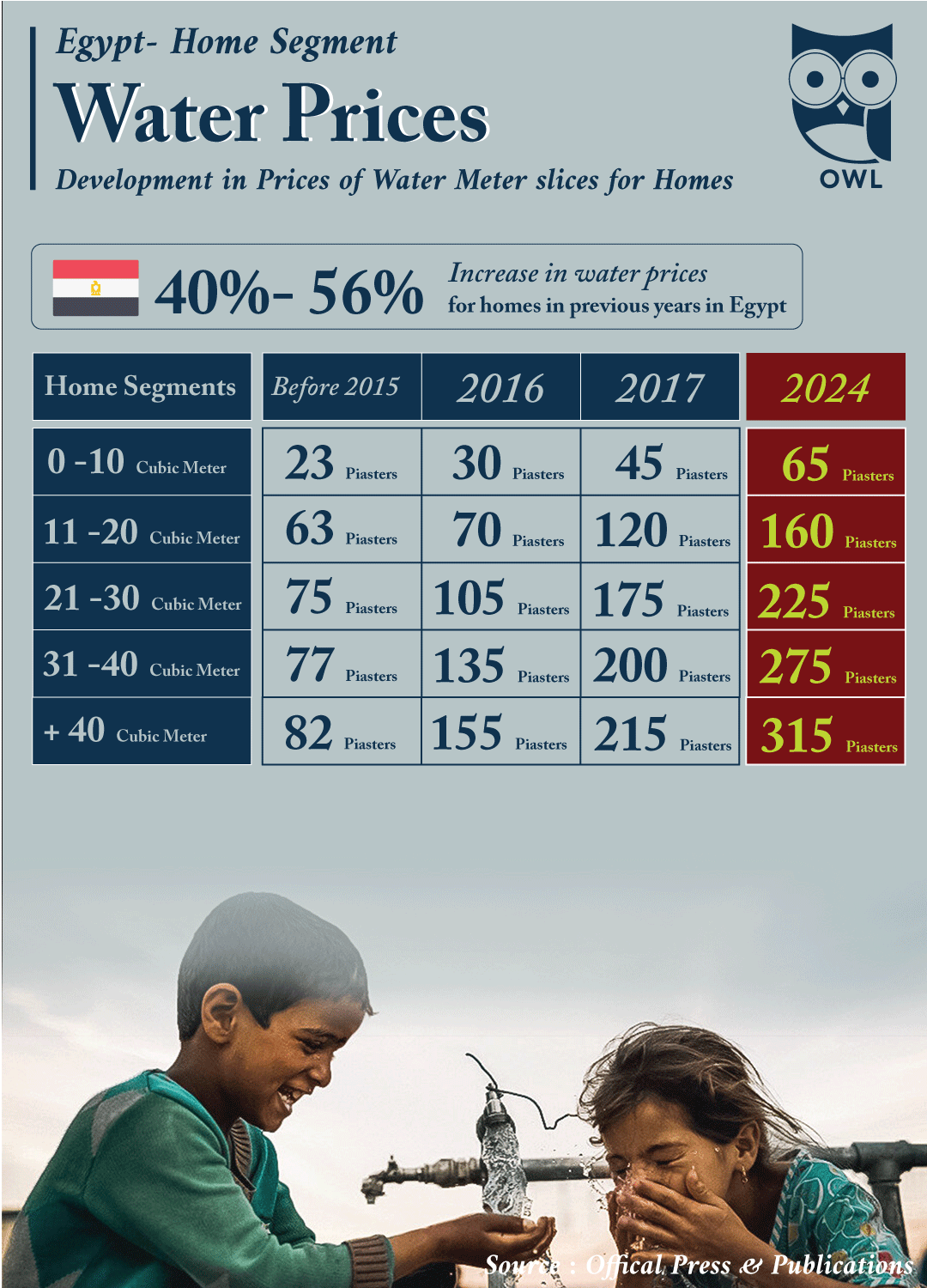
For the past eight years, Egyptian households have enjoyed a relatively stable water pricing structure, with the last adjustment taking place in 2006. During this period, all citizens paid a uniform rate of LE0.23 (approximately $0.03) per cubic meter of water consumed. However, this era of stability is now coming to an end.
Differentiated Pricing Based on Consumption
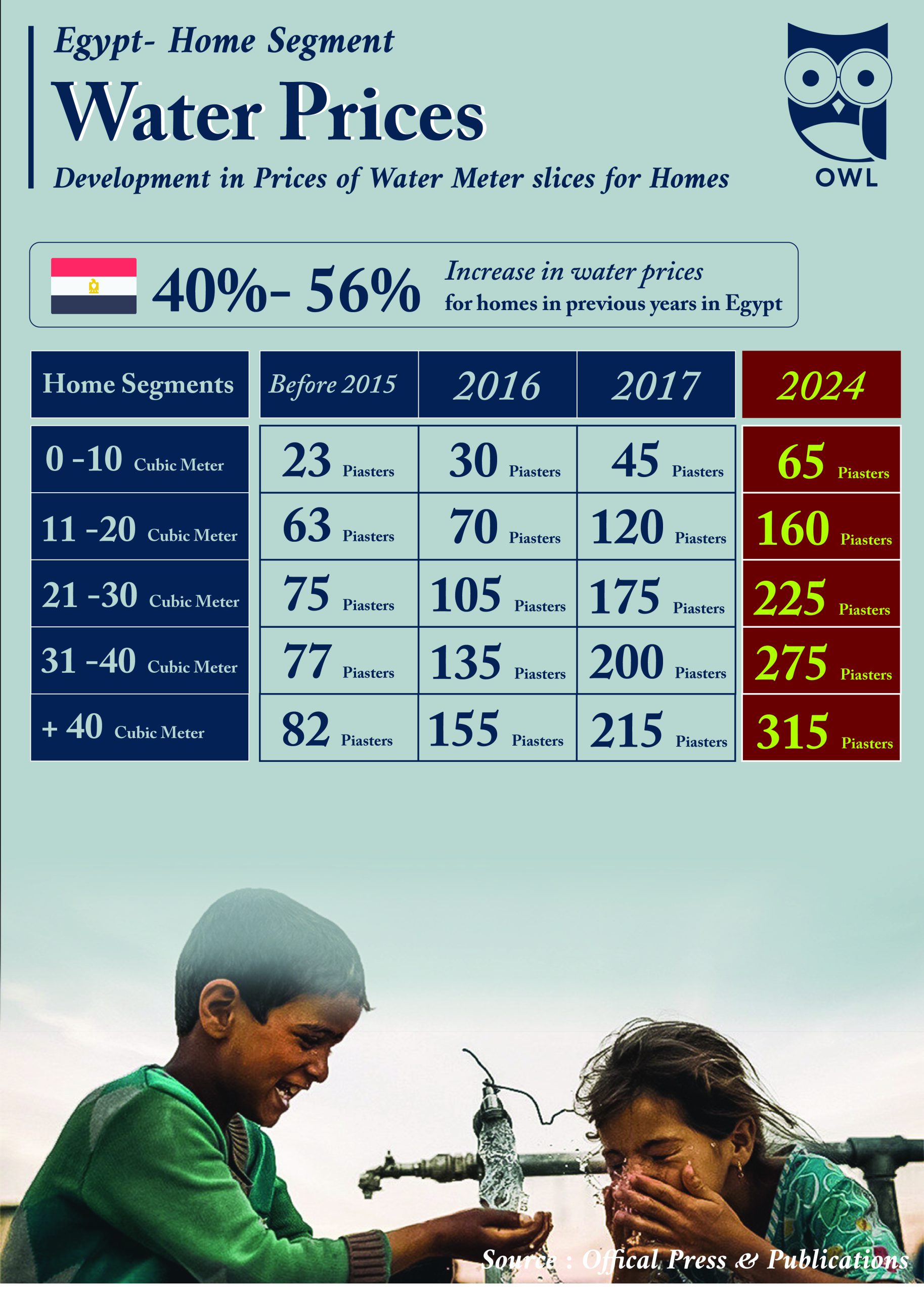
In 2006, the government introduced a tiered pricing system, where the cost of water was differentiated based on consumption levels. Households consuming less than 10 cubic meters per month were charged the lowest rate of LE0.23 per cubic meter, while those exceeding this threshold faced higher tariffs.
The New Price Hike
As of June 2014, the government has implemented the first price increase for potable water in nearly a decade. The new tariffs will be imposed on subscribers who consume more than 10 cubic meters of water per month, with the new price ranging between LE0.36 ($0.05) and LE0.67 ($0.10) per cubic meter.
Rationale Behind the Price Increase
Reducing Subsidies
The primary driver behind the water price hike is the government’s efforts to reduce its substantial subsidy burden. According to the Holding Company for Water and Waste Water (HCWW), the government currently subsidizes the water sector to the tune of LE1.2 billion ($0.17 billion) annually, with the actual cost of water production standing at LE1.4 ($0.20) per cubic meter.
Targeting High-Consumption Households
The price increase will not affect low-income and poor families, who are included in the first tranche of consumption (less than 10 cubic meters per month). Instead, the new tariffs will be levied on the higher-spending segments of HCWW’s 10 million subscribers nationwide.
Aligning Prices with Production Costs
By gradually adjusting water prices, the government aims to bring them closer to the actual cost of water production and distribution, which is more than double the current tariff paid by the highest consumption segment.
Broader Subsidy Reduction Efforts
Reducing Energy Subsidies
The water price hike is part of a broader government initiative to reduce subsidies across various sectors. In April 2014, the government raised natural gas prices for households from LE0.1 to LE0.4 per cubic meter, and there were also plans to increase the costs of three widely-used forms of petrol – 92 octane, 80 octane, and diesel, all of which would be LE1 ($0.14) higher per litre.
Targeting a Leaner Subsidy Bill
Egypt’s interim government has been working to shrink its overall subsidy bill, which is expected to reach LE166 billion ($23.6 billion) by the end of the current fiscal year 2013/14. The energy subsidy bill alone is projected to exceed LE130 billion ($18.5 billion), despite efforts to reduce it by LE20 billion ($2.8 billion) compared to the previous fiscal year.
Potential Impacts on Households
Burden on Higher-Consumption Households
The water price hike will directly impact households that consume more than 10 cubic meters per month, leading to increased monthly water bills. This could pose a financial challenge for middle-income and affluent families, who may need to adjust their water usage habits to mitigate the higher costs.
Protecting Low-Income Families
The government’s decision to exempt low-income and poor families from the price increase is a strategic move to shield the most vulnerable segments of the population from the economic burden. This aligns with the broader goal of ensuring affordable access to essential resources.
Encouraging Water Conservation
The tiered pricing system, with higher tariffs for higher consumption, is designed to incentivize water conservation among Egyptian households. By making water more expensive for those who use it in excess, the government hopes to promote sustainable usage patterns and reduce strain on the country’s limited water resources.
Challenges and Considerations
Balancing Affordability and Cost Recovery
The water price adjustment is a delicate balancing act, as the government must ensure that water remains affordable for the majority of the population while also generating sufficient revenue to maintain and upgrade the water infrastructure. Striking this balance will be crucial in the long run.
Addressing Broader Water Management Issues
While the price hike is a significant step, it is important to recognize that water scarcity and inefficient management are longstanding challenges in Egypt. Addressing these systemic issues will require a comprehensive approach that goes beyond pricing adjustments, including investments in water treatment facilities, leak reduction, and public awareness campaigns.
Ensuring Transparency and Accountability
As the government implements these pricing changes, it will be essential to maintain transparency and accountability in the water sector. Clear communication with the public, as well as robust monitoring and evaluation mechanisms, will be crucial to ensure that the benefits of the price adjustments are realized and that the burden is distributed equitably.
Conclusion
The water price hike in Egypt represents a pivotal moment in the country’s efforts to balance affordability, sustainability, and financial viability in the water sector. By targeting higher-consumption households and shielding the most vulnerable, the government aims to reduce the substantial subsidy burden while promoting conservation and responsible usage. As Egypt navigates this transition, it will be crucial to address the broader water management challenges and ensure that the pricing reforms are implemented in a transparent and equitable manner, ultimately benefiting the nation’s long-term water security.