Egypt’s currency, the Egyptian Pound (EGP), has been a central component of the nation’s economic landscape for decades. As the country has navigated through periods of growth, inflation, and policy changes, the dynamics of currency circulation have undergone a remarkable transformation. This article delves into the intriguing story of the EGP’s evolution, shedding light on the key trends, patterns, and implications that have unfolded over time.

The Rise of the 200 EGP Note
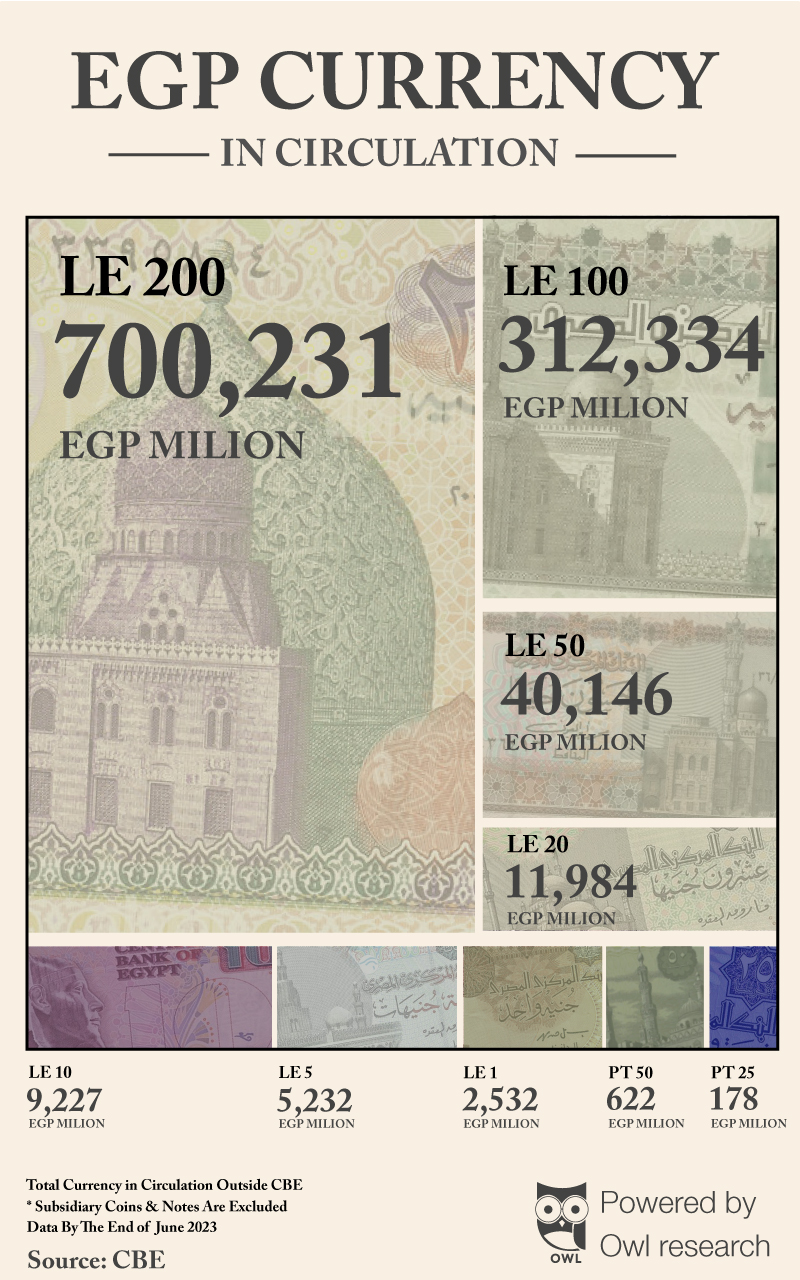
One of the most striking developments in Egypt’s currency landscape has been the increasing prominence of the 200 EGP note. Introduced in 2007, this high-denomination bill has steadily gained traction, becoming the dominant currency denomination in circulation. In 2007, the value of 200 EGP notes in circulation stood at a mere 3.02 billion Egyptian pounds. However, by 2023, this figure had skyrocketed to a staggering 700.2 billion Egyptian pounds, accounting for the majority of the total currency in circulation.
Tracking the Growth of Currency in Circulation
The overall value of currency in circulation in Egypt has experienced a consistent upward trajectory over the past two decades. In 2004, the total currency in circulation, excluding subsidiary denominations, amounted to approximately 1.4 billion Egyptian pounds. By 2023, this figure had ballooned to an impressive 1.08 trillion Egyptian pounds, equivalent to around $22.6 billion.
Trends in Currency Denomination
The growth in currency circulation has been driven by a diversification of denominations. While the 200 EGP note has emerged as the frontrunner, other denominations have also seen significant increases. The 100 EGP, 50 EGP, and 20 EGP bills have all experienced substantial growth, reflecting the expanding needs of the Egyptian economy and population.
Factors Influencing Currency Demand
The surge in currency circulation can be attributed to a confluence of factors, including economic growth, population expansion, and inflationary pressures. As the Egyptian economy has expanded, the demand for cash transactions and liquid assets has risen, driving the increased circulation of banknotes. Additionally, the country’s growing population has contributed to the heightened need for accessible currency.
The Role of the Central Bank
The Central Bank of Egypt (CBE) plays a pivotal role in managing the country’s currency and monetary policy. The CBE is responsible for regulating the supply of currency, ensuring its stability, and adapting to the evolving needs of the economy. Through its policies and interventions, the CBE aims to maintain the purchasing power of the EGP and foster a healthy financial environment.
Monetary Policy Decisions
The CBE’s monetary policy decisions have a direct impact on the circulation of currency. Interest rate adjustments, reserve requirements, and other policy levers employed by the central bank can influence the demand for cash and the overall money supply. These measures are carefully calibrated to balance economic growth, inflation, and financial stability.
Technological Advancements
In recent years, the CBE has embraced technological advancements to enhance the efficiency and security of the currency system. The introduction of advanced anti-counterfeiting features, such as holographic elements and embedded security threads, has helped to ensure the integrity of the EGP. Additionally, the central bank’s efforts to promote digital payment solutions and financial inclusion have the potential to shape the future trajectory of currency circulation in Egypt.
The Impact on the Egyptian Economy
The dynamics of currency circulation in Egypt have far-reaching implications for the country’s economic landscape. The availability of cash and the public’s confidence in the national currency are crucial factors that influence consumer spending, investment, and overall economic activity.
Implications for Inflation and Purchasing Power
The growth in currency circulation can have a direct impact on inflation rates and the purchasing power of the Egyptian pound. As the money supply expands, it can exert upward pressure on prices, potentially eroding the real value of the currency. The CBE’s monetary policy efforts aim to strike a balance between maintaining price stability and supporting economic growth.
Implications for Financial Inclusion and Digital Transformation
The evolution of currency circulation in Egypt is also intertwined with the country’s ongoing efforts to promote financial inclusion and digital transformation. As the central bank explores the potential of digital currencies and mobile payment solutions, the landscape of currency usage and transaction patterns may undergo significant changes in the years to come.
Conclusion
The story of the Egyptian pound’s currency circulation is a dynamic and multifaceted one, reflecting the country’s economic development, policy decisions, and technological advancements. The rise of the 200 EGP note, the overall growth in currency in circulation, and the central bank’s role in shaping these trends have all contributed to the ever-evolving landscape of the EGP. As Egypt continues to navigate the challenges and opportunities of the future, the management and evolution of its currency will undoubtedly remain a crucial area of focus for policymakers and economic stakeholders alike.