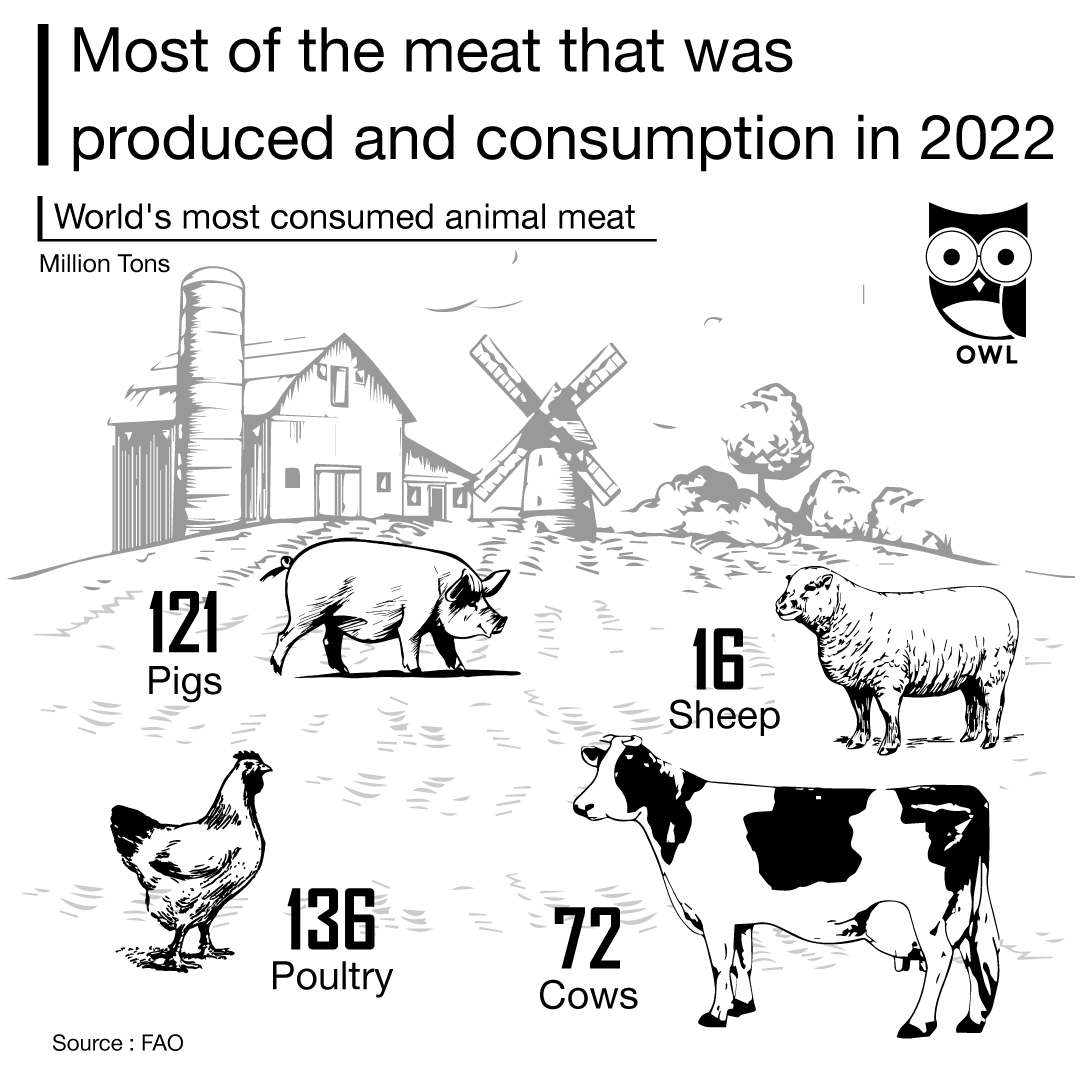
Meat remains one of the most consumed sources of protein worldwide, and global production continues to rise in response to population growth and changing diets. According to the Food and Agriculture Organization (FAO), the year 2022 highlighted poultry, pork, and beef as the most consumed animal meats, with poultry taking the lead.
1. Poultry – 136 Million Tons
Poultry tops the list as the most consumed meat globally. With 136 million tons produced in 2022, chicken remains popular due to its affordability, fast production cycle, and widespread cultural acceptance across most regions.
2. Pork – 121 Million Tons
Pork ranks second, with 121 million tons consumed worldwide. It is particularly dominant in East Asia and Europe, where it remains a dietary staple. However, religious and cultural restrictions limit its consumption in the Middle East and parts of Africa.
3. Beef – 72 Million Tons
Beef is the third most consumed meat, with 72 million tons produced in 2022. It is especially popular in countries like the United States, Brazil, and Argentina, where cattle farming plays a major role in agriculture and exports.
4. Sheep and Lamb – 16 Million Tons
Sheep meat (including lamb and mutton) accounts for 16 million tons. While it is the smallest category globally, it holds cultural and religious importance in regions such as the Middle East, North Africa, and Central Asia.
5. Key Insights on Global Meat Consumption Trends
- Population growth and urbanization are driving higher demand for poultry and beef.
- Affordability makes chicken the most accessible protein source, especially in developing countries.
- Cultural and religious factors strongly influence consumption patterns, particularly for pork and lamb.
- Sustainability concerns are rising, as livestock production contributes significantly to greenhouse gas emissions, water usage, and deforestation.
Final Thoughts
In 2022, global meat consumption was led by poultry (136 million tons), followed by pork (121 million tons), beef (72 million tons), and sheep (16 million tons). These numbers highlight not only dietary preferences but also the economic and cultural dynamics shaping the world’s food system.
As the demand for protein continues to grow, balancing food security, affordability, and sustainability will remain a global challenge.