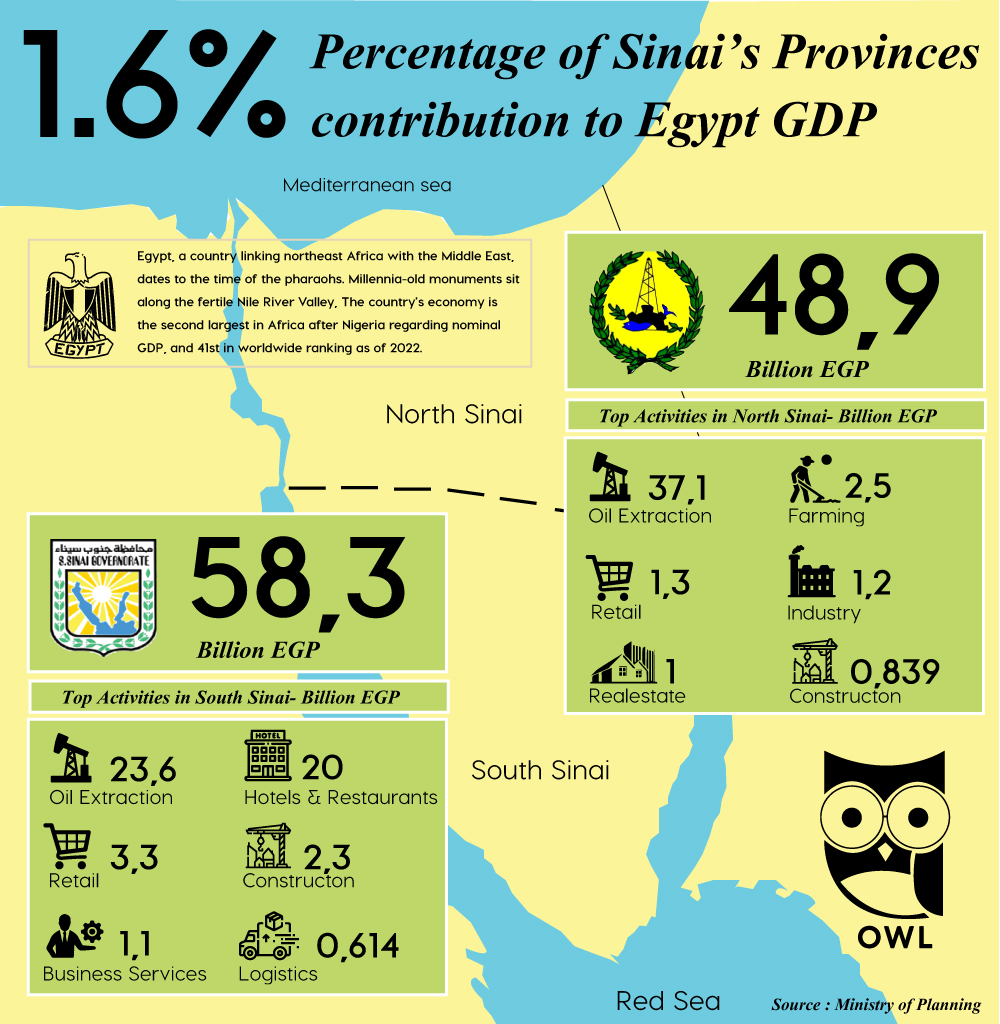
The Sinai Peninsula plays an important yet relatively modest role in Egypt’s overall economy. According to the Ministry of Planning, the combined contribution of North Sinai and South Sinai provinces accounted for 1.6% of Egypt’s GDP in 2022, with a total economic output exceeding 107 billion EGP.
1. North Sinai’s Economic Activities
North Sinai generated 48.9 billion EGP in 2022, with the economy largely dominated by oil extraction.
Key Sectors in North Sinai (Billion EGP):
- Oil Extraction: 37.1
- Farming: 2.5
- Retail: 1.3
- Industry: 1.2
- Real Estate: 1.0
- Construction: 0.839
👉 Oil remains the backbone of North Sinai’s economy, while agriculture and small-scale industries provide supplementary contributions.
2. South Sinai’s Economic Activities
South Sinai contributed 58.3 billion EGP, with a more diverse economic structure that includes tourism, oil, and services.
Key Sectors in South Sinai (Billion EGP):
- Oil Extraction: 23.6
- Hotels & Restaurants (Tourism): 20
- Retail: 3.3
- Construction: 2.3
- Business Services: 1.1
- Logistics: 0.614
👉 Tourism is a key driver of South Sinai’s economy, particularly due to resorts in Sharm El-Sheikh and Dahab, alongside oil revenues.
3. Sinai’s Strategic Importance
While Sinai’s overall GDP share is 1.6%, its strategic significance goes beyond economic figures:
- Tourism Hub: South Sinai is home to world-renowned tourist destinations.
- Energy Sector: Oil and gas extraction remain essential for both provinces.
- Geopolitical Value: Sinai connects Africa with Asia, making it vital for trade, logistics, and security.
Final Thoughts
Sinai’s economy, contributing 1.6% to Egypt’s GDP, is built on oil extraction, tourism, and services, with South Sinai leaning heavily on tourism while North Sinai focuses on energy and agriculture. Moving forward, diversifying Sinai’s economy could enhance its role in Egypt’s overall development, especially through investment in logistics, real estate, and sustainable tourism.