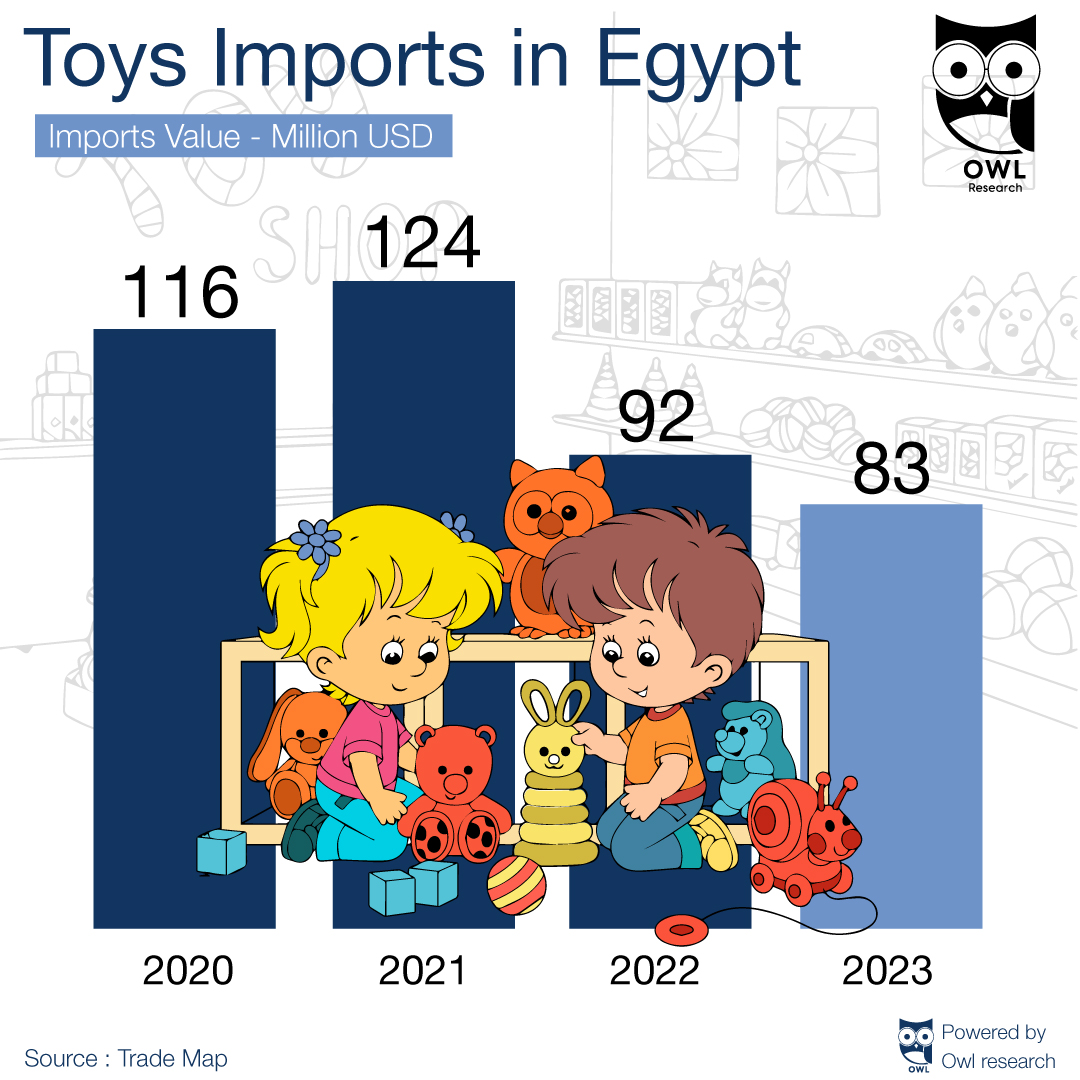
Egypt’s toy market has witnessed noticeable changes in recent years, reflecting broader economic shifts, import dynamics, and evolving consumer demand. According to Trade Map data, Egypt’s toy imports between 2020 and 2023 show both growth and contraction trends, influenced by currency fluctuations, global supply chain challenges, and shifts in consumer purchasing power.
📊 Toy Import Trends in Egypt (2020–2023)
- 2020: Egypt imported toys worth 116 million USD.
- 2021: Imports peaked at 124 million USD, marking the highest level in the four-year period.
- 2022: A decline occurred, with imports falling to 92 million USD.
- 2023: The downward trend continued, reaching 83 million USD, the lowest in this timeframe.
This trajectory highlights how economic conditions, exchange rate volatility, and increased production costs globally have impacted Egypt’s ability to maintain steady toy imports.
🧸 Key Drivers Behind Toy Import Trends
- Economic Pressures in Egypt
- Currency devaluation against the US dollar has made imports more expensive.
- Import restrictions and prioritization of essential goods also affected non-essential categories like toys.
- Global Supply Chain Challenges
- Post-pandemic supply chain disruptions and higher shipping costs contributed to fluctuating import values.
- Consumer Demand & Lifestyle Shifts
- While demand for children’s products remains high, families are shifting toward cheaper alternatives or locally produced toys due to rising inflation.
- Government Policies
- Egypt has been encouraging local manufacturing to reduce dependency on imports, which has likely contributed to the decline in toy import values.
🌍 Egypt’s Position in the Global Toy Market
Though Egypt is not a major global toy producer, its market reflects regional consumption trends. Toys remain an important consumer category due to Egypt’s large youth population. The decline in imports indicates an opportunity for domestic manufacturers and regional suppliers to step in and meet demand.
📈 Future Outlook for the Toy Market in Egypt
- Local Manufacturing Growth: With government initiatives to boost local industries, Egypt may see more homegrown toy brands entering the market.
- Digital & Educational Toys: Rising interest in educational and tech-based toys could reshape demand patterns.
- Import Stabilization: If the currency stabilizes and supply chain pressures ease, toy imports may rebound in the coming years.
✅ Conclusion: Egypt’s toy imports have dropped significantly from their 2021 peak, reflecting economic challenges and policy shifts. However, this creates opportunities for local production and regional suppliers to meet Egypt’s high demand for children’s toys, ensuring the sector continues to play an important role in the country’s consumer market.