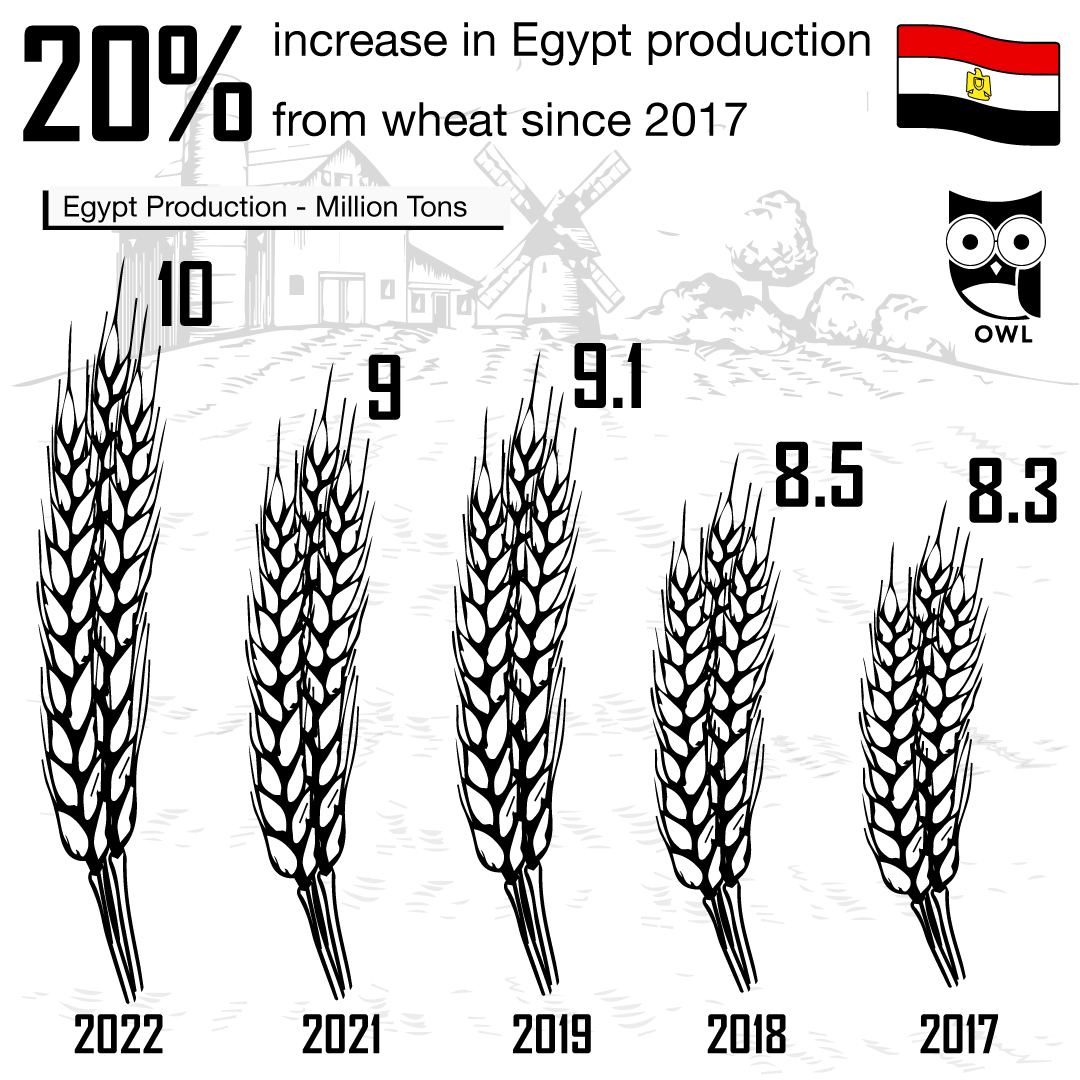
Egypt, one of the world’s largest wheat consumers, has recorded a 20% increase in wheat production since 2017, according to official statistics. This growth highlights the country’s efforts to strengthen food security and reduce its reliance on imports.
Growth in Wheat Production Over the Years
- 2017: 8.3 million tons
- 2018: 8.5 million tons
- 2019: 9.1 million tons
- 2021: 9 million tons
- 2022: 10 million tons
This steady upward trend reflects Egypt’s investment in agricultural reforms, improved irrigation techniques, and expanded cultivation areas dedicated to wheat.
Why Wheat is Crucial for Egypt
Wheat is the cornerstone of Egypt’s food system, mainly due to its use in bread production. Subsidized bread feeds millions of Egyptians daily, making wheat production and imports a matter of national security. By raising production levels, Egypt aims to:
- Lower dependence on imports from Russia, Ukraine, and other countries.
- Stabilize domestic supply amid global price fluctuations.
- Enhance food security in the face of geopolitical and climate-related challenges.
Government Initiatives Driving Growth
The increase in wheat production is largely attributed to:
- Expansion of cultivated areas under national wheat projects.
- Improved irrigation and modern farming techniques to boost yields.
- Government incentives for farmers, including higher procurement prices for locally produced wheat.
- Strategic reserves development to store more wheat and reduce vulnerability to global supply shocks.
Challenges Ahead
Despite the 20% rise, Egypt still imports millions of tons of wheat annually to meet local demand. With annual consumption exceeding 20 million tons, domestic production covers less than half of the country’s needs.
Key challenges include:
- Water scarcity impacting agricultural expansion.
- Rising input costs for fertilizers and seeds.
- The need for further modernization in small-scale farming.
Conclusion
Egypt’s 20% increase in wheat production since 2017 marks significant progress toward self-sufficiency. However, with wheat remaining a central element of food security, the country must continue investing in agricultural development, farmer support, and innovative farming solutions to balance rising demand with sustainable supply.