Egypt’s Top Imports in 2025: Natural Gas and Diesel Lead the Way
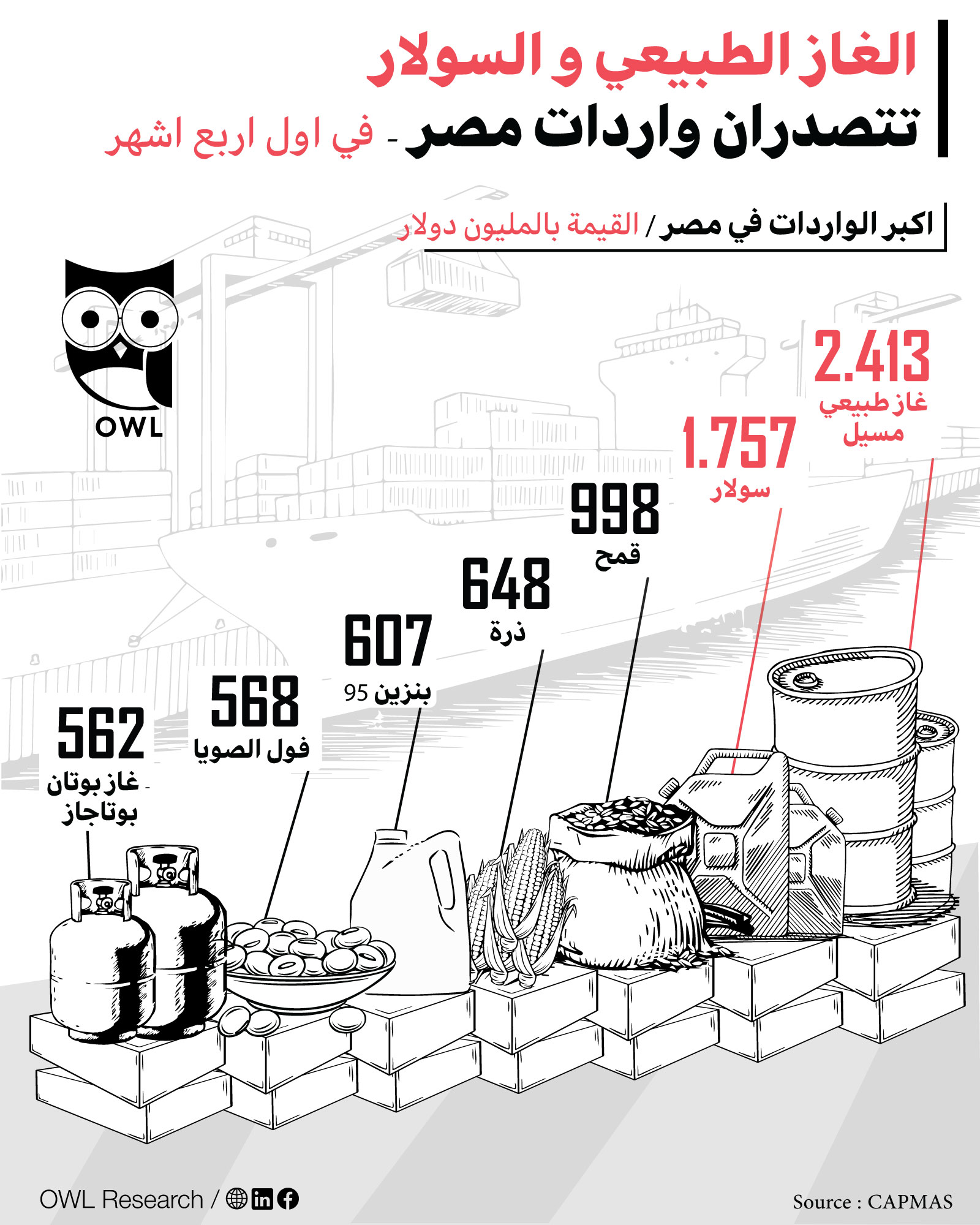
Egypt’s import landscape in the first four months of 2025 highlights the dominance of energy products in the country’s trade bill. According to data from CAPMAS (Central Agency for Public Mobilization and Statistics), liquefied natural gas (LNG) and diesel fuel (solar) top the list of the largest imported items, reflecting Egypt’s heavy reliance on energy to support its domestic consumption and industrial needs.
This article provides a breakdown of Egypt’s major imports, their values in million US dollars, and what they reveal about the country’s trade priorities and economic dynamics.
Egypt’s Largest Imports (January–April 2025)
- Liquefied Natural Gas (LNG) – $2.413 billion
LNG is the top import, underscoring Egypt’s need to secure stable energy supplies for both industrial and residential use. - Diesel Fuel (Solar) – $1.757 billion
Diesel ranks second, showing the importance of transportation and power generation in Egypt’s energy mix. - Wheat – $998 million
As one of the world’s largest wheat importers, Egypt continues to prioritize food security, with imports primarily coming from Russia, Ukraine, and other global suppliers. - Corn (Maize) – $648 million
Corn is a key input in animal feed and the poultry sector, reflecting the strong demand in Egypt’s agricultural and food industries. - Gasoline 95 – $607 million
Higher-octane gasoline imports point to Egypt’s growing demand for high-efficiency fuels in the automotive sector. - Soybeans – $568 million
Used for edible oil production and livestock feed, soybeans are an essential agro-commodity in Egypt’s import basket. - Butane Gas – $562 million
Butane gas is widely consumed in Egyptian households, particularly for cooking, which explains its strong position among top imports.
Key Insights
- Energy Dominance: With LNG, diesel, gasoline, and butane topping the list, energy commodities represent the bulk of Egypt’s import bill.
- Food Security: Wheat, corn, and soybeans continue to be strategic imports to meet the dietary and industrial needs of Egypt’s growing population.
- Trade Balance Pressures: High import costs in both energy and food categories put pressure on Egypt’s trade balance, highlighting the need for investment in local production and alternative energy sources.
Conclusion
Egypt’s import structure in early 2025 reflects its dual dependency on energy and food commodities. While energy fuels economic activity and transportation, grains and oilseeds secure the nation’s food supply. Going forward, enhancing domestic production, diversifying suppliers, and investing in renewable energy will be critical steps to reduce reliance on costly imports.