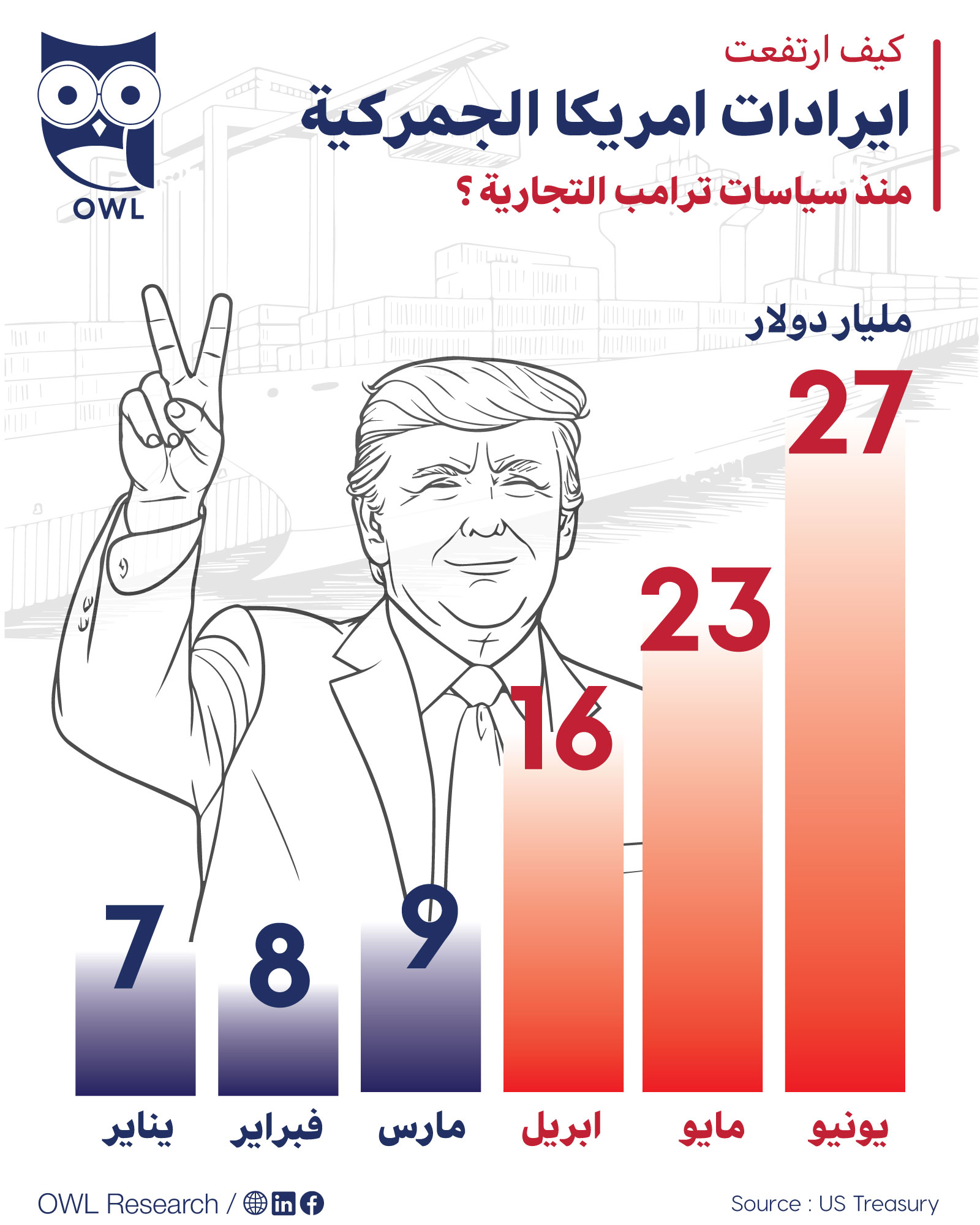
Since the introduction of Donald Trump’s trade policies, U.S. customs revenues have shown a remarkable increase. According to U.S. Treasury data, tariffs and customs duties collected between January and June rose significantly, reflecting the impact of tariffs imposed on imports from major trade partners such as China, the European Union, and Mexico.
This article breaks down the monthly growth in U.S. customs revenues, explains the reasons behind the surge, and discusses the wider economic implications.
U.S. Customs Revenues: Monthly Breakdown (in Billion Dollars)
- January: $7 billion
- February: $8 billion
- March: $9 billion
- April: $16 billion
- May: $23 billion
- June: $27 billion
The data highlights a steady month-over-month increase, with revenues nearly quadrupling from January to June.
Why Customs Revenues Increased Under Trump
- Tariff Hikes on Chinese Goods
Trump’s administration imposed tariffs on hundreds of billions of dollars’ worth of Chinese imports. This was part of the broader U.S.–China trade war, aiming to reduce the U.S. trade deficit and encourage domestic manufacturing. - Expansion of Tariffs to Other Partners
Beyond China, tariffs were also introduced or increased on goods from the EU, Mexico, and Canada, further boosting customs revenue. - Shift in Importer Costs
Importers were forced to pay higher duties, which directly translated into rising government revenue. However, these costs were often passed on to U.S. businesses and consumers.
Economic Implications
- Short-Term Gains for the Treasury: The U.S. government collected higher revenues, strengthening fiscal inflows.
- Higher Prices for Consumers: Businesses often transferred tariff costs to consumers, leading to price hikes on electronics, food, and manufactured goods.
- Global Trade Tensions: The tariffs contributed to strained relations with key trade partners and disrupted global supply chains.
- Mixed Impact on U.S. Industry: While some domestic producers benefited from reduced foreign competition, others relying on imported inputs faced higher costs.
Conclusion
The surge in U.S. customs revenues from $7 billion in January to $27 billion in June illustrates the tangible fiscal impact of Trump’s trade policies. While the tariffs boosted government income, they also reshaped trade dynamics, raised consumer costs, and sparked global economic debates.
As discussions about U.S. trade policy continue, the balance between revenue gains and economic costs remains a central issue for policymakers.