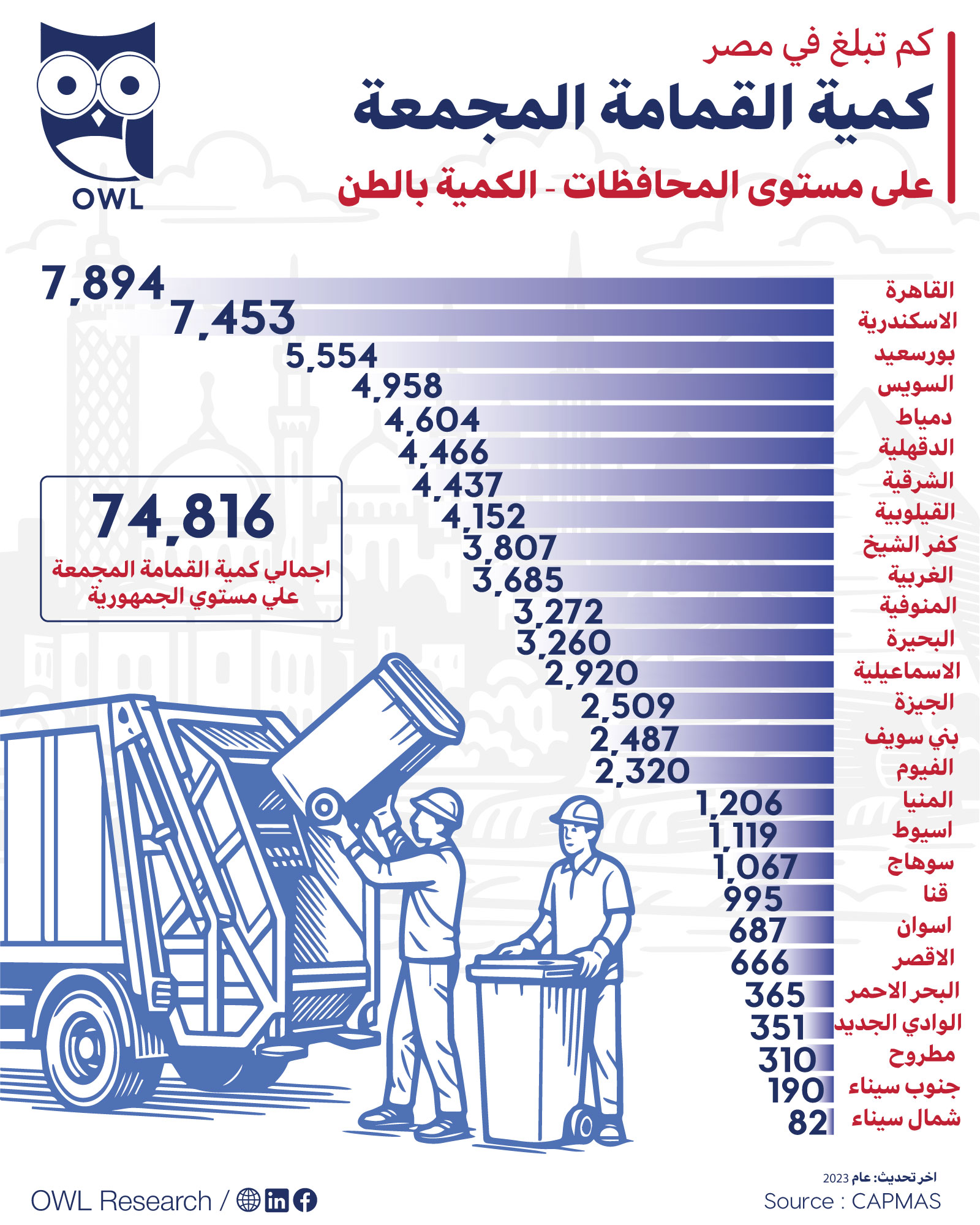
Waste management is a critical issue for Egypt, with rising urban populations and industrial activity increasing the pressure on collection and recycling systems. According to the Central Agency for Public Mobilization and Statistics (CAPMAS), the total quantity of garbage collected across Egypt in 2023 reached 74.8 million tons. This highlights both the scale of the challenge and the opportunities for improving environmental sustainability.
Garbage Collected in Egypt by Governorates (Tons, 2023)
- Cairo: 7.894 million tons
- Alexandria: 7.453 million tons
- Port Said: 5.554 million tons
- Suez: 4.958 million tons
- Damietta: 4.604 million tons
- Dakahlia: 4.466 million tons
- Sharqia: 4.437 million tons
- Gharbia: 4.152 million tons
- Qalyubia: 3.807 million tons
- Kafr El Sheikh: 3.685 million tons
- Menoufia: 3.272 million tons
- Beheira: 3.260 million tons
- Ismailia: 2.920 million tons
- Giza: 2.509 million tons
- Beni Suef: 2.487 million tons
- Fayoum: 2.320 million tons
- Minya: 1.206 million tons
- Assiut: 1.119 million tons
- Sohag: 1.067 million tons
- Qena: 995 thousand tons
- Aswan: 687 thousand tons
- Luxor: 666 thousand tons
- Red Sea: 365 thousand tons
- New Valley: 351 thousand tons
- Matrouh: 310 thousand tons
- South Sinai: 190 thousand tons
- North Sinai: 821 thousand tons
Total nationwide garbage collected: 74.816 million tons
Key Insights
1. Cairo and Alexandria Dominate Waste Generation
Together, Cairo (7.9M tons) and Alexandria (7.4M tons) produce over 20% of Egypt’s total garbage, reflecting their large populations and dense urban activity.
2. Industrial and Port Cities Generate High Waste
Governorates like Port Said (5.5M tons) and Suez (4.9M tons) also contribute heavily due to industrial and maritime activity.
3. Upper Egypt Produces Less Waste
Governorates in Upper Egypt such as Luxor, Aswan, Qena, and Sohag generate significantly lower amounts of waste, partly due to smaller populations and less industrialization.
4. Environmental and Policy Implications
The scale of waste highlights the urgent need for:
- Expanded recycling infrastructure
- Public awareness campaigns on waste reduction
- Investment in waste-to-energy projects
- Governorate-level policies tailored to local needs
Conclusion
With 74.8 million tons of garbage collected in 2023, Egypt faces a pressing waste management challenge. Cairo, Alexandria, and major industrial hubs account for the bulk of waste, while rural and southern governorates generate less. Addressing this challenge requires sustainable policies, investment in recycling, and community engagement, ensuring a cleaner and more resilient future for Egypt.