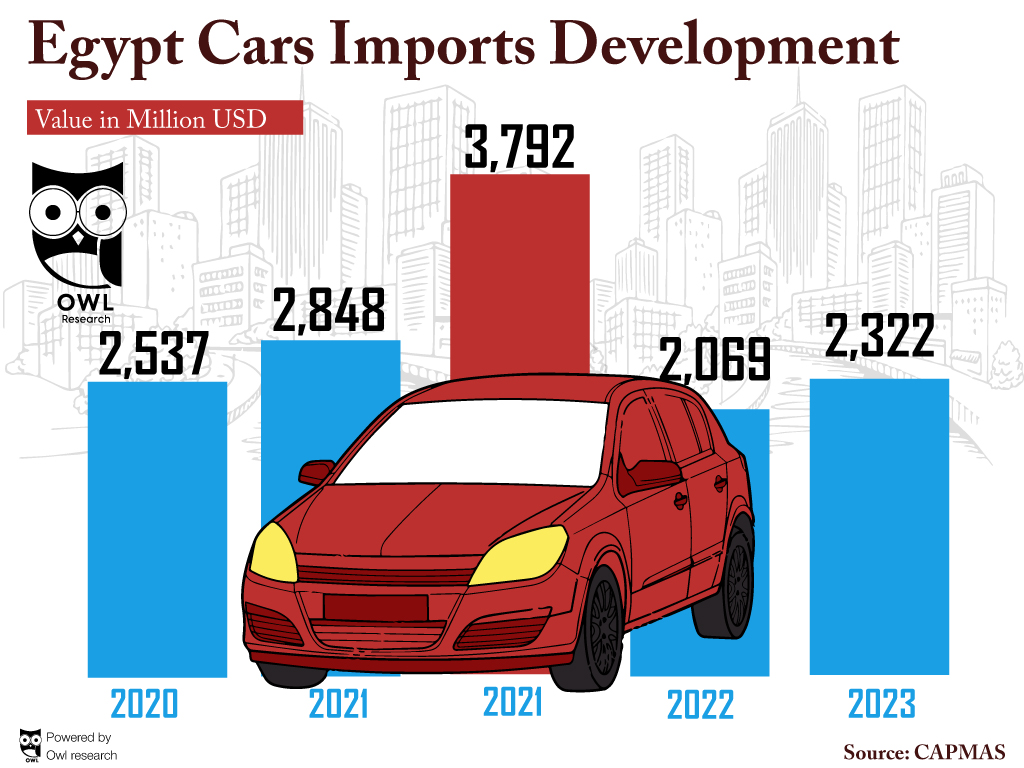
Egypt’s automotive industry has been undergoing a significant transformation, with the government introducing various initiatives to stimulate growth and meet the evolving demands of the domestic market. One such initiative, the tax-free car import program for Egyptian expatriates, has garnered considerable attention, driving a surge in remittances and a steady increase in the number of vehicles being brought into the country.
The Tax-Free Car Import Initiative for Egyptian Expats
In a move to incentivize Egyptians living abroad to invest in the local economy, the Egyptian government launched a tax-free car import initiative. This program allows eligible expatriates to import vehicles without paying the standard customs duties, provided they meet the specified criteria and deadlines.
Deadline and Application Process
The deadline for the tax-free car import initiative is set for April 29, 2024, as announced by the Minister of Finance, Mohamed Maait. Interested individuals must register their applications online and make the required deposit payments by this date. Maait emphasized that this is the final deadline, with no further extensions to be granted.
Surge in Remittances and Car Imports
The minister revealed that the initiative has resulted in a significant influx of remittances from Egyptians living overseas, amounting to a staggering $750 million. This influx of foreign currency has had a positive impact on the country’s economic stability and growth.
Furthermore, the number of imported cars released to Egyptian expats has been steadily increasing, with a total of 27,000 vehicles already distributed to beneficiaries. The minister also disclosed that the number of approved import initiatives has reached 250,000, each valid for a period of 5 years, allowing recipients to select and replace their cars as per their preferences during this timeframe.
Expanded Benefits and Eligibility
The benefits of the tax-free car import initiative extend beyond just the customs duty exemption. Egyptians abroad can now also import vehicles from free zones within the country, provided the payment for the car’s value is made in foreign currency and transferred to the seller’s account.
According to the head of the Egyptian Customs Authority, Al-Shahat Ghattouri, a remarkable 490,000 Egyptians residing abroad have registered electronically to take advantage of this program.
Financial Aspects and Regulations
The financial aspects of the tax-free car import initiative are equally important to understand. The deposit required from beneficiaries represents a reduced customs tax applicable to the imported vehicles. This deposit remains valid throughout the entire duration of the import approval.
Regarding the eligibility criteria, the first owner of the imported vehicle is not limited by the manufacturing year, while subsequent owners must adhere to a three-year limit. Additionally, the customs release time for imported cars should not exceed three years.
Trends and Market Dynamics
Evolving Import Sources
As the tax-free car import initiative gains momentum, the sources of Egypt’s automotive imports have also been undergoing changes. While traditional suppliers like Germany, China, and Turkey continue to play a significant role, new markets have emerged as fast-growing import origins.
For instance, between 2021 and 2022, Kuwait emerged as the fastest-growing import market for cars, with a remarkable increase of $92.7 million. The United States and Thailand also saw substantial growth in their exports of vehicles to Egypt during this period.
Export Destinations and Potential
On the export front, Egypt’s car exports have also been gaining traction, with the United Arab Emirates, Côte d’Ivoire, and Lebanon emerging as the fastest-growing destinations. The country’s export potential in the automotive sector remains significant, particularly in the UAE market, where the export gap stands at $6.7 million.
Conversely, the country’s import potential is also noteworthy, with Germany presenting the highest import gap of $249 million, indicating substantial room for growth in this segment.
Implications and Future Outlook
The tax-free car import initiative has had a multifaceted impact on Egypt’s automotive landscape. The surge in remittances and the influx of imported vehicles have contributed to the country’s economic development, while also catering to the evolving preferences of Egyptian consumers.
As the program continues to gain momentum, it is expected to attract further investments, foster technological advancements, and drive the expansion of the domestic automotive manufacturing sector. Additionally, the increased availability of a diverse range of vehicles may lead to enhanced consumer choice and improved market competition.
Looking ahead, the successful implementation of the tax-free car import initiative, coupled with strategic policy decisions and infrastructure investments, could position Egypt as a regional hub for the automotive industry, further strengthening its economic resilience and global competitiveness.
Conclusion
Egypt’s automotive sector has undergone a transformative phase, with the tax-free car import initiative for expatriates playing a pivotal role. The program’s success in attracting remittances, increasing car imports, and expanding eligibility criteria has had a significant impact on the country’s economic landscape.
As Egypt continues to navigate the evolving dynamics of the automotive industry, the government’s commitment to fostering growth and meeting the changing demands of consumers will be crucial in shaping the future of this vital sector. With the right strategies and policies in place, Egypt’s automotive potential can be fully unlocked, driving economic prosperity and positioning the country as a regional leader in the global automotive landscape.