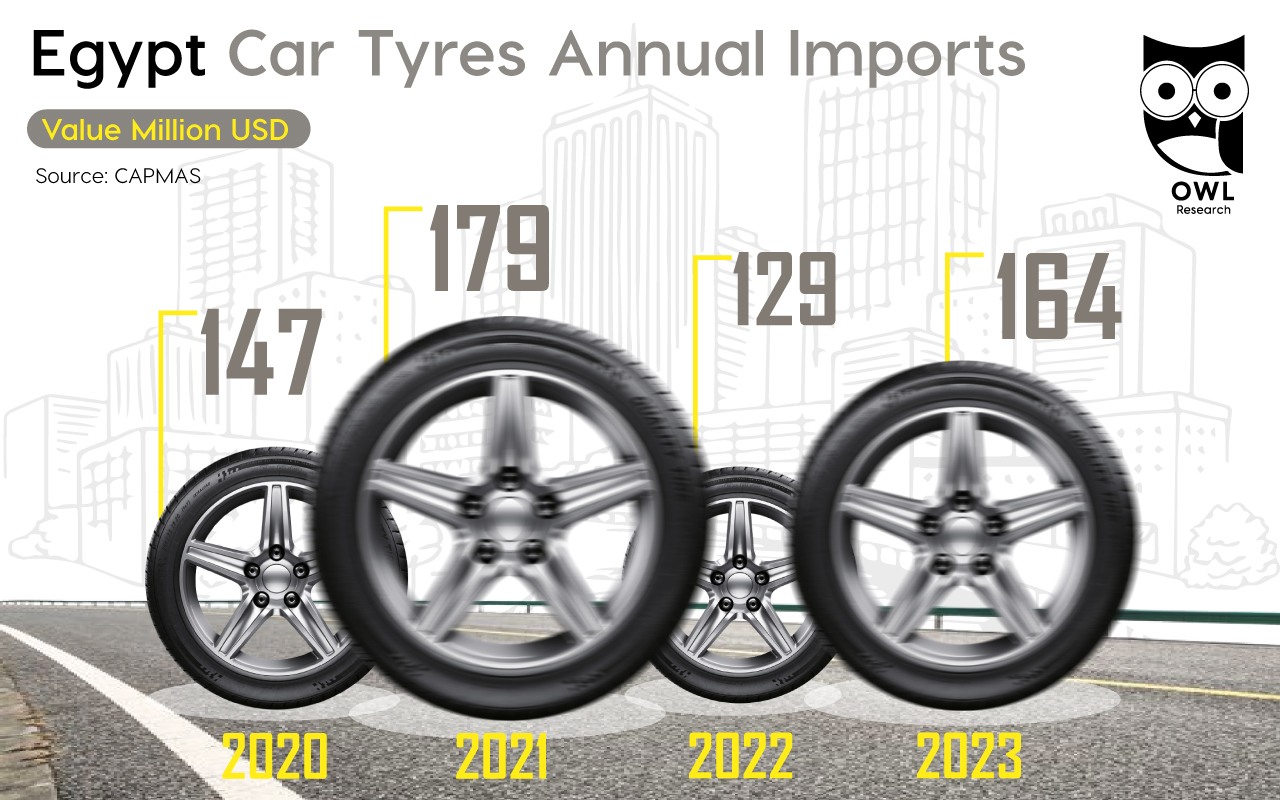
Egypt’s automotive industry relies significantly on imported car tyres to meet domestic demand. According to CAPMAS, the value of Egypt’s tyre imports between 2020 and 2023 highlights fluctuations that reflect both global trade conditions and local market dynamics.
Car Tyres Imports in Egypt (2020–2023)
- 2020: $147 million
- 2021: $179 million
- 2022: $129 million
- 2023: $164 million
Analysis of the Trends
2020 – Stability Amid Global Challenges
In 2020, Egypt imported tyres worth $147 million, despite the impact of the COVID-19 pandemic on global trade. Demand remained steady, supported by the need to maintain private vehicles and commercial fleets.
2021 – Peak Growth in Imports
Tyre imports surged to $179 million, the highest level in four years. This increase was largely due to the recovery in global trade, higher demand for vehicles, and currency stability that boosted purchasing power.
2022 – Sharp Decline
The value dropped to $129 million, reflecting challenges such as global supply chain disruptions, inflationary pressures, and import restrictions in Egypt. These factors reduced the flow of imported tyres into the market.
2023 – Recovery Signs
By 2023, imports climbed back up to $164 million, indicating gradual recovery in demand. However, the figure still remained below 2021 levels, showing that the market has not yet fully stabilized.
Factors Influencing Egypt’s Tyre Import Market
- Currency Fluctuations – The devaluation of the Egyptian pound affected the cost of importing tyres.
- Global Supply Chains – Shipping delays and rising freight costs influenced tyre availability and prices.
- Domestic Market Demand – Growth in Egypt’s vehicle fleet continued to support tyre imports, especially for commercial transport.
- Government Policies – Import restrictions and policies to encourage local production also shaped the market trends.
Future Outlook
With rising demand for vehicles and ongoing infrastructure expansion, Egypt’s tyre imports are expected to remain significant. However, greater focus may be placed on local tyre manufacturing to reduce reliance on imports and stabilize prices.
✅ Conclusion: Egypt’s car tyre import market demonstrates how global challenges and local policies directly influence trade flows. While 2021 was a peak year, 2022 saw a decline, followed by a partial recovery in 2023. Future growth will likely depend on balancing imports with local production efforts.