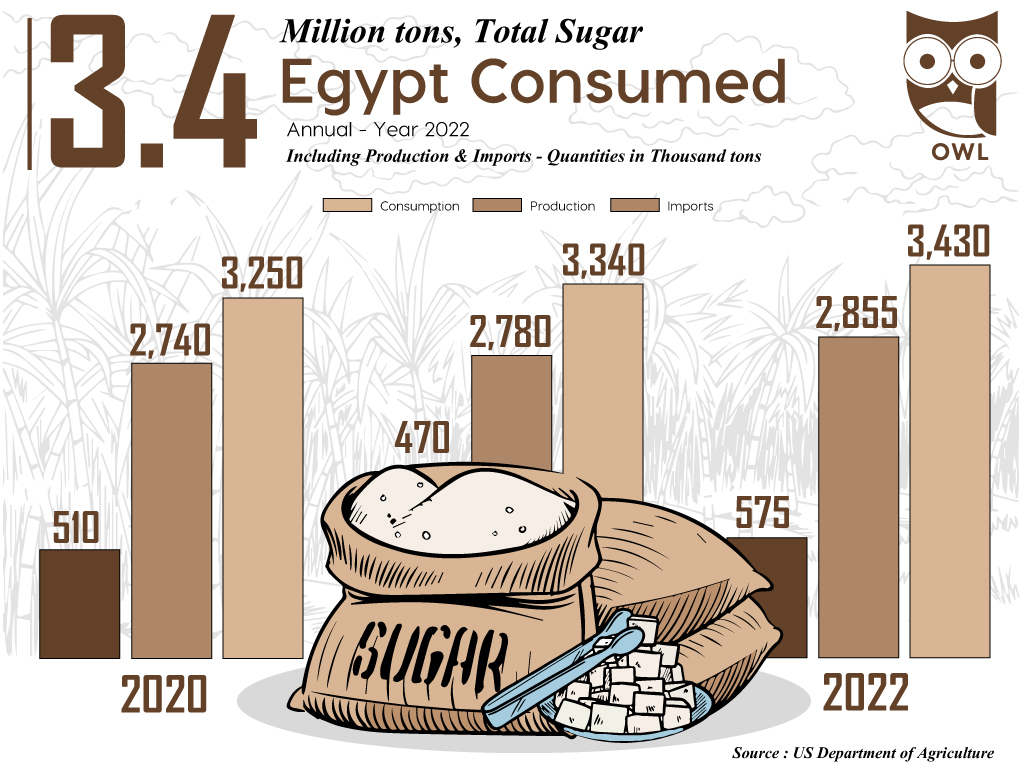
Egypt’s sugar market continues to play a central role in the country’s food and agriculture sector. According to the US Department of Agriculture, Egypt consumed 3.4 million tons of sugar in 2022, combining both local production and imports. This trend highlights not only the rising domestic demand but also the reliance on imports to fill the gap.
Sugar Consumption and Production in Egypt
In 2022, Egypt’s total sugar consumption reached 3.4 million tons, with 2.85 million tons produced locally. Despite strong domestic production, the output fell short of meeting total consumption needs. This created a gap that had to be covered by imports, demonstrating the country’s partial dependence on foreign supply.
Sugar Imports: Covering the Supply Gap
Egypt imported 575,000 tons of sugar in 2022 to meet its domestic demand. Compared to 510,000 tons in 2020 and 470,000 tons in 2021, imports rose, showing how consumption growth outpaced production improvements. This reliance on imports remains a challenge for food security and trade balance, particularly given global market fluctuations.
Market Challenges and Opportunities
Several factors affect Egypt’s sugar industry:
- Population growth: Rising population continues to increase sugar demand.
- Agricultural constraints: Limited arable land and water scarcity restrict expansion of sugarcane and sugar beet cultivation.
- Price fluctuations: Global sugar prices directly impact Egypt’s import bill.
- Opportunities: Increasing investment in sugar beet processing and modern agricultural techniques could reduce import reliance in the future.
Conclusion
Egypt’s sugar sector in 2022 reflects both strengths and vulnerabilities. With 3.4 million tons consumed, the country remains one of the significant sugar markets in the MENA region. However, rising imports highlight the need for strategic policies to boost local production and ensure food security. Strengthening the sugar value chain—from farming to refining—will be essential to balance growing demand with sustainable domestic supply.