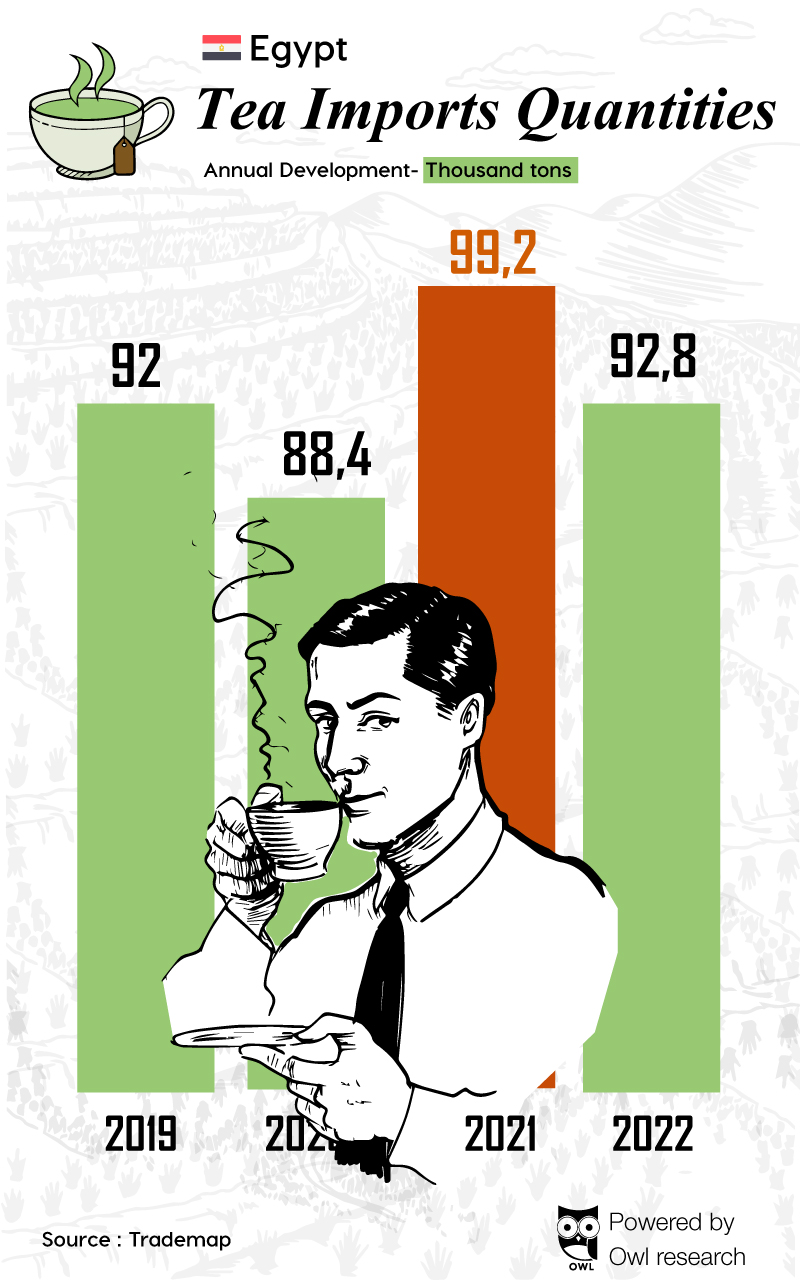
Tea is a staple beverage in Egyptian households, making the country one of the largest tea importers globally. According to Trade Map data, Egypt’s tea imports fluctuated between 2019 and 2022, reflecting both rising demand and changing trade dynamics.
📊 Egypt’s Tea Import Quantities (2019–2022)
- 2019: Egypt imported 92 thousand tons of tea.
- 2020: Imports declined slightly to 88.4 thousand tons, possibly due to global trade disruptions and currency pressures.
- 2021: Imports surged to 99.2 thousand tons, marking the highest level in this period.
- 2022: Tea imports stabilized at 92.8 thousand tons, returning closer to the 2019 level.
This pattern shows that while tea remains an essential commodity in Egypt, external factors such as global supply chains, pricing, and foreign exchange availability strongly affect annual import volumes.
☕ Key Factors Driving Tea Imports in Egypt
- Cultural Importance of Tea
Tea is deeply ingrained in Egyptian daily life, consumed across all income levels and social classes. This cultural factor ensures steady baseline demand regardless of price fluctuations. - Global Supply & Pricing
The spike in 2021 imports coincided with increased global tea production and favorable pricing, making imports more accessible. - Economic & Currency Pressures
Egypt’s dependency on imports exposes tea pricing to currency devaluation and rising international shipping costs, affecting affordability and total import volumes. - Population Growth
With a population exceeding 100 million, Egypt’s growing consumer base continues to drive strong demand for essential goods, including tea.
🌍 Egypt in the Global Tea Market
Egypt is a major tea importer, with the majority of supplies coming from leading producers such as Kenya, India, and Sri Lanka. The country’s reliance on imports makes it sensitive to global tea price fluctuations, but also reinforces its role as a key regional tea consumer market.
📈 Future Outlook
- Steady Demand: Tea imports will remain strong due to cultural consumption patterns.
- Price Sensitivity: Any changes in the exchange rate or global supply disruptions will directly impact import levels.
- Local Opportunities: Encouraging domestic tea cultivation or developing regional trade partnerships could help Egypt reduce reliance on imports.
✅ Conclusion: Egypt’s tea imports show resilience despite economic and global challenges, with demand firmly rooted in cultural habits. While imports peaked in 2021, the long-term trend suggests stable consumption and continued reliance on international suppliers, positioning Egypt as a vital market in the global tea trade.