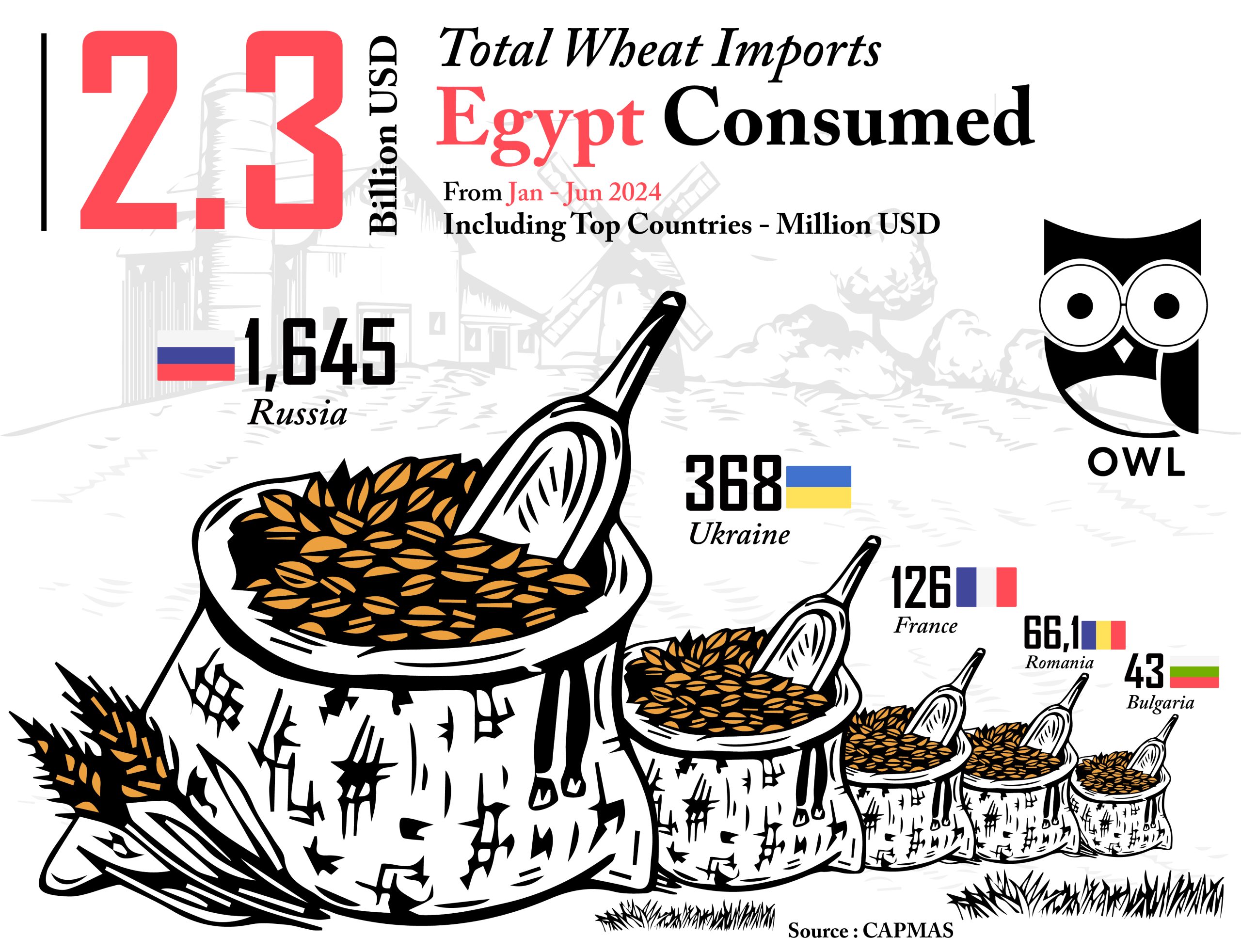
Egypt, the world’s largest wheat importer, continued to rely heavily on foreign supplies in 2024. According to CAPMAS data, Egypt imported wheat worth $2.3 billion between January and June 2024, highlighting the country’s strong dependence on global markets to meet its domestic consumption needs.
Russia Dominates Egypt’s Wheat Supply
Russia remains Egypt’s largest wheat supplier, accounting for $1.64 billion of total imports in the first half of 2024. This represents more than 70% of total wheat imports, reaffirming Egypt’s strategic reliance on Russian grain despite global market uncertainties and fluctuating prices.
Ukraine and Other Key Suppliers
- Ukraine was the second-largest supplier, providing $368 million worth of wheat, reflecting its continued role in Egypt’s food security despite ongoing geopolitical tensions.
- France supplied $126 million, while Romania and Bulgaria contributed $66 million and $43 million respectively.
- Together, these European suppliers diversify Egypt’s wheat sources, though Russia continues to dominate the trade.
Why Egypt Relies on Wheat Imports
Egypt’s wheat imports are driven by several key factors:
- High domestic demand: Bread remains the staple food for most Egyptians, with government-subsidized bread being a cornerstone of social stability.
- Production limitations: Limited arable land and water scarcity restrict the expansion of domestic wheat production.
- Global price dynamics: Fluctuations in international wheat prices directly impact Egypt’s food import bill.
Future Outlook for Egypt’s Wheat Security
With wheat imports crossing $2.3 billion in just six months, Egypt faces challenges in balancing food security and fiscal pressures. The government continues to explore strategies such as:
- Expanding local wheat cultivation projects.
- Building stronger trade agreements with multiple countries to reduce reliance on a single supplier.
- Enhancing storage capacity to manage supply shocks.
Conclusion
Egypt’s wheat imports in 2024 underscore the nation’s strategic dependence on Russia and Ukraine, while also highlighting the importance of diversifying sources. As wheat remains central to Egyptian diets and social stability, ensuring a steady and affordable supply will remain a top government priority.