The Egyptian economy is highly sensitive to fluctuations in both the US dollar exchange rate and global energy prices. Given Egypt’s reliance on imports, foreign debt, and energy costs, any increase in the value of the dollar or oil prices directly affects inflation, debt servicing, and the state budget.
1. Egypt’s Debt and Dollar Exposure
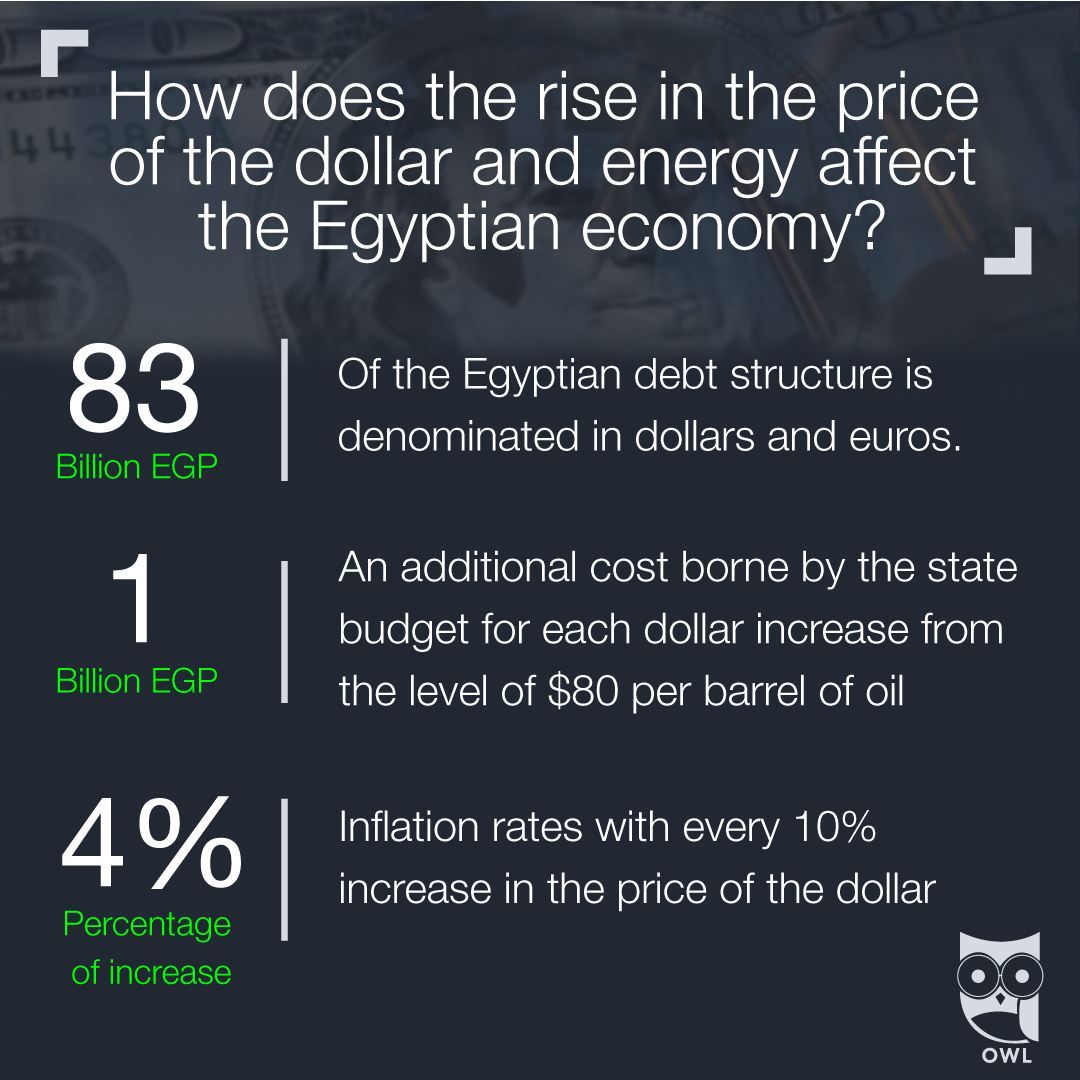
- Around 83 billion EGP of Egypt’s debt is denominated in dollars and euros.
- This means that every depreciation of the Egyptian pound or appreciation of the US dollar increases the debt burden in local currency terms.
- As a result, Egypt faces higher repayment obligations, putting additional strain on the government’s finances.
2. Rising Oil Prices and Budget Pressure
- For every $1 increase in the price of oil above the benchmark of $80 per barrel, Egypt’s state budget incurs an additional cost of 1 billion EGP.
- This is due to the country’s reliance on imported petroleum products and the heavy state subsidy system.
- Higher oil prices therefore reduce the government’s fiscal space, limiting funds available for social services and investment.
3. Impact on Inflation and Daily Life
- A 10% increase in the price of the dollar leads to around a 4% rise in inflation rates in Egypt.
- This inflationary pressure affects the cost of food, transport, electricity, and other essentials, making life more expensive for ordinary Egyptians.
- The weaker pound also reduces purchasing power, hitting low and middle-income households the hardest.
4. Broader Economic Implications
- Investment climate: Rising debt costs and inflation can deter foreign investors and put pressure on the local business environment.
- Trade balance: Since Egypt imports a large portion of its raw materials, machinery, and food products, dollar appreciation worsens the trade deficit.
- Currency reserves: The Central Bank of Egypt must use more of its reserves to stabilize the pound, creating long-term financial vulnerabilities.
Final Thoughts
The rise in the US dollar exchange rate and global energy prices presents serious challenges for Egypt’s economy. From rising debt burdens and budgetary pressures to higher inflation, the effects are felt across all levels of society. For Egypt, strategies such as boosting exports, reducing dependency on imports, and expanding renewable energy production are critical to mitigate the risks of external shocks.