Introduction
Tea is not just a drink in the Arab world—it is a daily ritual, a social connector, and a cultural symbol.
From Cairo’s streets to Moroccan gatherings, tea plays a central role in everyday life. But beyond culture, tea consumption also reveals deep behavioral and economic insights.
At OWL Research, we look at tea not as a product—but as a window into people’s lives.
The Leaders: Who Consumes the Most Tea?
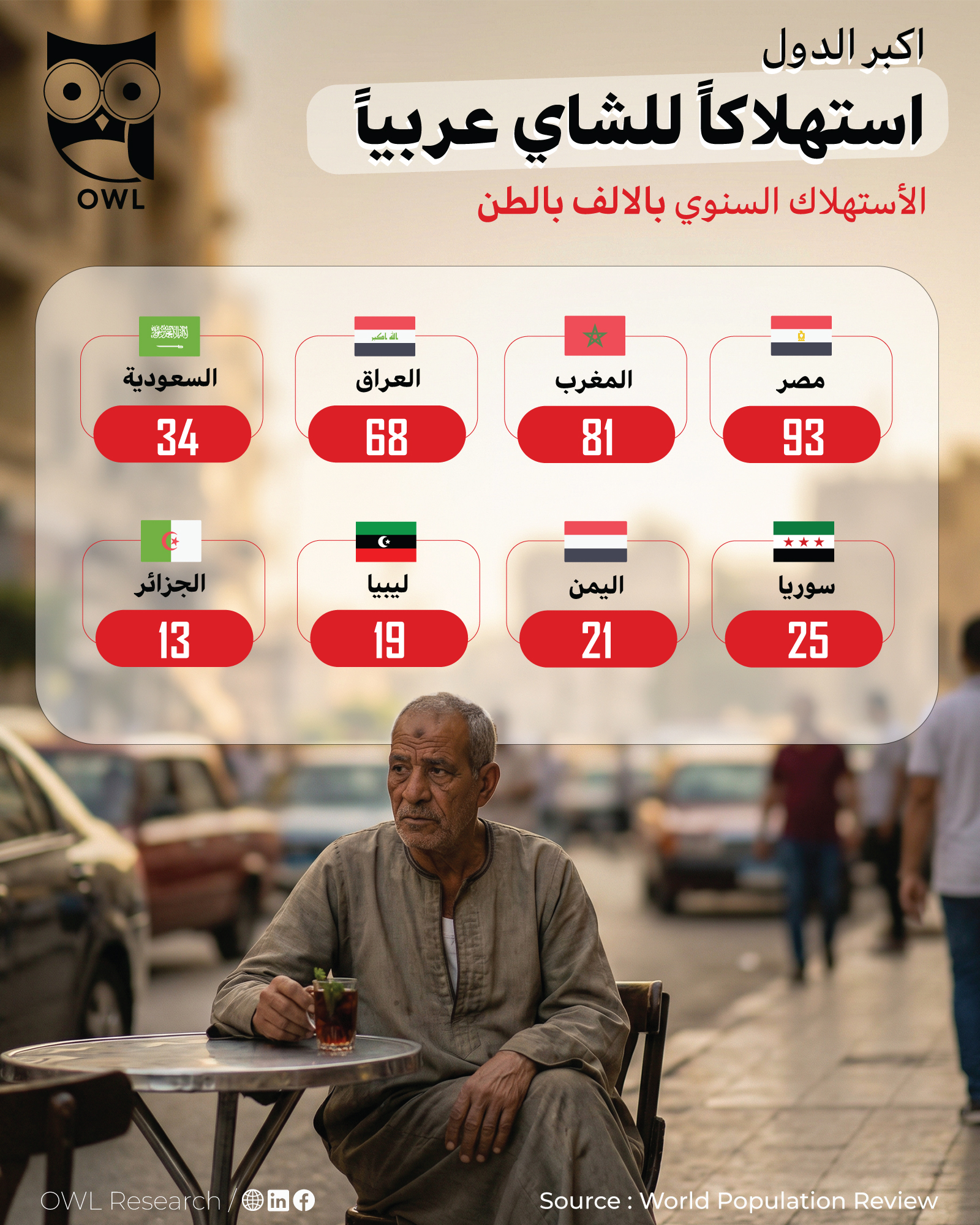
Annual tea consumption across selected Arab countries (in thousand tons) shows clear leaders:
- Egypt: 93
- Morocco: 81
- Iraq: 68
- Saudi Arabia: 34
- Syria: 25
- Yemen: 21
- Libya: 19
- Algeria: 13
Key Insight:
Egypt ranks as the largest tea consumer in the Arab world, highlighting the drink’s deep integration into daily routines.
Why Tea? Understanding the Behavior
1. Daily Habit, Not Occasional Consumption
Tea is consumed multiple times a day—not just once.
👉 Morning, after meals, during work, and in social settings.
2. Affordable Comfort
In economies facing pressure, tea offers:
- Low cost
- High frequency consumption
- Emotional satisfaction
👉 It becomes a “small luxury” people don’t give up.
3. Social Currency
Tea plays a key role in:
- Hosting guests
- Family bonding
- Street culture (cafés, kiosks)
👉 Refusing tea is often socially uncommon.
4. Cultural Identity (Especially in Morocco & Egypt)
- In Morocco, tea is ritualized (mint tea ceremonies)
- In Egypt, it’s deeply embedded in everyday informal life
The Deeper Insight: Resilience Consumption
Tea represents what we call:
👉 “Resilient Consumption”
Even under economic pressure:
- People cut spending on big items
- But maintain small daily habits like tea
This makes tea:
- A stable demand category
- Less sensitive to economic shocks compared to other goods
Implications for Brands & Businesses
For FMCG Brands:
- Focus on frequency-driven consumption
- Offer small packs & affordable pricing
- Innovate within tradition (flavors, formats)
For Marketers:
- Position tea as:
- Comfort
- Routine
- Social connection
NOT as a luxury product
For Investors:
- Tea is a high-volume, low-risk category
- Strong in price-sensitive markets
Egypt Case Spotlight: Why #1?
Egypt’s leadership in tea consumption is driven by:
- Large population
- Strong café/street culture
- Habitual daily consumption
- Accessibility across all income levels
👉 Tea is not segmented—it is universal.
Conclusion
Tea in the Arab world is more than consumption—it is behavior, culture, and resilience combined.
At OWL Research, we believe:
👉 The strongest insights don’t come from what people buy,
but from what they never stop buying—even in tough times.