Introduction
Over the past decade, Egypt has witnessed a significant increase in minimum wages, reflecting ongoing economic reforms and inflationary pressures. While these increases signal progress on paper, the real question remains:
👉 Are wages truly keeping up with the cost of living?
At OWL Research, we go beyond numbers to understand what they actually mean for people.
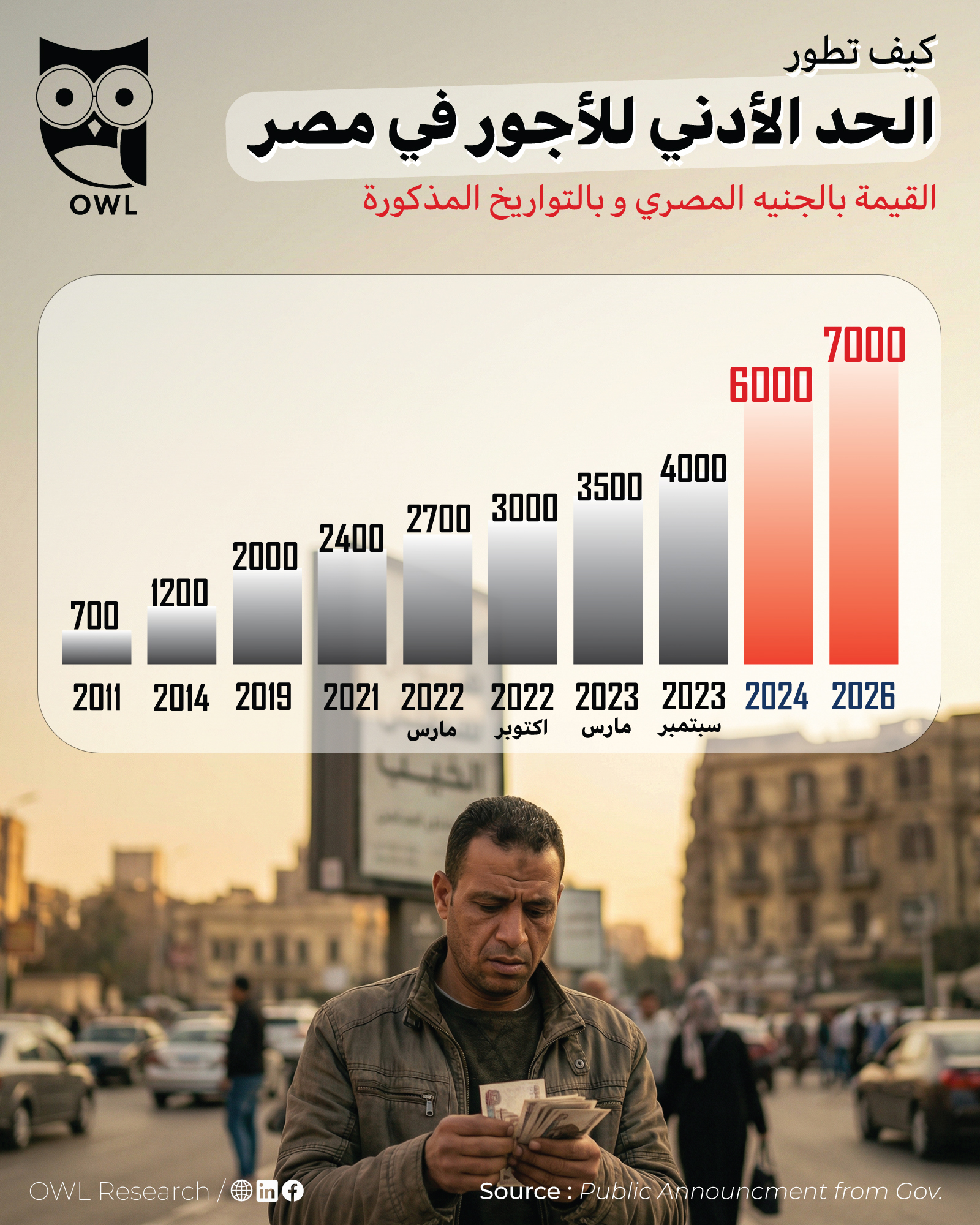
A Decade of Growth: The Numbers Tell a Story
Egypt’s minimum wage has increased nearly 10x over the past 15 years:
- 2011: 700 EGP
- 2014: 1,200 EGP
- 2019: 2,000 EGP
- 2021: 2,400 EGP
- 2022: 2,700 → 3,000 EGP
- 2023: 3,500 → 4,000 EGP
- 2024: 6,000 EGP
- 2026 (planned): 7,000 EGP
Key Insight:
The pace of increase has accelerated significantly post-2022, indicating stronger government intervention in response to economic pressures.
The Real Question: Nominal vs. Real Value
While wages are increasing in nominal terms, their real purchasing power tells a different story.
What’s happening?
- Inflation has surged, particularly after currency devaluations
- Cost of essentials (food, housing, transport) has risen sharply
- Households feel more financial pressure despite higher income levels
👉 In simple terms:
People are earning more… but affording less.
Behavioral Impact: How People Are Adapting
From a consumer insights perspective, rising wages + rising costs are reshaping behavior:
1. Trading Down
Consumers shift toward cheaper brands and alternatives.
2. Prioritization of Essentials
Spending is increasingly focused on:
- Food
- Rent
- Transportation
3. Reduced Discretionary Spending
Categories like entertainment, fashion, and dining out are often cut first.
4. Income Diversification
More individuals are seeking:
- Side hustles
- Freelance work
- Informal income sources
The Hidden Insight: Wage Growth ≠ Financial Comfort
There is a growing disconnect between:
- Policy indicators (wage increases)
- Consumer reality (financial stress)
This gap creates a critical insight:
👉 Economic improvement at a macro level does not always translate into perceived well-being at a micro level.
What This Means for Brands & Businesses
Understanding this shift is crucial for market success:
For Brands:
- Focus on value-for-money positioning
- Offer smaller packs / affordable options
- Communicate practical benefits, not luxury
For Marketers:
- Tap into the emotional reality of financial pressure
- Avoid messaging that feels disconnected from real life
For Businesses:
- Pricing strategies must reflect consumer sensitivity
- Innovation should focus on efficiency and accessibility
Conclusion
Egypt’s minimum wage growth reflects a dynamic and responsive economic policy environment. However, the lived experience of consumers tells a more complex story.
At OWL Research, we believe:
👉 The true measure of economic progress is not just in rising numbers,
but in how people actually live, spend, and feel.