The Gulf region hosts one of the largest Indian diaspora communities in the world. Across the GCC countries, Indian nationals play a crucial role in supporting economic growth, infrastructure development, and business expansion. According to recent estimates, the total Indian population in the Gulf exceeds 9.1 million people, making it the largest expatriate community in the region.
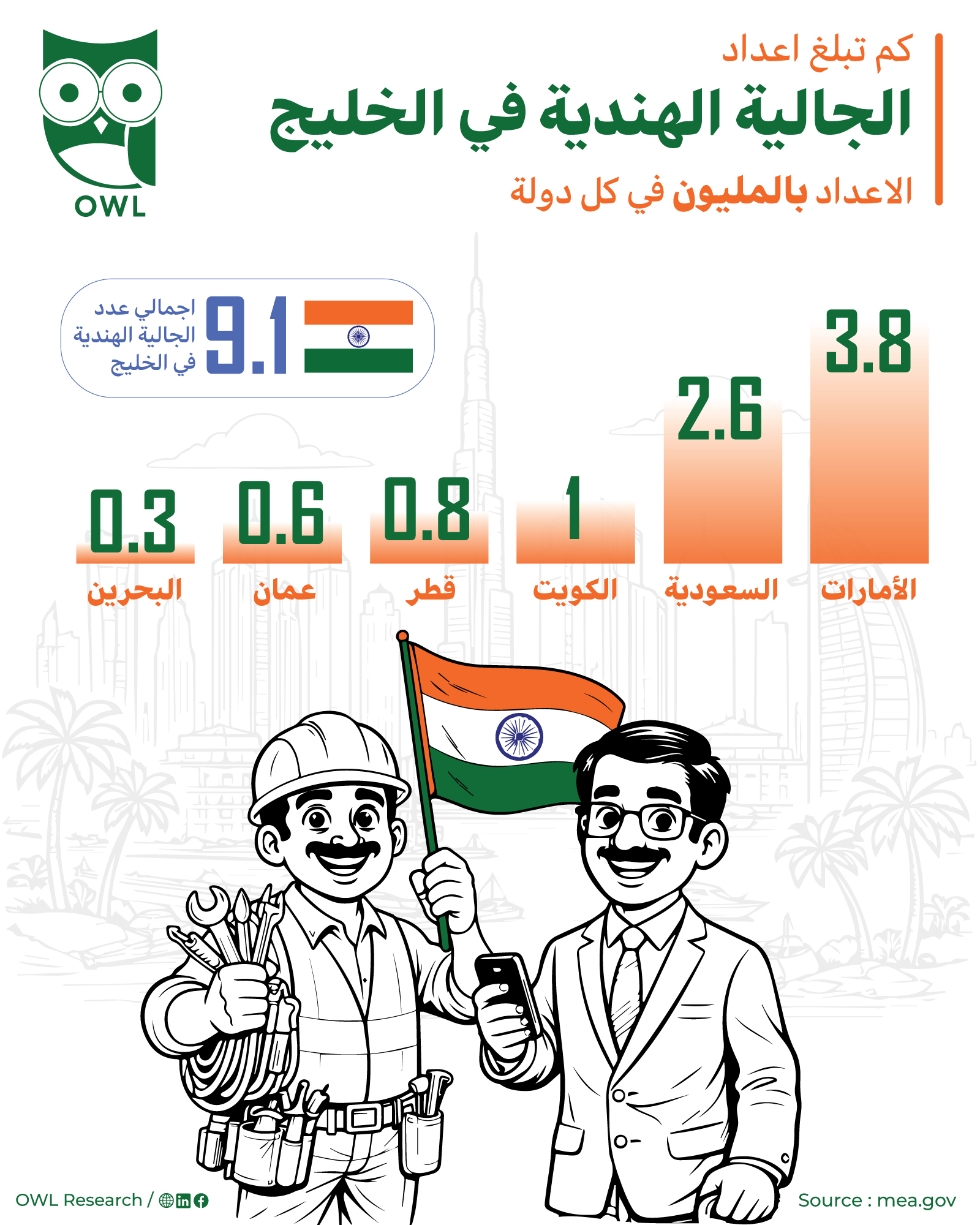
Distribution of the Indian Population Across GCC Countries
The presence of Indian nationals varies across Gulf countries, reflecting differences in labor demand, economic structures, and migration policies.
- United Arab Emirates: 3.8 million
- Saudi Arabia: 2.6 million
- Kuwait: 1 million
- Qatar: 0.8 million
- Oman: 0.6 million
- Bahrain: 0.3 million
The UAE and Saudi Arabia together account for nearly 70% of the Indian population in the GCC, highlighting their role as major destinations for migrant workers and professionals.
A Diverse Workforce
The Indian community in the Gulf is highly diverse, spanning multiple sectors and skill levels. Indian nationals contribute across industries such as:
- Construction and infrastructure
- Engineering and technical services
- Healthcare and education
- Finance and professional services
- Retail and hospitality
- Entrepreneurship and small business ownership
This diversity has made the Indian diaspora an essential pillar of the Gulf’s labor market.
Economic and Social Impact
The presence of millions of Indian workers contributes significantly to both Gulf economies and India itself. In the Gulf, Indian professionals and workers help support large-scale development projects and service industries. Meanwhile, remittances sent back to India represent a major source of income for millions of families.
Beyond economics, Indian communities have also contributed to cultural exchange, education, and the strengthening of diplomatic ties between India and Gulf nations.
Looking Ahead
As Gulf countries continue to diversify their economies and invest in new sectors such as technology, renewable energy, and advanced services, the demand for skilled talent is expected to grow. The Indian workforce is likely to remain a central component of this transformation.
Understanding demographic trends such as the distribution of expatriate populations helps policymakers, businesses, and researchers better anticipate labor market needs and economic shifts in the region.