Global Interest Rates as of February 2024: An Overview
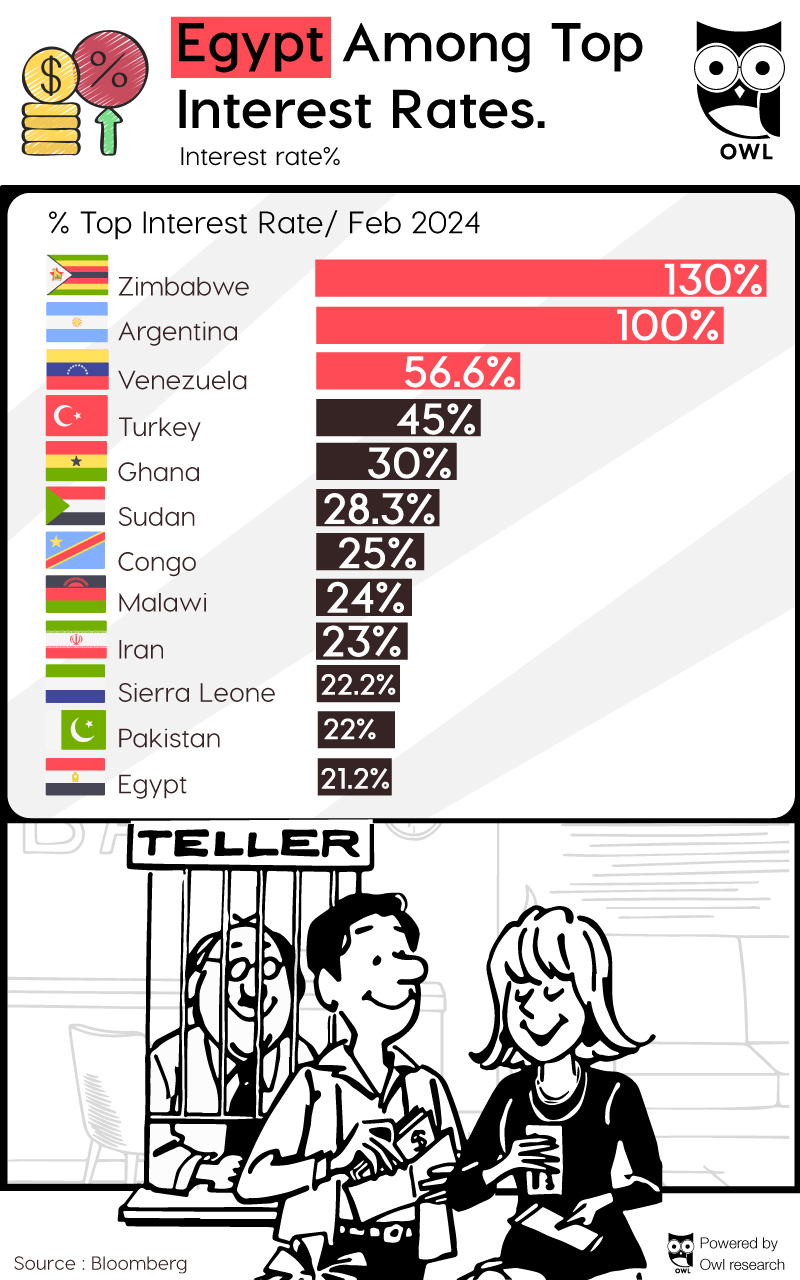
What Are Interest Rates and Why They Matter
Interest rates—especially the policy or benchmark rates set by central banks—play a critical role in the economy. They influence borrowing costs, savings, inflation, investment, currency values, and overall economic growth. When rates are high, borrowing becomes more expensive, which can dampen spending and slow inflation. Conversely, low rates tend to stimulate demand, but also risk overheating the economy.
Egypt’s Interest Rates in February 2024
- In February 2024, the Central Bank of Egypt (CBE) raised its key interest rates by 200 basis points to fight inflation.
- After the hike, the overnight lending rate was about 22.25%, and the overnight deposit rate about 21.25%.
Rates Around the World: Major Economies
Here are policy rates from some of the world’s largest economies around February 2024:
Emerging Markets & Other Regions
- Many emerging market economies had significantly higher interest rates than developed ones, often both to control inflation and to defend currency value.
- Countries reliant on imports (fuel, food) faced extra pressure when global prices rose and local currencies weakened.
- Central banks in these economies balanced between controlling inflation and avoiding too much economic slowdown or capital flight.
Global Trends & Key Takeaways
- Peak Tightening Phase — By early 2024, many central banks had completed a phase of aggressive rate hikes begun in 2022 and were now in a “holding pattern.” They paused to observe if inflation was coming under control.
- Inflation Pressure Easing but Not Gone — In many places, inflation had started to decline, but core inflation (excluding volatile items like food & energy) remained sticky. This means central banks couldn’t yet cut rates widely.
- Currency Volatility Risk — In many emerging markets (including Egypt), high interest rates were also used to defend the currency from depreciation and to maintain foreign exchange stability.
- Debt Servicing and Fiscal Stress — Higher rates make interest payments on government debt more expensive. Countries with large public debt (especially those with external debt) faced tighter budget constraints.
- Borrowing Costs & Investment — For businesses and consumers, high lending rates mean higher loan costs. It slows down investment in big capital projects, real estate, and expansions in emerging economies.
What This Means Going Forward
- If inflation and supply chain pressures continue to ease, we may see gradual rate reductions later in 2024 in some countries. But timing matters: cutting too early risks inflation resurgent.
- Egypt, with its high inflation and heavy import dependence, may keep rates elevated until more stability is assured.
- Emerging markets with strong exports or commodity income will have more buffer; others may struggle with capital outflows.
Conclusion
Interest rates globally as of February 2024 reflect a period of stabilization following aggressive monetary tightening. While advanced economies are mostly in pause mode, emerging markets like Egypt are maintaining high rates to control inflation and protect economic stability. The path forward depends on how inflation trends, currency stability, and global commodity prices evolve.