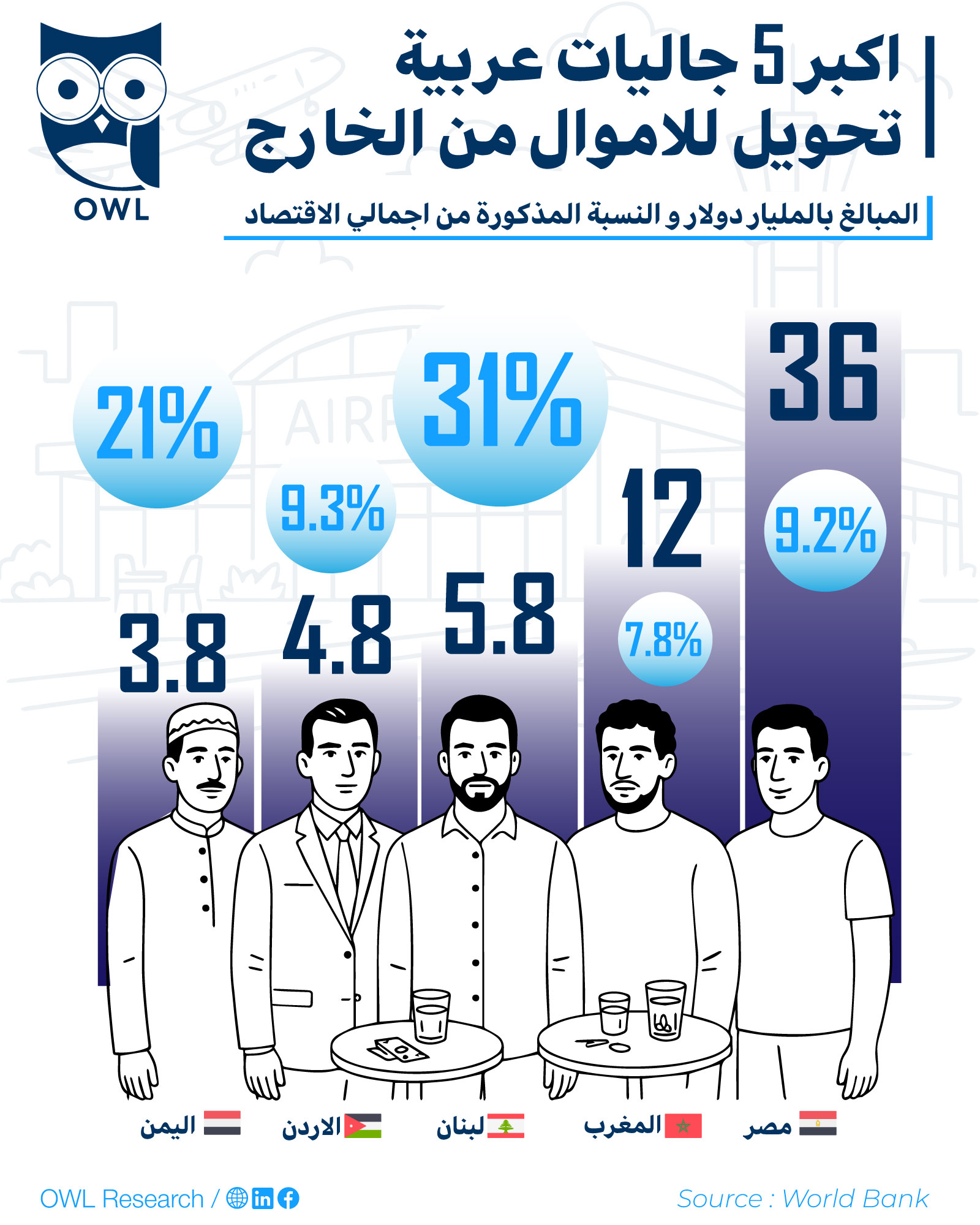
Remittances continue to play a major role in supporting Arab economies, especially during periods of inflation, currency pressure, and limited local job opportunities. According to the latest World Bank data, five Arab countries stand out as the largest recipients of money sent from citizens living abroad.
1. Egypt — $36 Billion (9.2% of GDP)
Egypt tops the list with the largest volume of remittances in the Arab world. Egyptian workers abroad—especially in the Gulf—remain a crucial source of foreign currency for the economy. Even with recent global challenges, remittances continue to provide key support to households and the national balance of payments.
2. Morocco — $12 Billion (7.8% of GDP)
Morocco’s diaspora is one of the most globally widespread. Transfers from Moroccans abroad remain a stable income source, supporting families and contributing significantly to local development and investments.
3. Lebanon — $5.8 Billion (31% of GDP)
Despite its economic crisis, Lebanon receives one of the highest remittance-to-GDP ratios in the world. With limited job opportunities inside the country, Lebanese expatriates play a vital role in sustaining households and keeping the economy afloat.
4. Jordan — $4.8 Billion (9.3% of GDP)
Jordan’s remittances come mainly from workers in the Gulf region. These inflows help support domestic consumption, education, and living expenses for many Jordanian households.
5. Yemen — $3.8 Billion (21% of GDP)
With ongoing conflict and limited economic opportunities, remittances have become a lifeline for millions of Yemenis. The high percentage relative to GDP highlights their essential role in basic household survival.