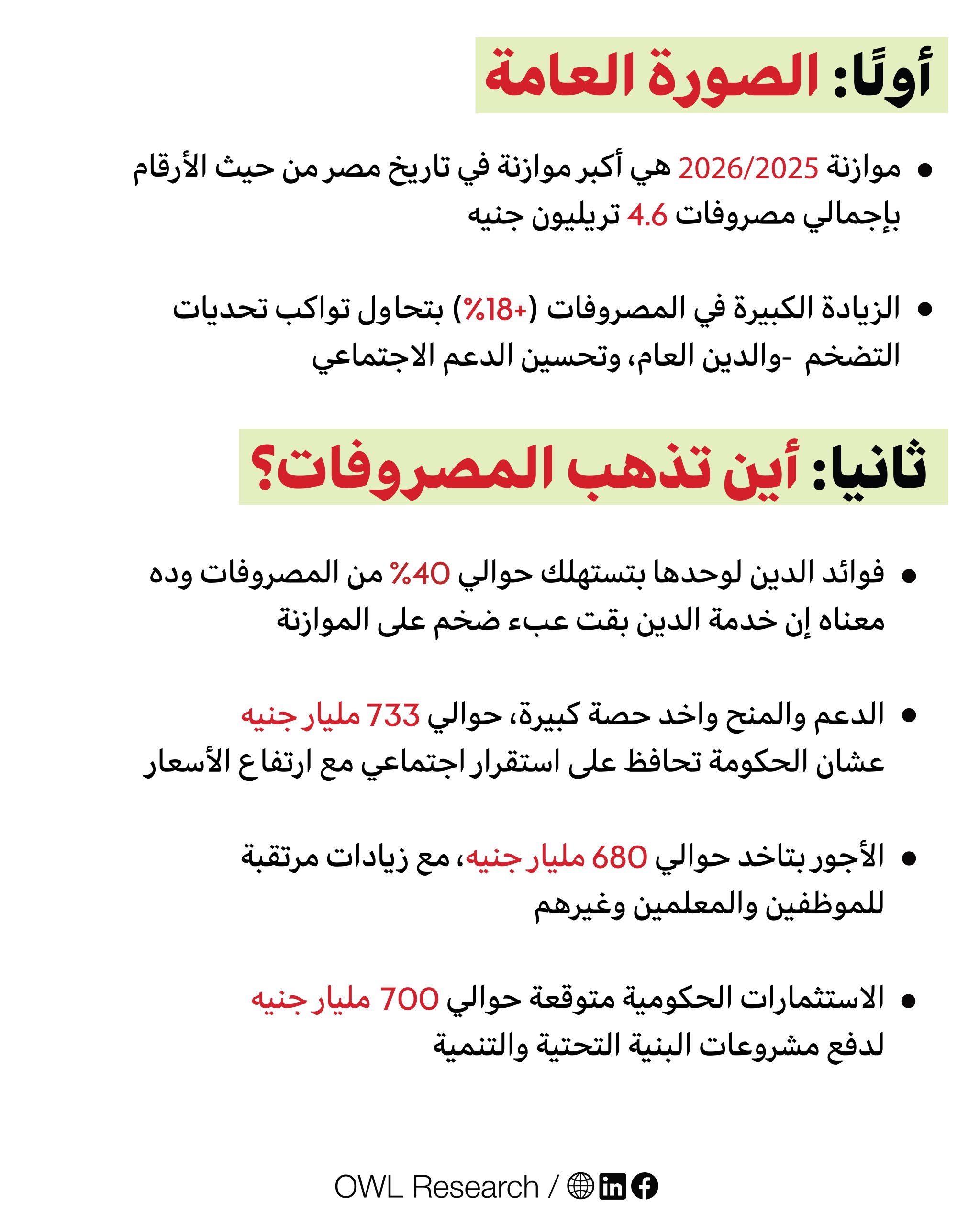
Egypt’s draft budget for 2025/2026 is the largest in the country’s history, with total planned spending reaching 4.6 trillion EGP. The government aims to respond to rising inflation, support vulnerable groups, and continue essential development projects—all while trying to control the growing public debt.
1. Where Does the Money Go?
The budget shows strong pressure from a few major spending items:
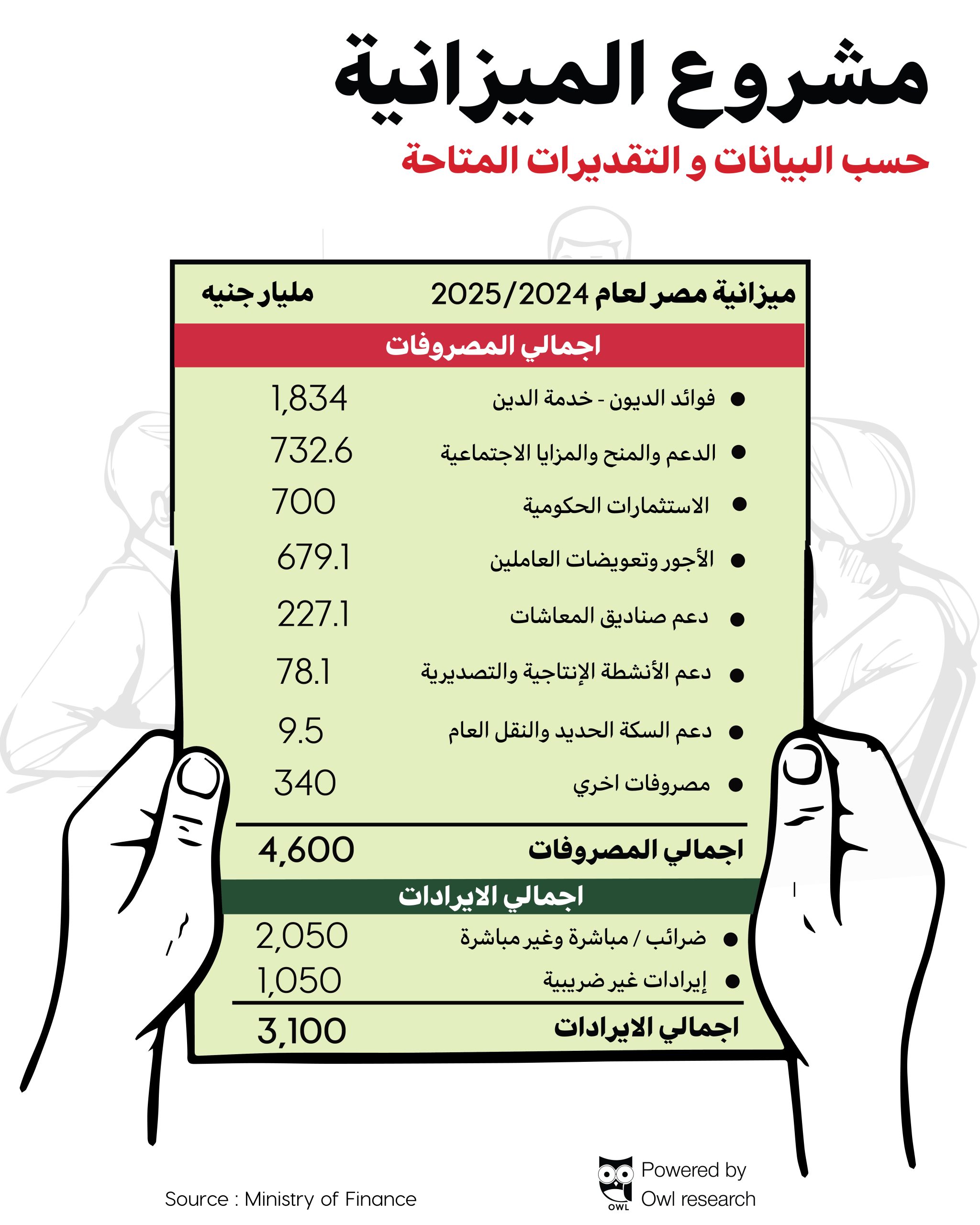
- Debt service (interest payments) alone consumes about 40% of total spending—around 1.83 trillion EGP. This remains the single biggest burden on the budget.
- Subsidies and social benefits take 733 billion EGP, reflecting the government’s effort to maintain stability during the price surge.
- Government wages cost 680 billion EGP, with expected raises for teachers and public employees.
- Public investments are planned at 700 billion EGP, focusing on infrastructure, transportation, and development projects.
2. How Much Does the Government Expect to Collect?
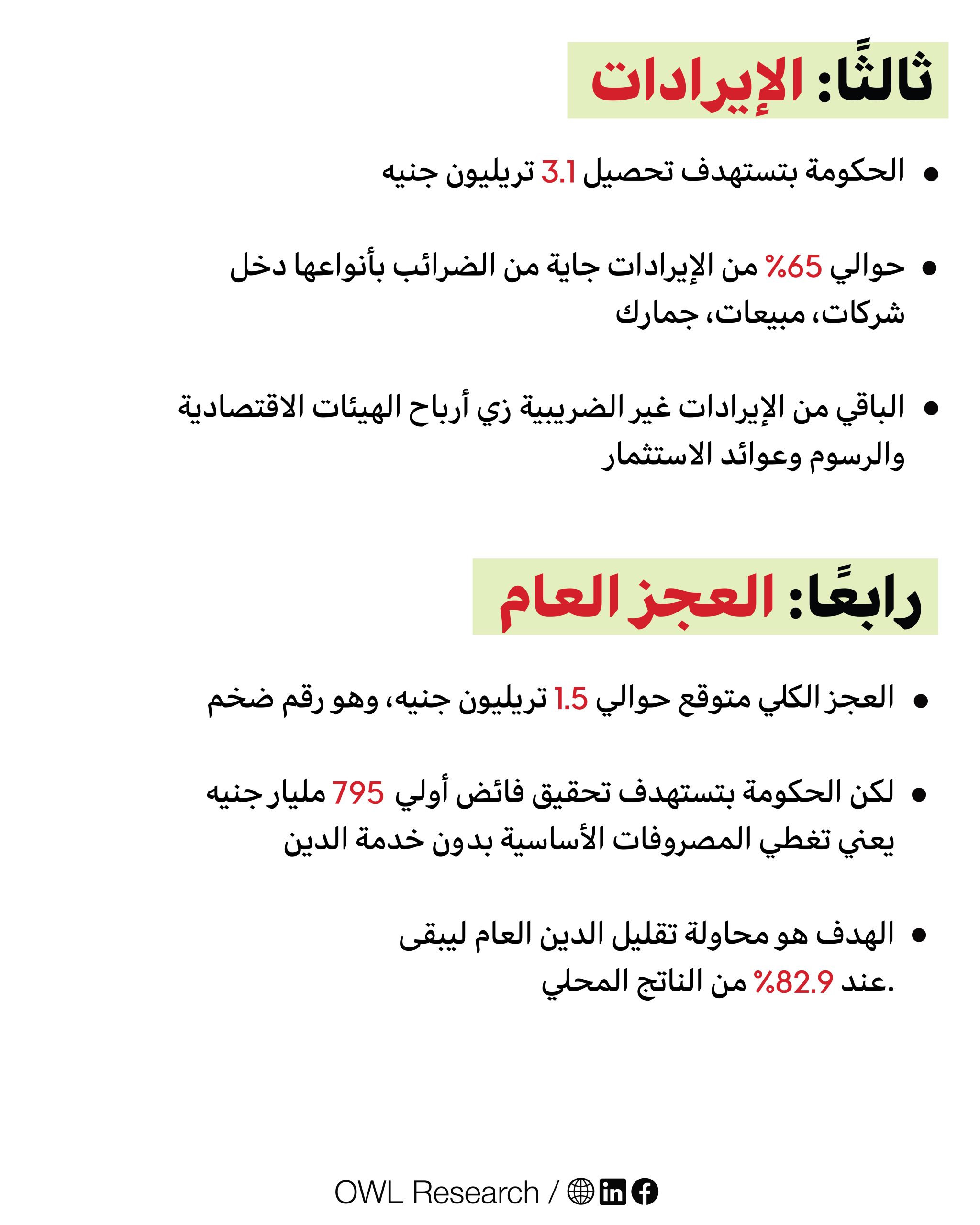
Egypt aims to collect 3.1 trillion EGP in revenues:
- 65% will come from taxes—mainly income taxes, VAT, corporate taxes, and customs duties.
- The rest comes from non-tax revenues, such as state-owned enterprises’ profits, fees, and investment returns.
3. What About the Budget Deficit?
Despite higher revenues, the overall deficit is projected to reach 1.5 trillion EGP.
However, excluding interest payments, the government aims to achieve a primary surplus of 795 billion EGP, meaning basic government operations will generate a surplus before debt costs are added.
4. The Main Goal: Stabilize Public Debt
The government plans to reduce the overall debt-to-GDP ratio toward 82.9%, aiming to restore stability, attract investment, and improve financial sustainability.