Sharp Increases Across Segments and What It Means for Businesses
As part of Egypt’s ongoing energy pricing reform, April 2026 marks a significant shift in electricity tariffs for the commercial sector. Unlike the residential segment—where most brackets remained stable—commercial users are facing substantial price increases across all tiers. This move signals a clear strategic direction: accelerating cost-reflective pricing for businesses while pushing efficiency and operational optimization.
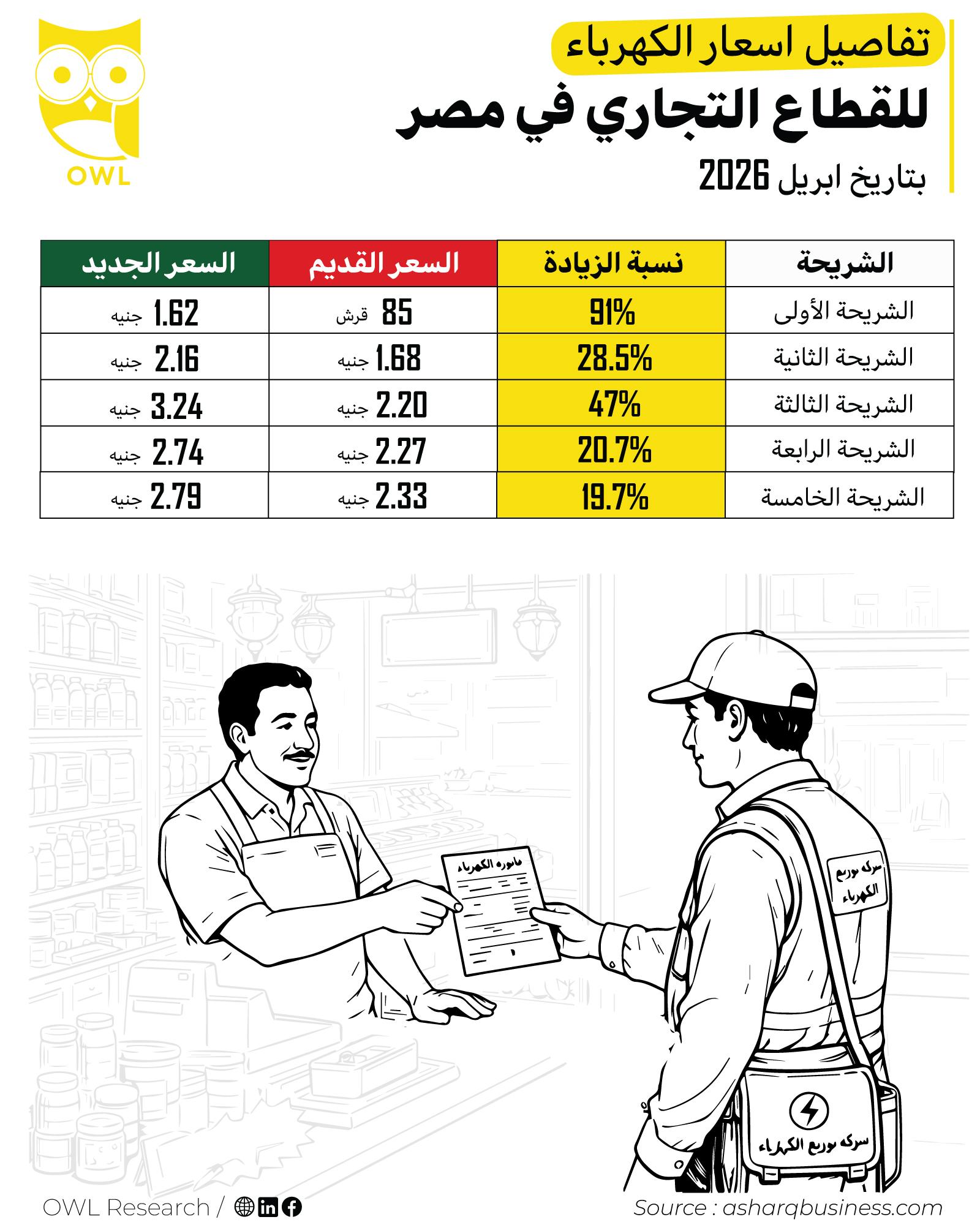
Key Highlights
- All commercial segments experienced price increases
- Increases range from +19.7% up to +47%
- The highest increase is concentrated in mid-tier consumption segments
- The reform reinforces a shift toward cost recovery and subsidy reduction in the business sector
Updated Commercial Electricity Tariffs (April 2026)
| Segment | Old Price | New Price | Increase |
|---|---|---|---|
| Tier 1 | 0.85 EGP | 1.62 EGP | +91% |
| Tier 2 | 1.68 EGP | 2.16 EGP | +28.5% |
| Tier 3 | 2.20 EGP | 3.24 EGP | +47% |
| Tier 4 | 2.27 EGP | 2.74 EGP | +20.7% |
| Tier 5 | 2.33 EGP | 2.79 EGP | +19.7% |
Insight:
The increases are not linear—mid-consumption businesses are hit the hardest, suggesting a targeted effort to rebalance pricing distortions in this segment.
Strategic Interpretation (OWL Perspective)
From a market intelligence and policy lens, this pricing update reflects three core dynamics:
1. Accelerated Subsidy Removal for Businesses
The government is clearly prioritizing full cost recovery in the commercial sector, reducing reliance on subsidized energy.
2. Pressure on Operating Margins
Electricity is a key cost driver for many sectors:
- Retail
- F&B
- Manufacturing (light industrial)
- Services
This will directly compress margins, especially for SMEs.
3. Strong Push Toward Efficiency
The pricing model creates a natural incentive for:
- Energy-saving technologies
- Operational efficiency
- Load optimization strategies
Impact by Business Type
Small Retail & Shops
Impact: Moderate to High
- Higher fixed operating costs
- Potential price pass-through to consumers
Restaurants & Cafés
Impact: High
- Energy-intensive operations (cooling, refrigeration, equipment)
- Margin pressure likely → menu price adjustments
Medium Enterprises
Impact: Very High
- Especially those in mid-consumption tiers (largest increase)
- May trigger cost restructuring
Large Businesses
Impact: Controlled but Significant
- More capable of absorbing costs
- Likely to invest in efficiency solutions (solar, smart systems)
Market Implications
1. Inflationary Pressure (Indirect)
Businesses may pass increased costs to consumers → contributing to price increases across categories
2. Acceleration of Energy Solutions Market
Rising tariffs create strong demand for:
- Solar energy solutions
- Energy-efficient appliances
- Smart metering & monitoring systems
3. Shift in Competitive Dynamics
- Efficient businesses gain advantage
- Cost-heavy operators lose margin competitiveness
Opportunities for Brands
For companies operating in Egypt, this shift unlocks key opportunities:
- Position products around “cost saving” and “efficiency”
- Develop solutions targeting SMEs under pressure
- Introduce financing options for energy-saving upgrades
- Build messaging around ROI from efficiency investments
Final Thought
Egypt’s 2026 commercial electricity pricing is a clear economic signal:
The era of subsidized energy for businesses is ending.
This transition will:
- Reshape cost structures
- Drive operational efficiency
- Create new opportunities for innovation
For businesses, the priority is no longer just growth—
it’s efficient, sustainable growth.