What Changed, What Stayed the Same, and What It Means for Consumers
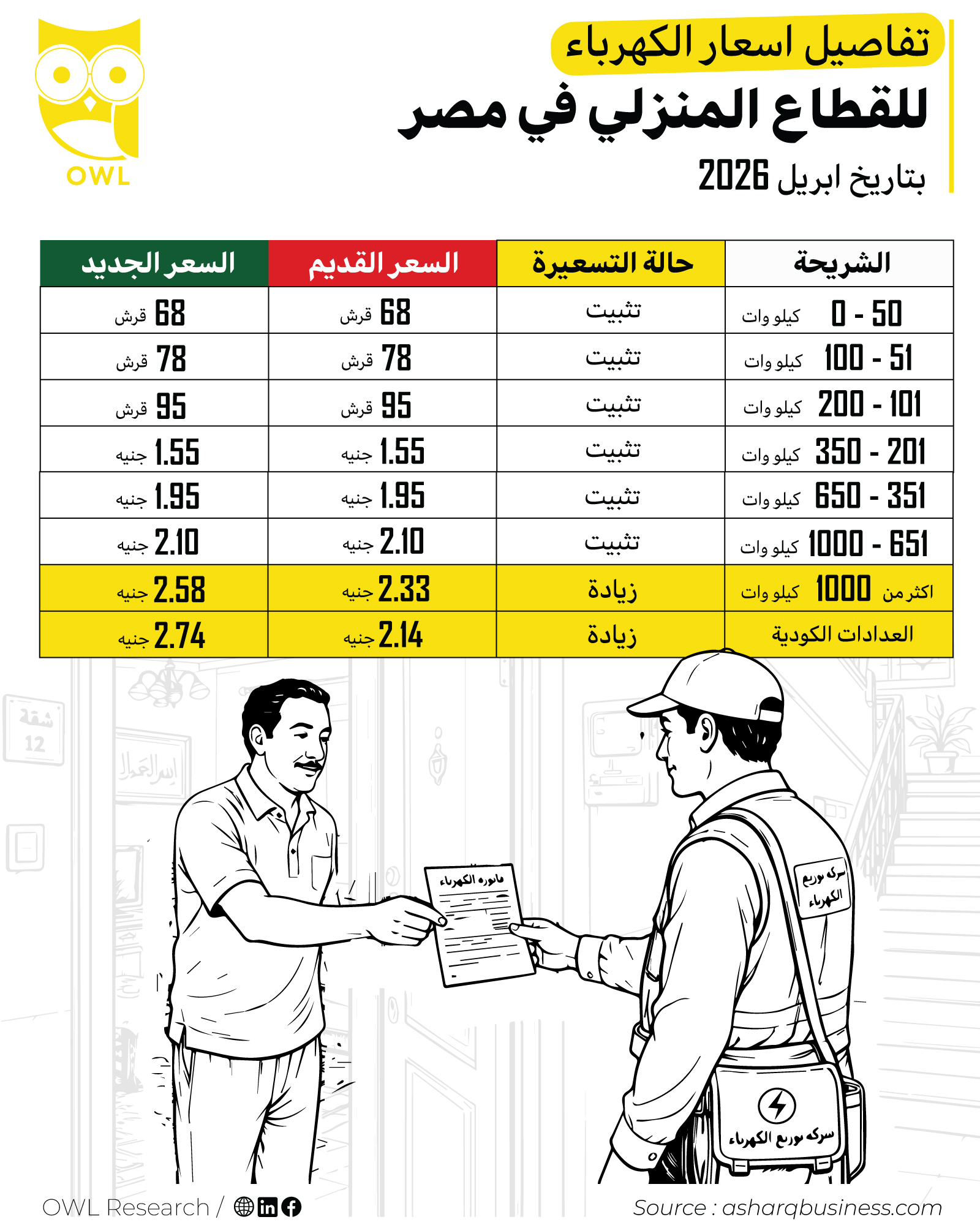
Egypt’s electricity pricing structure continues to evolve as part of the country’s broader energy reform strategy. As of April 2026, the government has announced updated tariffs for the residential sector—bringing a mix of price stabilization for most households and targeted increases for higher consumption segments. This update reflects a clear direction: protecting low- and middle-income consumers while gradually rationalizing subsidies for heavy users.
Key Highlights
- No change in electricity prices for consumption up to 1000 kWh
- Price increases apply only to:
- Consumption above 1000 kWh
- Prepaid (card-based) meters
- The structure maintains a tiered pricing model, encouraging efficient energy use
Updated Electricity Tariffs (April 2026)
Stable Pricing Segments (Majority of Households)
| Consumption Bracket | Price |
|---|---|
| 0 – 50 kWh | 0.68 EGP |
| 51 – 100 kWh | 0.78 EGP |
| 101 – 200 kWh | 0.95 EGP |
| 201 – 350 kWh | 1.55 EGP |
| 351 – 650 kWh | 1.95 EGP |
| 651 – 1000 kWh | 2.10 EGP |
👉 Insight:
This means that the majority of Egyptian households will not experience any increase in their electricity bills, reinforcing a consumer protection approach.
Increased Pricing Segments
| Category | Old Price | New Price |
|---|---|---|
| Above 1000 kWh | 2.33 EGP | 2.58 EGP |
| Prepaid Meters | 2.14 EGP | 2.74 EGP |
Insight:
The increase is clearly targeted at high-consumption users and prepaid systems, which are often associated with higher usage variability.
Strategic Interpretation (OWL Perspective)
From a consumer insights and policy lens, this pricing update reflects three core strategic directions:
1. Subsidy Optimization
The government continues to gradually remove subsidies from heavy users, ensuring that support is directed where it’s most needed.
2. Behavioral Nudging
By increasing tariffs for higher consumption brackets, the system subtly encourages:
- Energy efficiency
- Reduced waste
- More conscious consumption behavior
3. Protection of Core Segments
Maintaining stable prices for lower tiers signals a strong commitment to:
- Social stability
- Cost-of-living control
- Household affordability
👥 What This Means for Different Consumer Segments
Low Consumption Households
Impact: No change
Behavior: Likely to remain stable
Middle-Class Families
Impact: Minimal to none
Behavior: Slight awareness increase but no major shift
High Consumption Users
Impact: Noticeable bill increase
Behavior: Likely to:
- Optimize usage
- Invest in energy-saving appliances
Prepaid Meter Users
Impact: Significant increase
Behavior: More frequent recharge monitoring and consumption control
Implications for Businesses & Marketers
For brands operating in Egypt—especially in home appliances, energy solutions, and fintech—this shift creates new opportunities:
- Energy-efficient products become more attractive
- Smart home solutions gain relevance
- Usage tracking apps can drive adoption
- Messaging can shift toward “saving” and “efficiency”
Final Thought
Egypt’s 2026 electricity pricing update is not just a tariff adjustment—it’s a behavioral and economic signal.
It reinforces a broader transition toward:
- Efficiency-driven consumption
- Targeted subsidy models
- Long-term sustainability
For consumers, it’s a reminder to be more conscious of usage.
For businesses, it’s a signal to align with a more efficiency-focused market mindset.