Global food consumption patterns continue to reveal the enormous scale of modern livestock production. According to estimates from the Food and Agriculture Organization of the United Nations (FAO), millions of animals are consumed every single day worldwide to meet growing demand for meat, dairy, and poultry products.
The figures highlight not only the scale of human consumption, but also the increasing pressure on agriculture, food supply chains, water resources, and environmental sustainability.
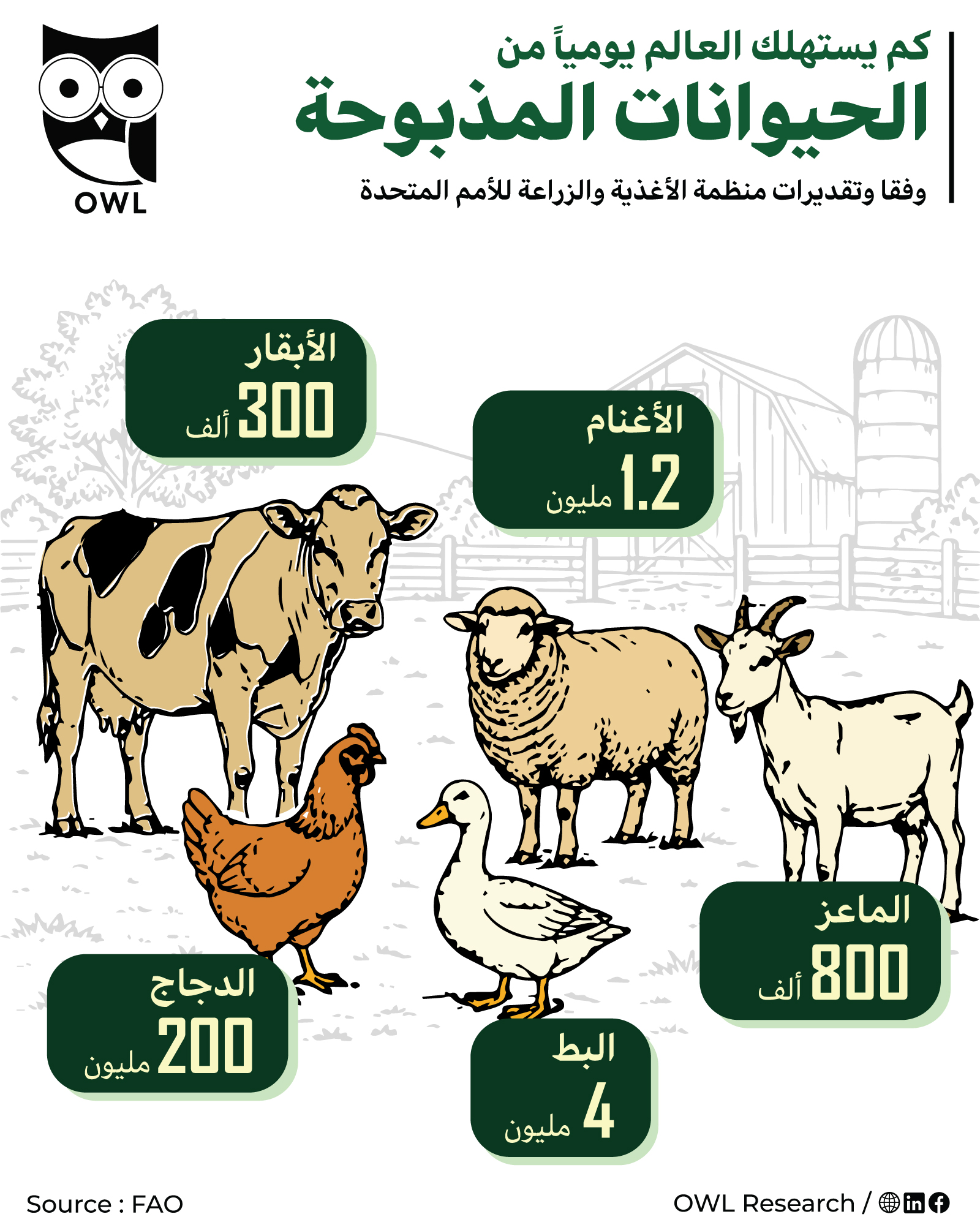
Estimated Daily Global Consumption of Farm Animals
Based on FAO estimates, the world consumes approximately:
- 200 million chickens per day
- 4 million ducks per day
- 1.2 million sheep per day
- 800 thousand goats per day
- 300 thousand cattle per day
These numbers reflect the massive industrial scale of global food systems and the central role animal protein continues to play in diets across both developed and emerging markets.
Poultry Dominates Global Consumption
Chicken remains by far the most consumed animal protein globally. Its affordability, shorter production cycles, lower production costs, and cultural acceptance across many regions have made poultry the dominant source of animal protein for billions of consumers.
The consumption of approximately 200 million chickens daily demonstrates how industrial poultry farming has become one of the largest segments of the global agricultural economy.
Duck consumption, while significantly smaller than chicken, remains highly concentrated in Asian markets where duck meat is an important part of traditional cuisine and food culture.
Rising Demand in Emerging Markets
Growing populations, urbanization, and rising incomes — particularly across Asia, Africa, and the Middle East — continue to increase demand for meat and livestock products.
As consumers move into higher income brackets, dietary patterns often shift toward increased protein consumption, placing additional pressure on livestock production systems worldwide.
This trend has driven rapid expansion in:
- Poultry farming
- Feed production industries
- Cold-chain logistics
- Livestock trade and exports
- Industrial-scale farming technologies
Sustainability and Environmental Challenges
The scale of global livestock consumption also raises major environmental and sustainability concerns.
Livestock production contributes significantly to:
- Greenhouse gas emissions
- Water consumption
- Land use expansion
- Deforestation
- Biodiversity loss
Cattle production in particular is often associated with higher environmental impact due to methane emissions and the large land and water requirements needed for beef production.
As climate concerns grow, governments, food companies, and consumers are increasingly exploring alternative proteins, plant-based diets, and more sustainable farming methods.
The Future of Global Protein Consumption
The future of animal consumption will likely be shaped by several key forces:
- Population growth
- Food security concerns
- Climate change policies
- Technological innovation in food production
- Consumer awareness around health and sustainability
While global meat demand is expected to continue rising in the near term, the industry may gradually shift toward more efficient, sustainable, and alternative protein solutions over the coming decades.