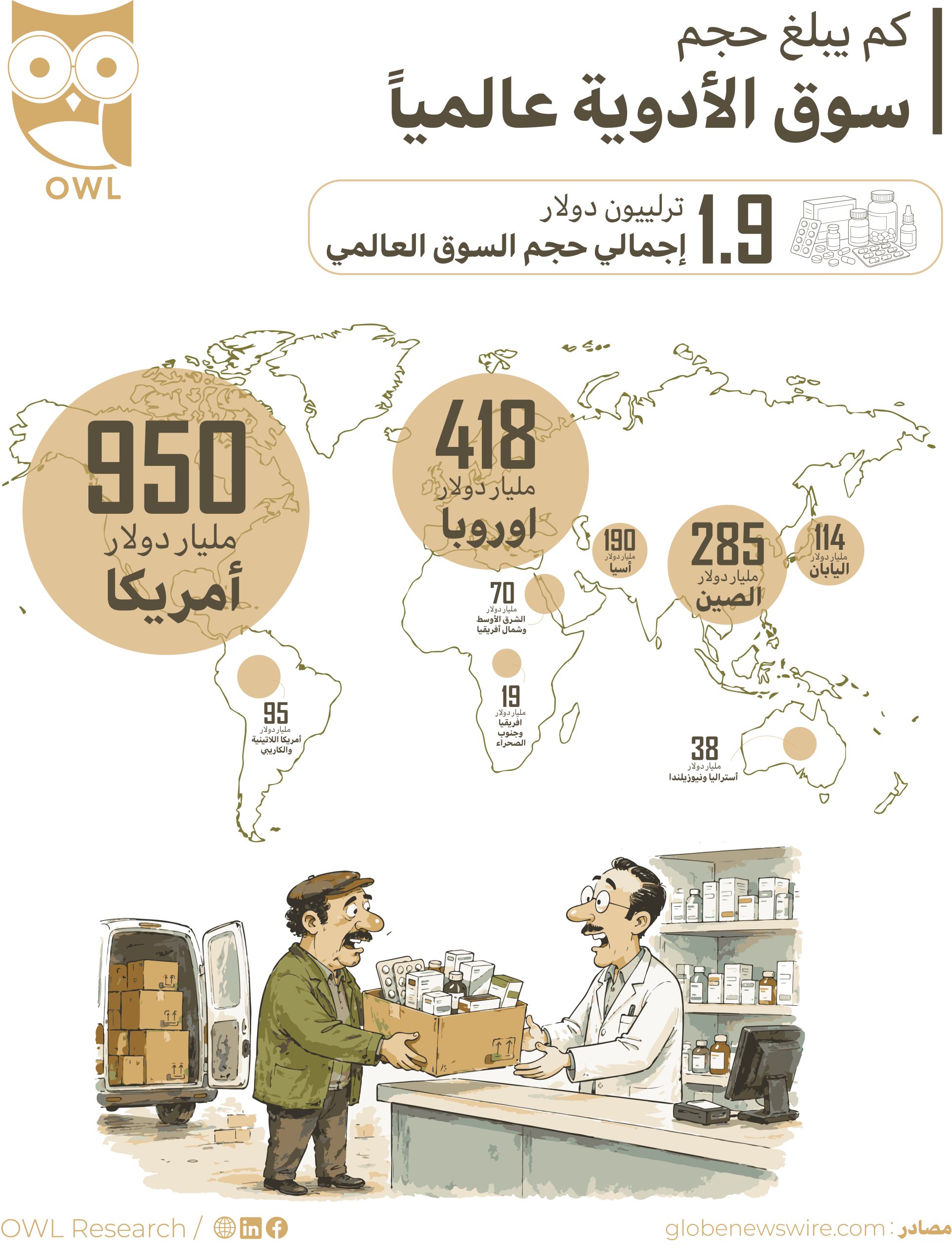
The pharmaceutical industry continues to rank among the world’s largest and most strategically important sectors, driven by rising healthcare demand, aging populations, chronic diseases, and continuous medical innovation. According to recent global estimates, the worldwide pharmaceutical market has reached approximately $1.9 trillion, highlighting the enormous economic scale of the healthcare and medicine industry.
From advanced biotechnology and cancer treatments to everyday medications and vaccines, pharmaceuticals remain a critical pillar of modern healthcare systems and global economic activity.
Regional Breakdown of the Global Pharmaceutical Market
The global pharmaceutical industry is heavily concentrated in a few major regions, with North America maintaining a dominant position.
United States – $950 Billion
The United States accounts for nearly half of the global pharmaceutical market, reaching approximately $950 billion. The country’s leadership is supported by:
- Strong research and development capabilities
- Large healthcare spending
- Advanced biotechnology ecosystems
- High prescription drug consumption
- Major global pharmaceutical companies
The U.S. market continues to lead globally in innovation, drug development, and high-value specialty treatments.
Europe – $418 Billion
Europe represents the second-largest pharmaceutical market globally, valued at approximately $418 billion. Countries such as Germany, France, Switzerland, and the United Kingdom play major roles in pharmaceutical manufacturing, research, and exports.
The region remains a global hub for both branded medicines and advanced life sciences research.
China – $285 Billion
China has rapidly emerged as one of the world’s fastest-growing pharmaceutical markets, reaching approximately $285 billion. Growth has been fueled by:
- Expanding healthcare access
- Population size and aging demographics
- Rising middle-class demand
- Government healthcare investment
- Domestic pharmaceutical manufacturing expansion
China is increasingly positioning itself as a global pharmaceutical production and biotechnology powerhouse.
Other Key Pharmaceutical Markets
Additional regions contributing significantly to the global pharmaceutical economy include:
- Asia (excluding China and Japan) – $190 billion
- Japan – $114 billion
- Latin America & the Caribbean – $95 billion
- الشرق الأوسط وشمال أفريقيا – $70 billion
- Australia & New Zealand – $38 billion
- Africa excluding MENA – $19 billion
These figures demonstrate how pharmaceutical demand is expanding across emerging markets as healthcare systems develop and access to medicine improves.
Key Drivers Behind Industry Growth
Several global trends continue to accelerate pharmaceutical market expansion:
Aging Populations
Longer life expectancy is increasing demand for chronic disease treatments, including cardiovascular, diabetes, and neurological medications.
Rising Chronic Diseases
Non-communicable diseases are becoming more prevalent globally, increasing long-term pharmaceutical consumption.
Biotechnology and Innovation
Advancements in biotechnology, gene therapy, immunotherapy, and personalized medicine are reshaping the future of healthcare.
Post-Pandemic Healthcare Investment
The COVID-19 pandemic significantly increased government and private sector investment in healthcare infrastructure, vaccines, and pharmaceutical research.
Challenges Facing the Industry
Despite its growth, the pharmaceutical sector faces major challenges, including:
- Rising drug pricing debates
- Regulatory complexity
- Supply chain vulnerabilities
- Patent expirations
- Access inequality between developed and developing markets
Governments worldwide are increasingly balancing healthcare affordability with the need to encourage pharmaceutical innovation and investment.
The Future of Global Pharmaceuticals
The pharmaceutical industry is expected to continue expanding over the coming decade, particularly in emerging economies where healthcare spending is rising rapidly.
Future growth will likely be shaped by:
- Artificial intelligence in drug discovery
- Personalized medicine
- Biopharmaceutical innovation
- Digital healthcare integration
- Expansion of preventive healthcare solutions
As healthcare becomes increasingly central to economic development and national security strategies, the pharmaceutical industry is expected to remain one of the world’s most influential and high-value sectors.