The United States has long been characterized by its religious diversity, with Christianity remaining the dominant faith while other religious affiliations and the unaffiliated population continue to shape the country’s social and cultural landscape.
According to data from the Pew Research Center (2025), approximately 62% of U.S. adults identify as Christian, making Christianity the largest religious affiliation in the country. However, the figures also reveal a more diverse picture, with nearly three in ten Americans identifying as religiously unaffiliated.
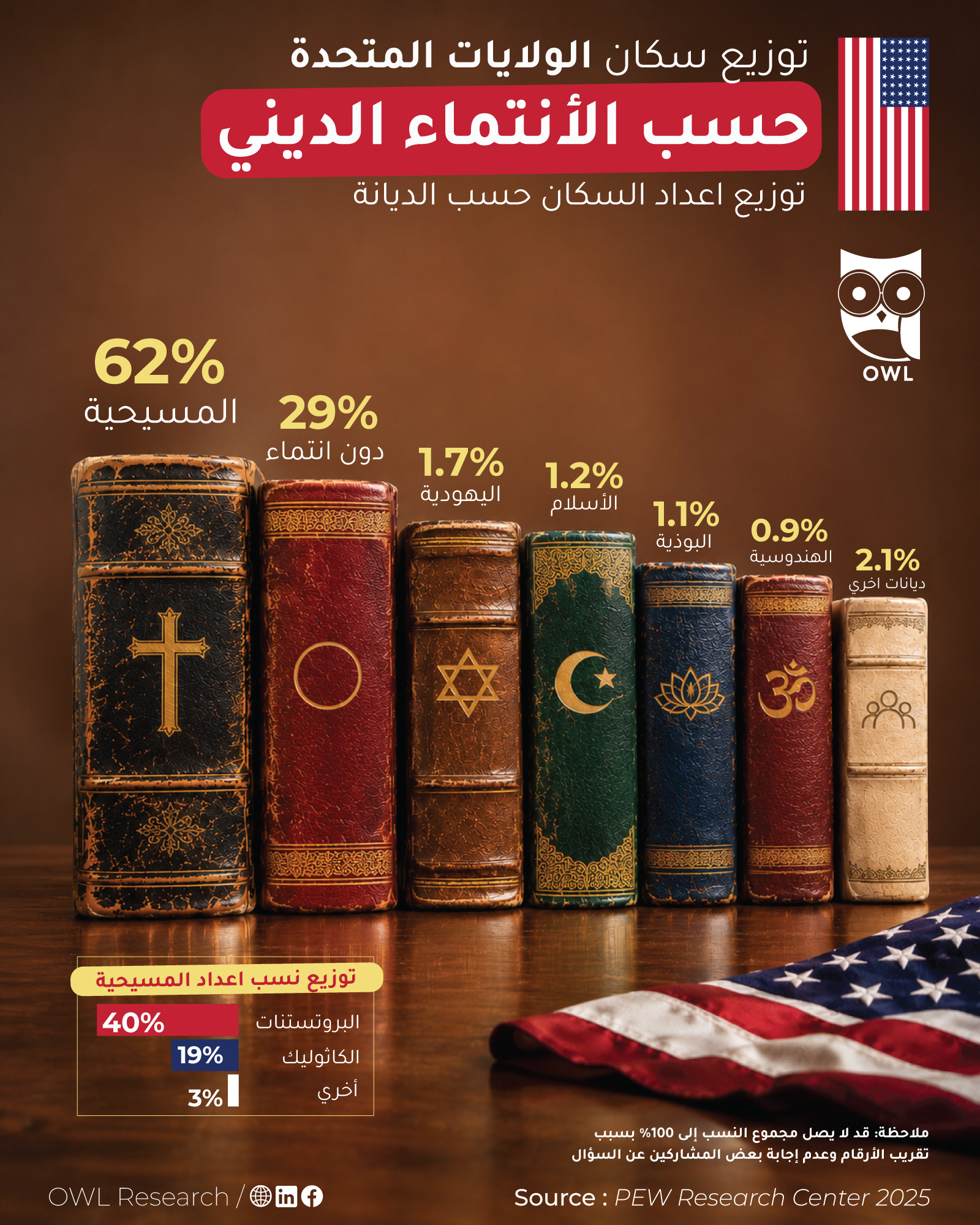
The Religious Composition of the American Population
Christianity continues to represent the majority of religious identification in the United States, accounting for approximately 62% of the population. Within this group, Protestants represent the largest segment, at around 40%, while Catholics account for approximately 19%. Other Christian denominations make up the remaining 3%.
Beyond Christianity, religious diversity is reflected in several smaller but significant communities:
- Religiously Unaffiliated (29%): Nearly one-third of Americans identify as atheist, agnostic, or having no particular religious affiliation.
- Jewish (1.7%): The Jewish community represents one of the largest non-Christian religious groups in the country.
- Muslim (1.2%): Islam continues to be part of America’s diverse religious landscape.
- Buddhist (1.1%): Buddhism represents another established religious community.
- Hindu (0.9%): The Hindu population contributes to the country’s growing religious diversity.
- Other Religions (2.1%): This category includes individuals affiliated with other religious traditions.
The Rise of Religious Non-Affiliation
One of the most notable findings is the size of the religiously unaffiliated population, which accounts for 29% of Americans.
Often referred to as the religiously unaffiliated or “Nones,” this group includes atheists, agnostics, and people who do not identify with any particular religion.
Its significant share highlights an important dimension of American society: religious identity is becoming increasingly diverse, extending beyond traditional religious institutions and affiliations.
This shift has implications for understanding cultural values, social attitudes, community engagement, and changing patterns of identity across generations.
Christianity Remains Dominant, but Religious Diversity Matters
Although Christianity maintains its leading position, the American religious landscape cannot be understood through a single religious category.
The presence of Jewish, Muslim, Buddhist, Hindu, and other religious communities reflects the country’s multicultural character. At the same time, the growing proportion of people without a religious affiliation adds another layer to the country’s social composition.
Understanding these differences is particularly relevant when examining demographic trends, consumer behavior, cultural preferences, and the way organizations communicate with diverse audiences.
What Do These Figures Tell Us?
The distribution of religious affiliation offers more than a snapshot of religious identity. It provides a broader perspective on the social and cultural composition of the United States.
Three key observations stand out:
- Christianity remains the dominant affiliation, representing approximately six out of every ten Americans.
- Religious non-affiliation is a major social segment, accounting for almost one-third of the population.
- Religious diversity extends beyond the largest faith groups, with several smaller communities contributing to the country’s cultural landscape.
As the United States continues to evolve demographically and culturally, tracking religious affiliation remains an important element in understanding its population and broader social dynamics.