The 2026 United States midterm elections have reshaped the balance of political power in Washington, with the Democratic Party securing control of the House of Representatives after a series of significant victories across the country.
Held on November 3, 2026, the elections covered all 435 seats in the US House of Representatives, making this one of the most consequential electoral contests of the current congressional cycle.
The results mark a major political setback for Republicans and create a new legislative landscape for President Donald Trump’s administration during the remaining two years of his presidential term.
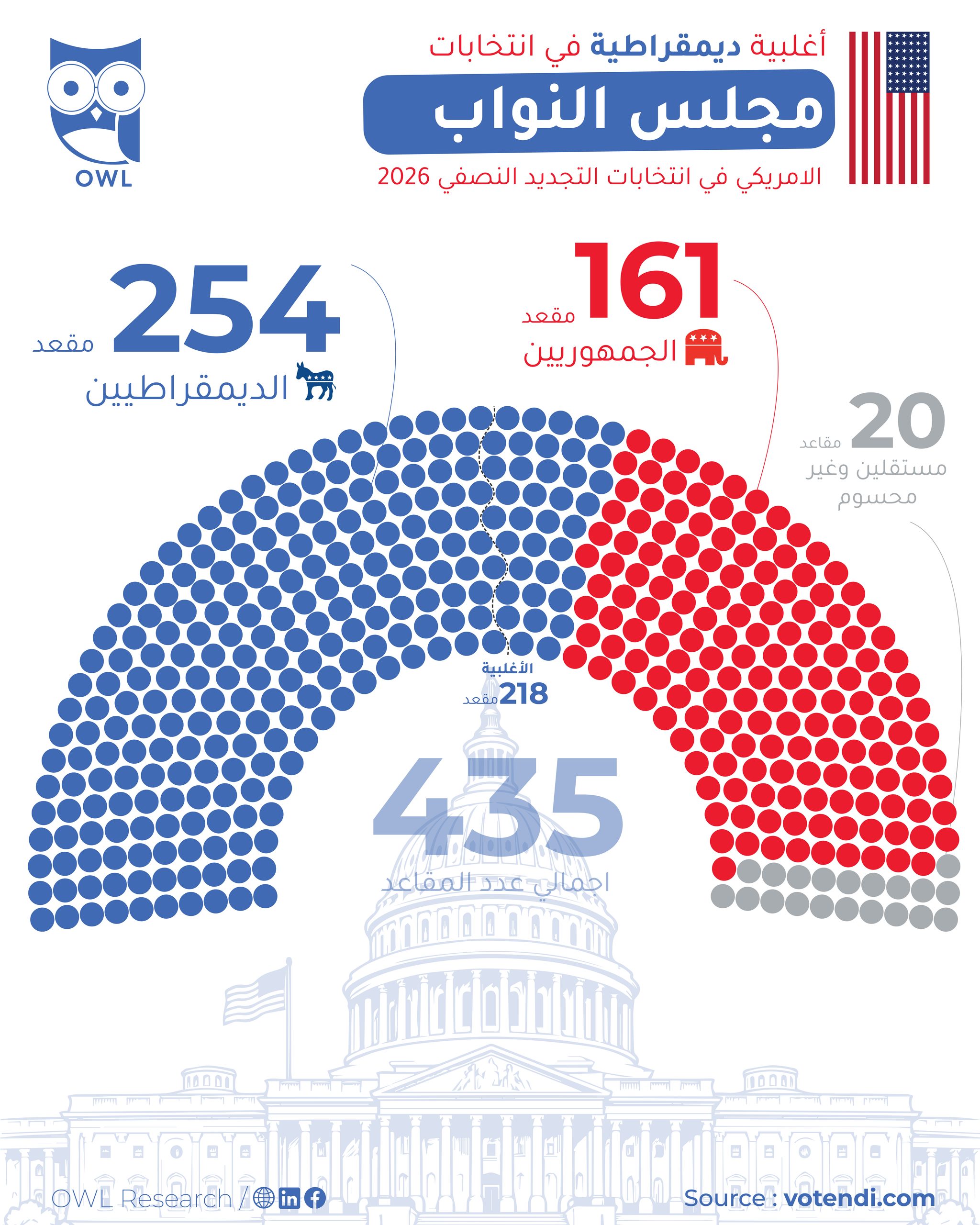
How the House of Representatives Is Divided
The US House of Representatives consists of 435 voting members, with 218 seats required to secure a simple majority.
The infographic captures an early results snapshot showing the following distribution:
- Democrats: 254 seats
- Republicans: 161 seats
- Uncalled races: 20 seats
- Total: 435 seats
This early count already placed Democrats well above the 218-seat threshold required to control the chamber.
As vote counting continued, subsequent election updates showed further changes in the seat distribution. By November 11, updated unofficial tracking indicated 256 Democratic seats, 170 Republican seats, and nine races still being counted.
A Significant Shift in Congressional Power
Before the 2026 midterm elections, Republicans controlled the House of Representatives with a narrow majority, while Democrats held 214 seats.
The Democratic gains across multiple competitive districts allowed the party to reverse the balance of power and reclaim control of the chamber.
This shift is particularly important because control of the House determines which party leads its committees, sets the legislative agenda, and exercises significant oversight authority over the federal government.
Why Does the Democratic Majority Matter?
The change in House leadership carries important political and legislative implications.
1. Legislative Priorities
With control of the House, Democrats gain greater influence over which bills receive consideration and how legislative priorities are established.
2. Congressional Oversight
The majority party controls committee leadership and has considerable influence over congressional investigations, hearings, and oversight activities.
3. Presidential Agenda
A Democratic-controlled House creates additional challenges for President Trump in advancing his legislative agenda, particularly on policies requiring congressional approval.
4. Political Momentum
The results provide Democrats with significant political momentum as both parties begin positioning themselves for the next presidential election cycle in 2028.
The Bigger Picture: Midterm Elections and Political Balance
Midterm elections traditionally serve as an important assessment of the sitting president’s performance and the public’s response to the administration’s policies.
The 2026 results demonstrate how congressional control can change halfway through a presidential term, even without a presidential election taking place.
For the Republican Party, losing the House represents a significant reduction in its ability to advance legislation independently. For Democrats, regaining control provides an opportunity to shape the national political debate and challenge the administration’s priorities.
What Comes Next?
Although Democrats have secured control of the House, the final distribution of seats remains subject to the completion of vote counting and the resolution of outstanding races.
The new congressional balance will become particularly important when the 120th United States Congress convenes in January 2027.
The outcome will shape legislative negotiations, federal policy debates, and the broader political environment leading into the 2028 presidential elections.