Overview
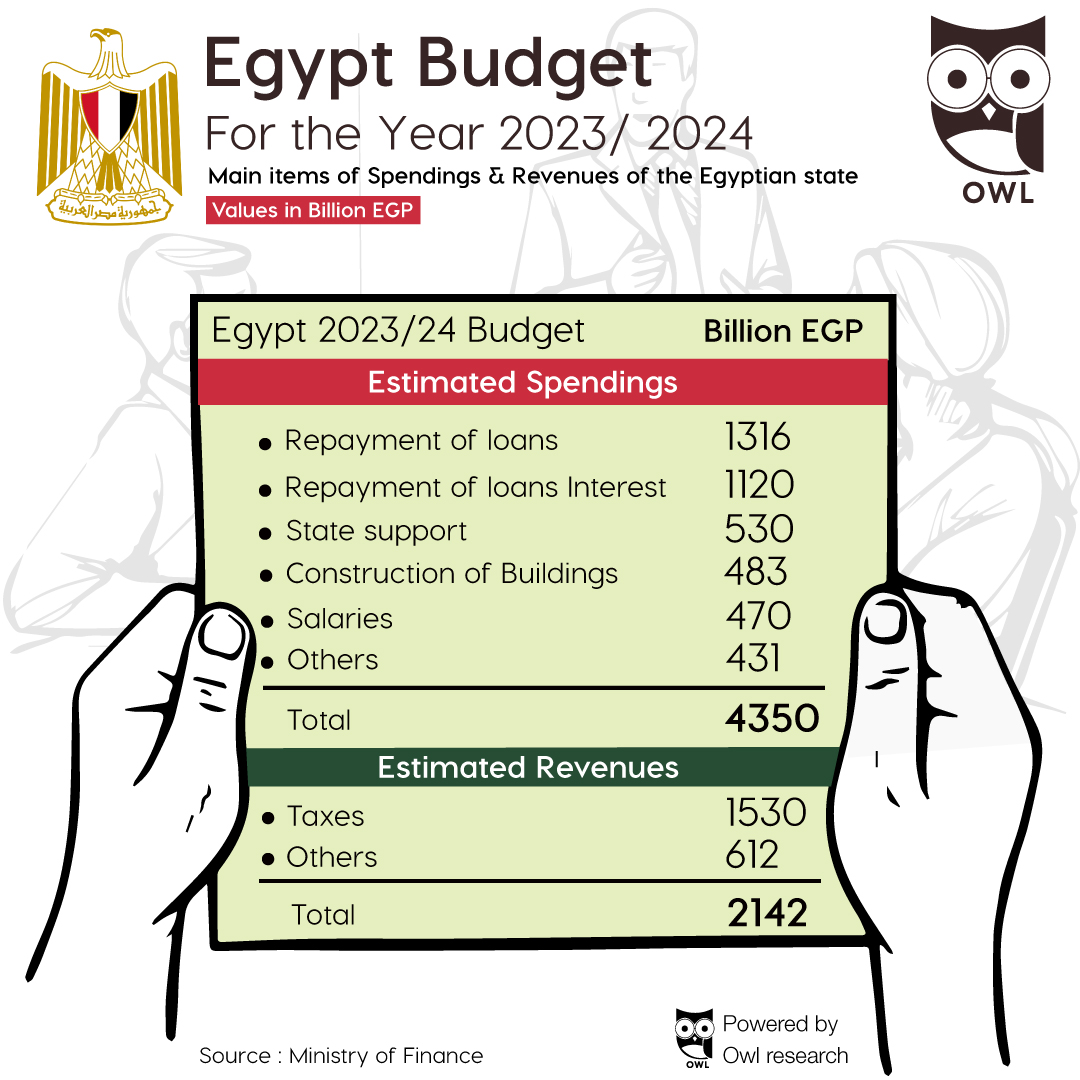
The Egyptian government’s budget for fiscal year 2023/2024 was passed amid economic pressures: high inflation, currency fluctuations, global supply chain disruptions, and rising debt service costs. The budget reflects balancing social welfare needs, subsidy demands, and public investment, while trying to reduce the deficit under reform commitments.
Priority Areas
- Social Protection & Subsidies
The government increased social welfare spending significantly, to protect households from inflation and rising costs. Subsidies (food, fuel, electricity, bread) remained central. Reuters+2Middle East Briefing+2 - Wages & Salaries
State employee wages and salaries saw increases, reflecting inflation pressures and efforts to maintain purchasing power. Middle East Briefing+1 - Health & Education
Major allocations for health and education sectors—both in staffing, infrastructure, and operating costs. Arab News+1 - Fiscal Discipline & Debt Management
The government aimed to reduce debt-to-GDP ratio and apply measures to control spending. Reforms and revenue collection enhancements were part of the plan. ebrd.com+2OECD+2
Challenges
- Inflation & Cost of Living: High inflation reduced the real value of incomes and raised the cost of subsidies, which forced adjustments. UNICEF+1
- Debt Servicing Pressure: A large portion of budget outlays was tied up in interest payments, making it harder to allocate funds to discretionary or development spending. FrontierView+2ebrd.com+2
- Exchange Rate Volatility & External Shocks: Fluctuating foreign exchange rates increased costs of imports, energy, and servicing external debts. Reuters+1
- Revenue Shortfalls: Dependency on tax income and other revenues meant any slowdown in economic activity or export earnings could strain projections. Mof Assets+1
Implications & Outlook
- Public Debt Trajectory: Tackling debt remains a priority; aiming to reduce debt-to-GDP ratio through tighter fiscal policy and more efficient spending. Mof Assets+1
- Living Standards: Unless inflation is controlled and wages keep pace, many households could continue to face hardship. Subsidies and social support remain critical.
- Reforms & IMF Oversight: Egypt’s economic reform programs (in cooperation with IMF etc.) are likely to shape coming budgets, especially in subsidy reform, tax collection, and spending efficiency. Reuters+1
- Investment & Infrastructure: Despite fiscal constraints, continued investment in infrastructure, healthcare, and education is seen as essential for long-term growth.
Conclusion
The FY 2023/2024 budget in Egypt illustrates the government’s tightrope walk: balancing necessary social support and subsidies with the need for fiscal consolidation and economic stability. With inflation, debt servicing, and external pressures looming large, success depends on strong revenue generation, disciplined spending, and structural reforms.