Egypt Budget 2024/2025: Key Figures, Priorities & Implications
Overview
Egypt’s Fiscal Year (FY) 2024/2025 budget reflects the government’s attempts to balance strong social spending, rising debt servicing, and economic reforms under IMF oversight. The budget prioritizes public investment, social welfare, and subsidies, while also grappling with inflation and currency pressures.
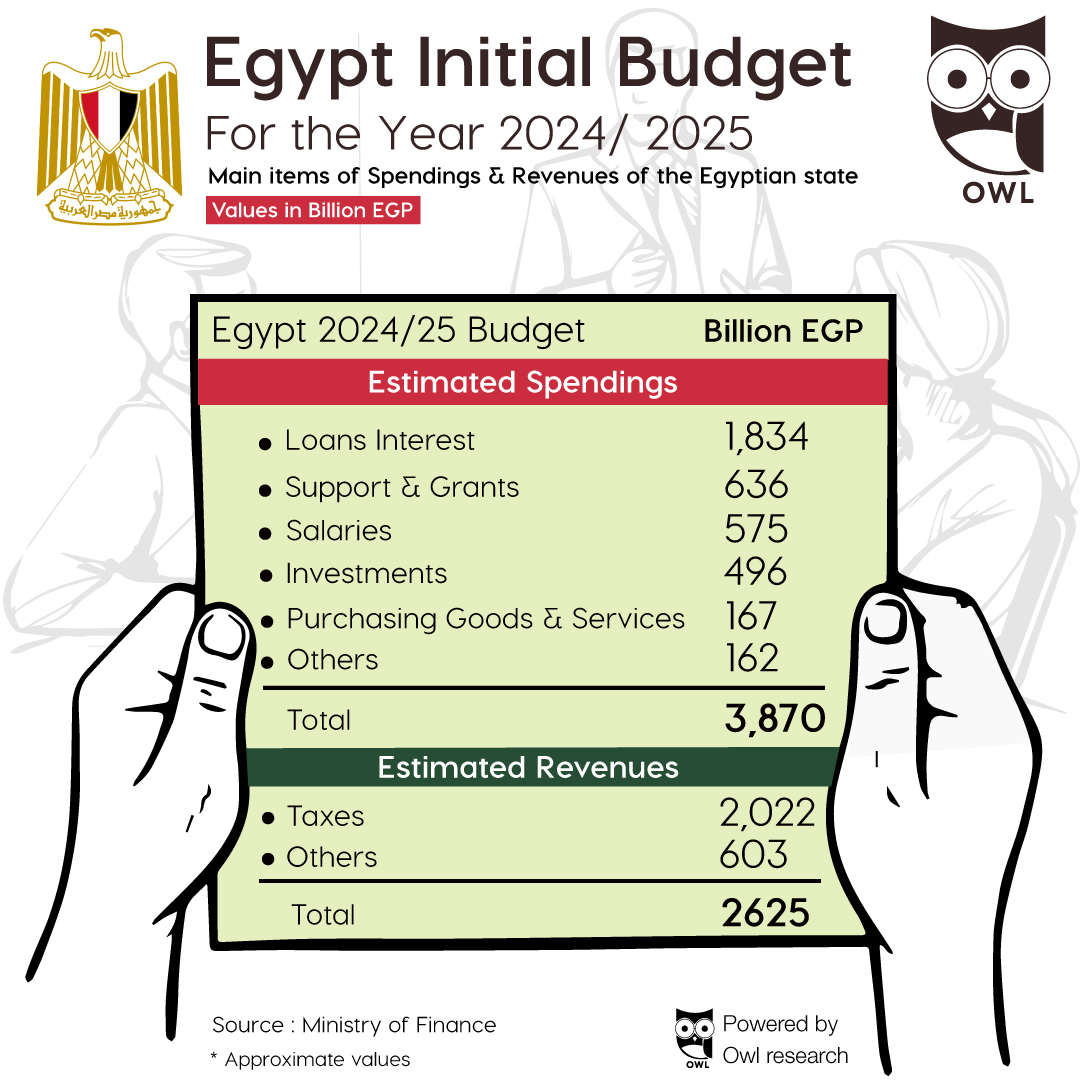
Major Spending Priorities
- Social Welfare & Subsidies
The government increased allocations for essential subsidies (bread, fuel, electricity, natural gas) and social safety net programs like Takaful & Karama, pensions, and health support. Reuters+2Ahram Online+2 - Wages & Public Sector Payroll
Salaries and wages received a significant increase, especially for state employees. This includes adjustments to wages to support public sector workers amid inflation. Ahram Online+1 - Education, Health & Research
Large allocations for educational budgets (pre-university, higher ed), health insurance, medicines, and infrastructure in health sector; also funding for scientific research. Ahram Online+1 - Infrastructure & Capital Investments
The budget steps up investment in construction, buildings, machinery & equipment. Part of EGP 1 trillion cap on total public investments (including SOEs & independent economic authorities) as pledged under IMF program. FrontierView+1
Challenges & Risks
- High Interest & Debt Servicing Costs
Almost half of budget outlays go to servicing domestic and external debt. Rising rates exacerbate the burden. FrontierView+1 - Inflation & Currency Pressures
Inflation has been high; exchange rate volatility increases cost of imports and fuels public sector costs. FrontierView+1 - Limited Space for Discretionary Spending
Because mandatory outlays (debt servicing, wages, subsidies) consume large parts of the budget, less remains for new or flexible policy spending. FrontierView - Dependence on IMF Requirements
The budget is closely tied to IMF-backed reforms, which means certain conditionalities (e.g., subsidy reform, revenue targets) will influence how spending is implemented. Middle East Briefing+1
Implications & Outlook
- Poverty & Living Standards: Increased subsidies and social programs aim to cushion vulnerable segments, but inflation and cost of living pressures make the impact mixed.
- Debt Level & Sustainability: Public debt levels remain high (domestic & external). Aiming to stabilize or slightly reduce the ratio to GDP over time is likely a priority. Reuters+1
- Investment Driven Growth: With more investment in infrastructure, manufacturing, and equipment, there is potential for productivity gains and private sector participation.
- Fiscal Tightening: Likely in subsequent budgets, with slower growth in non-mandatory spending to manage deficits and debt.
Conclusion
Egypt’s 2024/2025 budget reflects a complex balancing act: responding to citizens’ needs through subsidies, wages, health, and education, while under pressure from rising debt servicing costs and macroeconomic constraints. The government’s commitment to IMF programs and investment targets represent hope for stabilization and growth, but success depends heavily on inflation control, currency stability, efficient government spending, and achieving revenue targets.