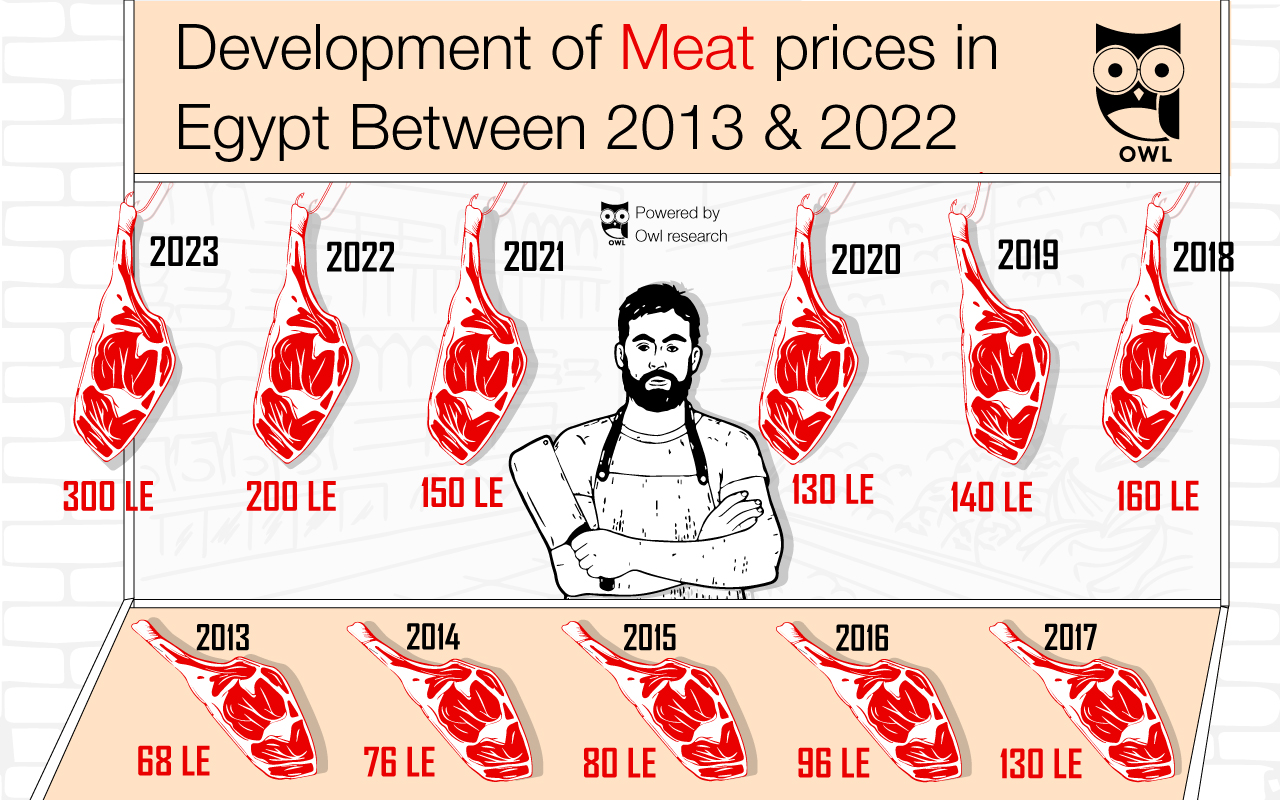
The cost of meat in Egypt has seen a sharp rise over the past decade, reflecting broader economic challenges such as inflation, currency fluctuations, and rising import costs. From 68 EGP per kilogram in 2013 to 300 EGP in 2023, meat prices have more than quadrupled, significantly affecting Egyptian households’ purchasing power.
1. Meat Prices in the Early Years (2013–2016)
- 2013: 68 EGP
- 2014: 76 EGP
- 2015: 80 EGP
- 2016: 96 EGP
During this period, prices increased gradually. The devaluation of the Egyptian pound and growing demand contributed to a steady but manageable rise.
2. Rapid Increases Begin (2017–2019)
- 2017: 130 EGP
- 2018: 160 EGP
- 2019: 140 EGP
The 2017 currency flotation caused a significant jump in prices, pushing meat to 130 EGP/kg. By 2018, costs reached 160 EGP, although there was a slight decline in 2019.
3. Pandemic and Inflation Pressures (2020–2022)
- 2020: 130 EGP
- 2021: 150 EGP
- 2022: 200 EGP
The COVID-19 pandemic and supply chain disruptions initially stabilized prices around 130 EGP, but by 2021 and 2022, inflationary pressures and higher import bills pushed prices higher, reaching 200 EGP in 2022.
4. Record High in 2023
- 2023: 300 EGP
In 2023, meat prices hit an all-time high of 300 EGP/kg, reflecting ongoing currency depreciation, global food price hikes, and domestic supply shortages. This surge significantly impacted household budgets, especially for middle- and low-income families.
5. Key Factors Behind Rising Meat Prices in Egypt
- Currency fluctuations: The Egyptian pound’s repeated devaluations increased import costs for feed and livestock.
- Global inflation: Higher international prices for food and commodities raised domestic costs.
- Local supply shortages: Rising production costs for farmers reduced supply.
- Population growth: Increasing demand for protein in a growing population.
Final Thoughts
Between 2013 and 2023, meat prices in Egypt rose from 68 EGP to 300 EGP, a more than fourfold increase in just 10 years. This reflects deeper structural challenges in Egypt’s economy, including dependency on imports, inflationary shocks, and global price volatility. Ensuring affordable access to protein remains one of the country’s major food security priorities.