The United States holds the world’s largest official gold reserves: a massive 8,133 tonnes, or 261.5 million ounces. A startling accounting anomaly, however, has created a potential financial time bomb. This gold is still valued on the Federal Reserve’s balance sheet at the historical official price of $42.22 per ounce, a rate set in 1973. At today’s market price (approximately $4,200 per ounce), the true value of these reserves is nearly 100 times higher.
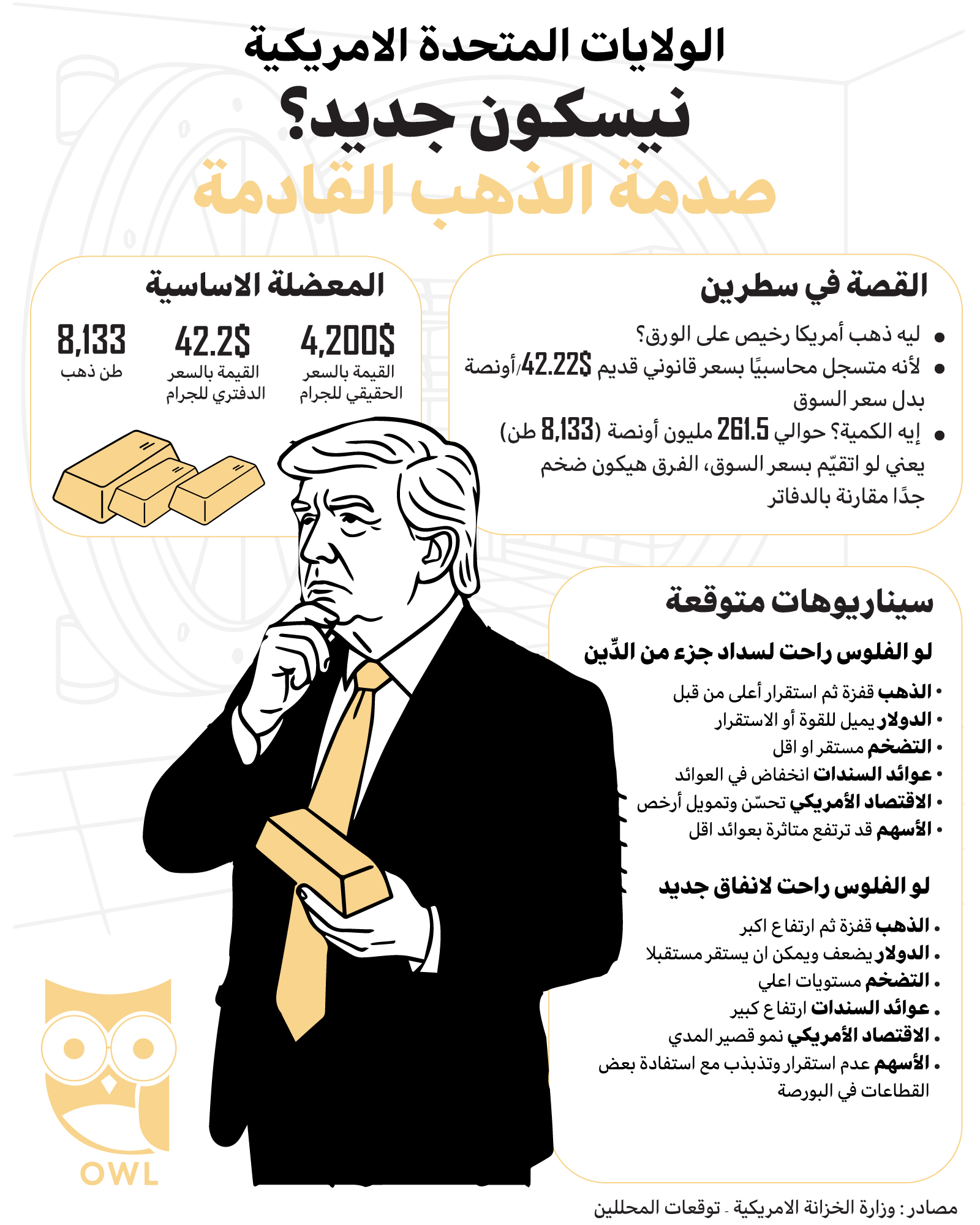
The Core Dilemma
This creates a staggering discrepancy on the government’s books:
- Book Value: ~$42.22 per ounce → Total: ~$11 billion
- Market Value: ~$4,200 per ounce → Total: Over $1.1 trillion
If the U.S. government were to officially revalue its gold to market prices—a process other nations have undertaken—it would suddenly recognize an unrealized gain of over $1 trillion. The critical question is: what would be done with this theoretical windfall? The chosen path would send shockwaves through the global economy.
Scenario 1: Using the Windfall to Pay Down Debt
If the revaluation gain were used to retire a portion of the national debt:
- Gold: Would likely spike initially on the news, then settle at a structurally higher level.
- U.S. Dollar: Would tend to strengthen or stabilize due to improved fiscal health.
- Inflation & Bonds: Inflationary pressure would ease. Bond yields would fall as perceived U.S. credit risk improved, leading to cheaper government financing.
- Economy & Stocks: The U.S. economy would benefit from lower interest rates. The stock market could rally on the prospect of lower yields and a stronger fiscal position.
Scenario 2: Using the Windfall for New Spending
If the revaluation were treated as available cash for new federal spending or stimulus:
- Gold: Would surge and potentially enter a sustained bull market as a hedge against currency debasement.
- U.S. Dollar: Would weaken significantly due to fears of money printing and inflation.
- Inflation & Bonds: Inflation expectations would soar. Bond yields would spike dramatically as investors demand higher returns for increased inflation and debt risks.
- Economy & Stocks: Might see short-term growth from stimulus but long-term instability. The stock market would face high volatility, with sectors like commodities benefiting while interest-sensitive sectors suffer.
The Bottom Line
The “official” price of U.S. gold is a relic of the past. A decision to align it with reality would be one of the most significant financial events in decades, forcing a fundamental choice between fiscal consolidation and monetary expansion, with profound consequences for the value of the dollar, global inflation, and financial markets worldwide.