Recent reports and analysis have focused on pinpointing locations within Iran that are central to its nuclear program and have allegedly been targeted by Israeli military operations. These strikes represent a significant and ongoing dimension of regional tensions.
Key Nuclear Sites and Alleged Strikes
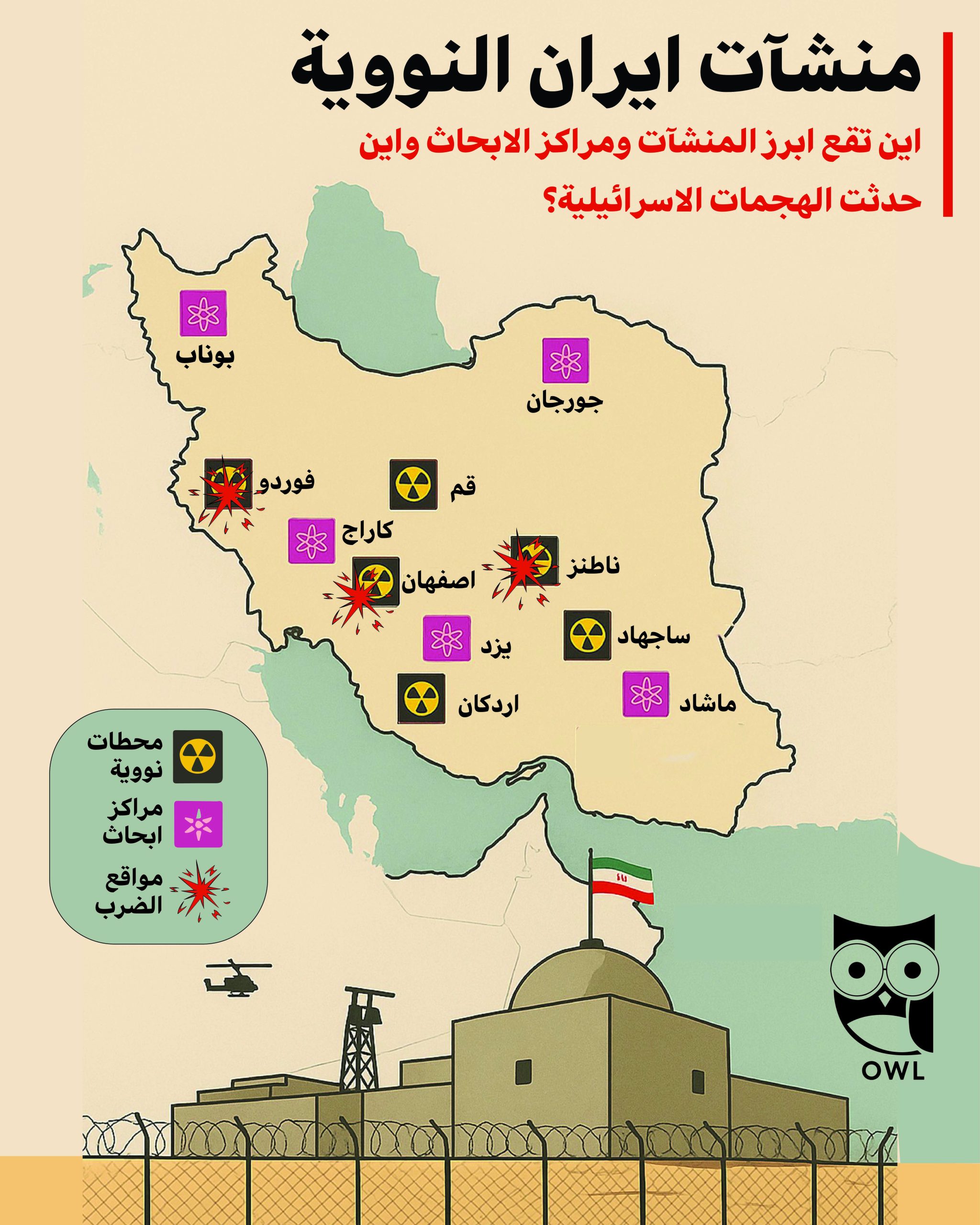
The map identifies two primary types of locations: Nuclear Facilities and Research Centers, with markers indicating where Israeli strikes have reportedly occurred.
Primary Nuclear Facilities:
- Natanz: Home to Iran’s main uranium enrichment facility, a repeated focal point of sabotage and alleged cyber and kinetic attacks over the years.
- Fordow: A fortified enrichment site built deep inside a mountain near the city of Qom. This facility is of particular concern to the international community due to its hardened nature.
- Isfahan: This location hosts a major uranium conversion plant and is a key nexus in Iran’s nuclear fuel cycle.
Major Research Centers:
- Parchin: A military complex long suspected of hosting high-explosive tests relevant to nuclear weapon development.
- Karaj: Site of the Iran Centrifuge Technology Company (TESA), crucial for centrifuge production and advancement.
- Lashkar Abad & Mashhad: Identified as locations for research and potentially covert workshops or storage.
Reported Strike Locations
According to the analysis, Israeli strikes have reportedly targeted several of these sensitive sites. The map specifically marks Isfahan, Karaj, and Parchin as locations where attacks have occurred. Strikes on Isfahan and Karaj would directly impact uranium conversion and centrifuge manufacturing capabilities, while an operation at Parchin would target alleged weaponization-related research.
Strategic Implications
This pattern of alleged strikes suggests a consistent Israeli strategy of horizontal escalation and capability denial. Rather than a single decapitation strike, the approach appears to be a sustained campaign aimed at:
- Degrading Iran’s technological progress.
- Creating perpetual insecurity within the program.
- Disrupting the supply chain for critical components.
- Signaling resolve and operational reach to Iranian leadership.
The targeting of both overt facilities like Isfahan and covert sites like Parchin indicates an intelligence-driven effort to hinder multiple facets of the program simultaneously, from enrichment to potential weaponization research. This ongoing shadow war keeps Iran’s nuclear ambitions in check from Israel’s perspective but continuously risks a major escalation into open conflict.