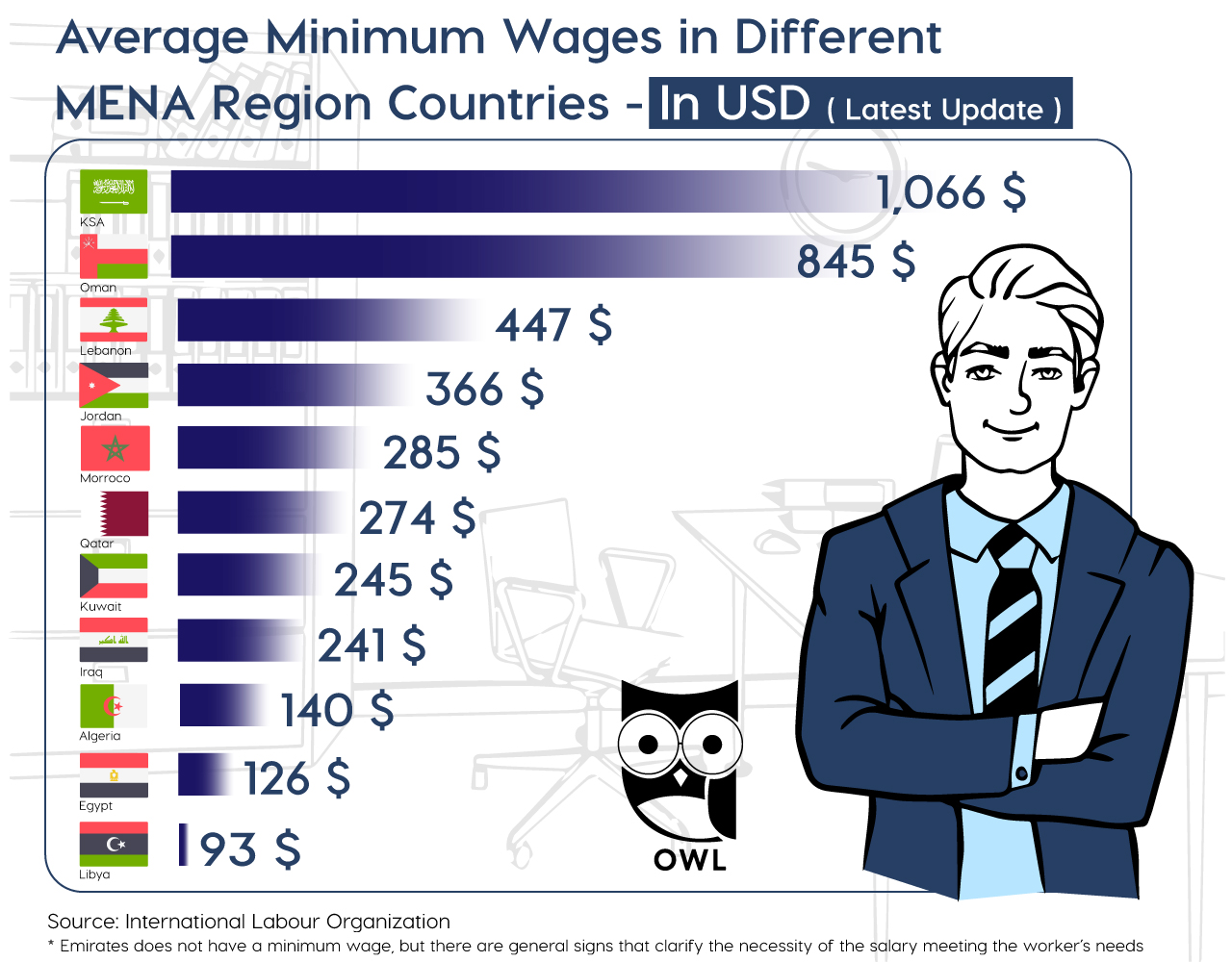
The Middle East and North Africa (MENA) region shows significant disparities in minimum wage levels, reflecting differences in economic structures, living standards, and government labor policies. According to the International Labour Organization (ILO), the latest update highlights how Gulf states lead the rankings, while North African countries remain at the lower end.
1. Top Minimum Wages in the MENA Region
- Saudi Arabia (KSA): $1,066 – the highest in the region, supported by strong oil revenues and a high-cost economy.
- Oman: $845 – among the highest, reflecting government reforms to attract skilled labor and improve living conditions.
2. Mid-Range Countries
- Lebanon: $447 – despite economic turmoil, Lebanon has maintained one of the region’s higher nominal minimum wages.
- Jordan: $366 – reflecting gradual wage growth aligned with cost of living increases.
- Morocco: $285 and Qatar: $274 – relatively mid-level minimum wages in North Africa and the Gulf.
- Kuwait: $245 and Iraq: $241 – highlighting modest wage protections compared to neighboring states.
3. Lowest Minimum Wages in the Region
- Libya: $193
- Algeria: $140
- Egypt: $126
These figures show the challenges faced by economies under fiscal strain, where wages remain far below global averages and inflation erodes real income.
4. Key Observations
- Wide gaps: The difference between the highest (Saudi Arabia: $1,066) and lowest (Egypt: $126) is striking.
- Gulf dominance: Oil-rich Gulf states (KSA, Oman, Qatar) maintain higher wage levels to attract foreign workers.
- North African struggles: Countries like Egypt and Algeria show some of the lowest wage floors, reflecting weaker economies and high unemployment rates.
- No official minimum wage in UAE: While the UAE does not have a defined minimum wage, guidelines emphasize the need for salaries that cover workers’ needs.
Final Thoughts
The minimum wage landscape in the MENA region reflects deep economic divides. While Gulf states continue to offer competitive wages, North African economies face persistent challenges in ensuring fair income levels. Policymakers across the region will need to address wage disparities to improve living standards, reduce inequality, and support sustainable economic growth.