Egypt’s automotive market has long been a focal point of interest, both domestically and globally. Once a thriving hub for vehicle sales, the industry has faced a series of turbulent challenges in recent years, grappling with a perfect storm of economic, political, and global factors. This article delves into the intricacies of this dynamic landscape, exploring the market’s trajectory, the underlying drivers, and the potential paths forward as the industry navigates uncharted waters.
Macroeconomic Upheaval and Its Impact
The Egyptian automotive market’s struggles cannot be divorced from the broader macroeconomic landscape. The country has been beset by a foreign exchange crisis, historic inflation, and mounting fiscal and external pressures, all of which have coalesced to create a perfect storm for the industry. The sluggish performance of non-oil exports, constrained private sector activity, and a burgeoning government debt have all contributed to the challenges facing the market.
The Ripple Effect of Global Shocks
The global poly-crisis, marked by supply chain disruptions and raw material shortages, has further exacerbated the woes of the Egyptian automotive industry. The lack of critical components, particularly microchips, has hampered production and stifled sales, leading to a precipitous decline in vehicle registrations. This cascading effect has reverberated throughout the industry, testing the resilience of manufacturers, dealers, and consumers alike.
Policy Adjustments and Their Implications
In response to the mounting pressures, the Egyptian authorities have undertaken a series of policy adjustments. These include raising key interest rates, allowing the exchange rate to depreciate substantially, and introducing social mitigation measures to shield the vulnerable population. While these actions aim to address the immediate challenges, their long-term impact on the automotive market remains to be seen.
The Automotive Market in Freefall
The effects of the macroeconomic turmoil and global shocks have been acutely felt in the Egyptian automotive industry. The once-thriving market has experienced a sharp decline, with sales plummeting to alarming levels.
The Downward Spiral
In June 2024, the domestic vehicles market saw a staggering 40.1% drop, with only 4,603 units sold. This negative trend has persisted for four consecutive months, with cumulative sales in the first half of the year reaching just 33,785 units, a 27.3% decline compared to the previous year.
Brand-wise Performance
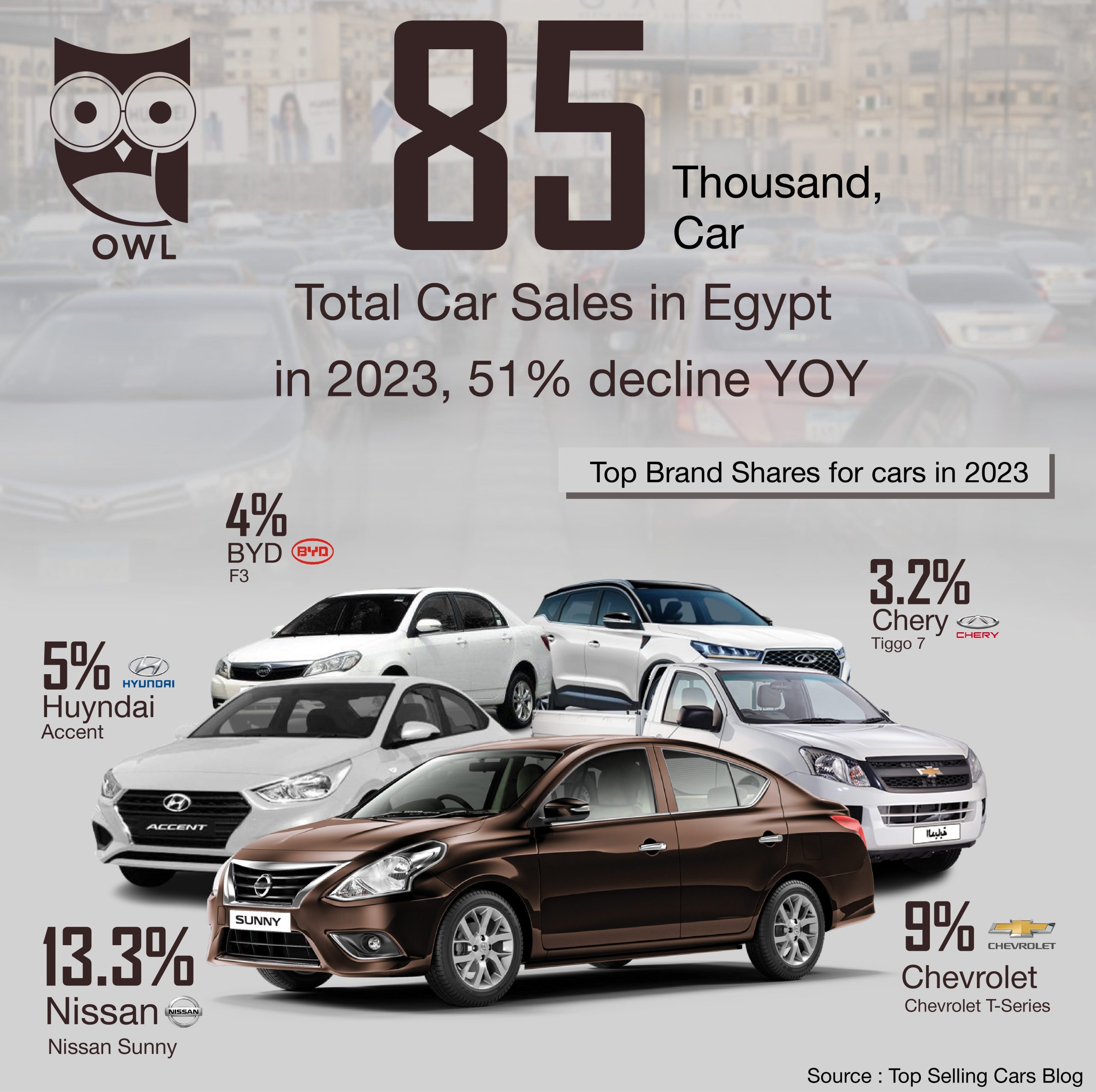
Within this bleak landscape, some brands have fared better than others. Nissan maintained its position as the market leader, securing 5,151 sales, albeit with a 32.7% year-on-year decline. Chery and Toyota followed, with 4,251 and 3,103 sales, respectively, also experiencing significant drops. MG, on the other hand, managed to move up one spot in the rankings, with 2,722 cumulative new registrations, though this still represented a 35.3% decline.
Model-level Trends
At the model level, the Nissan Sunny remained the best-selling vehicle, despite a 33.7% drop in year-on-year volume. The Chevrolet TFR, once a popular choice, also saw a 14.7% decline in sales.
The Rollercoaster of the Past Decade
To fully comprehend the current state of the Egyptian automotive market, it is essential to examine its historical trajectory. The past decade has been marked by a series of ups and downs, with the industry navigating through periods of growth and contraction.
The Tumultuous 2010s
From 2011 to 2013, the market experienced a decline, with overall sales falling from 244,328 units in 2010 to 207,405 in 2013. This period was characterized by yearly fluctuations, with 2011 reporting a 26.7% loss and 2012 a 19.7% growth.
The Rebound and Subsequent Setbacks
In 2014, the market rebounded, increasing by 34.9% to reach an all-time high of 279,779 sales. However, this was followed by three consecutive years of losses, with sales declining to 129,254 units by the end of 2017. The market then rebounded in 2018, growing by 41.5%, only to fall back down in the following year, ending 2019 at 163,383 units.
The Pandemic’s Unexpected Impact
Contrary to the global trend, the arrival of the COVID-19 pandemic in 2020 actually caused the Egyptian automotive market to increase by 34.5%, reaching 219,687 units. This momentum continued into 2021, with the market closing the year at 266,348 units.
The Disruption of 2022 and Beyond
The relative stability and growth experienced in the post-pandemic period were short-lived, as the Egyptian automotive market faced a new wave of challenges in 2022.
Supply Chain Woes and Microchip Shortages
The disruption in the global supply chain, particularly the lack of raw materials and the shortage of microchips, has emerged as a significant obstacle for the Egyptian automotive industry. This has led to production constraints and a sharp decline in vehicle sales, with the market contracting by 32.6% in 2022 to 186,819 units.
The Downward Spiral Continues
The industry’s struggles have only intensified in 2023, with the domestic vehicles market plummeting by 63.8% to just 64,882 sales. This marked the 25th consecutive month of year-on-year declines, underscoring the depth of the crisis facing the sector.
Shifting Customer Preferences and Evolving Landscape
Amidst the industry’s turmoil, there are signs of a changing landscape, driven by evolving customer preferences and emerging market trends.
The Rise of Eco-Conscious Mobility
Egyptian consumers have demonstrated a growing preference for fuel-efficient and environmentally friendly vehicles. This shift in preference can be attributed to increased awareness about the environmental impact of carbon emissions and the rising cost of fuel. As a result, there has been a surge in demand for hybrid and electric vehicles in the country.
Emphasis on Safety and Technology
Customers in Egypt are also placing greater emphasis on safety features and advanced technologies in their vehicles. Features such as lane departure warning systems and adaptive cruise control have become increasingly important considerations for buyers, reflecting a desire for enhanced safety and convenience.
Navigating the Path Forward
As the Egyptian automotive industry grapples with its challenges, stakeholders must navigate a complex landscape and chart a course towards a more resilient and sustainable future.
Addressing Macroeconomic Imbalances
Resolving the underlying macroeconomic imbalances, including the foreign exchange crisis, high inflation, and fiscal pressures, will be crucial in stabilizing the automotive market. Continued policy adjustments and targeted interventions may be necessary to create a more favorable environment for the industry’s growth.
Strengthening Supply Chain Resilience
Addressing the global supply chain disruptions, particularly the microchip shortage, will be a key priority for the Egyptian automotive industry. Diversifying supply sources, investing in local manufacturing capabilities, and fostering stronger partnerships with global suppliers can help mitigate the impact of such shocks.
Embracing Technological Advancements
To cater to the evolving customer preferences, the Egyptian automotive industry must embrace technological advancements. Investing in the development and promotion of hybrid and electric vehicles, as well as incorporating cutting-edge safety and convenience features, can help the industry stay relevant and competitive.
Fostering Collaboration and Adaptability
Navigating the turbulent waters of the Egyptian automotive market will require a collaborative effort among industry stakeholders, including manufacturers, dealers, policymakers, and consumers. Fostering a culture of adaptability, innovation, and strategic partnerships can help the industry weather the current storm and emerge stronger in the long run.
Conclusion
The Egyptian automotive industry finds itself at a critical juncture, grappling with a perfect storm of macroeconomic challenges and global disruptions. The path forward will require a multifaceted approach, addressing the underlying imbalances, strengthening supply chain resilience, and embracing technological advancements to cater to evolving customer preferences. By fostering collaboration, adaptability, and a strategic vision, the industry can navigate this turbulent period and chart a course towards a more sustainable and prosperous future.