The 2026 FIFA World Cup is projected to be the most commercially successful tournament ever organized, reflecting the growing global popularity of football and the increasing value of sports media rights.
According to estimates reported by IB Times and analyzed by OWL Research, total revenues associated with the tournament are expected to reach approximately $10.9 billion, setting a new benchmark for international sporting events.
The tournament, which will be jointly hosted by the United States, Canada, and Mexico, will also be the first FIFA World Cup featuring 48 national teams, significantly expanding its global reach, audience size, and commercial opportunities.
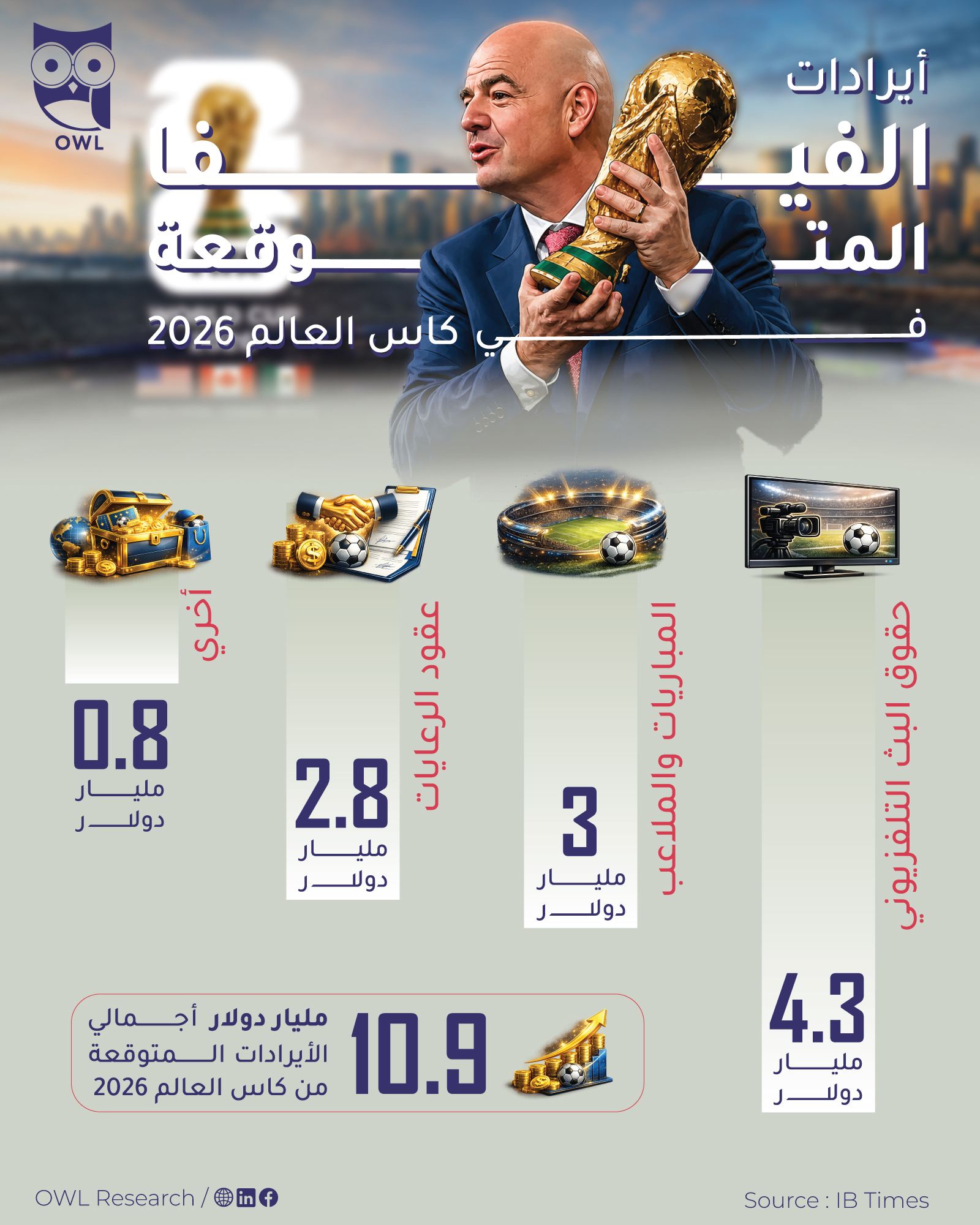
Breakdown of FIFA World Cup 2026 Revenue Streams
The projected revenue of $10.9 billion is expected to come from four major sources:
| Revenue Source | Value (USD Billion) | Share of Total Revenue |
|---|---|---|
| Broadcasting Rights | 4.3 | 39% |
| Commercial & Marketing Partnerships | 3.0 | 28% |
| Hospitality Programs | 2.8 | 26% |
| Ticket Sales | 0.8 | 7% |
| Total | 10.9 | 100% |
1. Broadcasting Rights: The Largest Revenue Driver
Broadcasting rights are expected to generate approximately $4.3 billion, representing nearly 40% of total tournament revenue.
Global demand for live sports content continues to rise as broadcasters and streaming platforms compete for premium events capable of attracting massive audiences and advertising revenue.
Football remains one of the few forms of content that consistently delivers large-scale live viewership across multiple continents simultaneously.
2. Commercial Partnerships and Sponsorships
Commercial partnerships are projected to contribute around $3 billion.
Global brands invest heavily in World Cup sponsorships because the tournament offers:
- Worldwide visibility
- Access to billions of viewers
- Strong emotional engagement with consumers
- Premium brand association opportunities
Major sectors investing in the World Cup typically include technology, finance, automotive, telecommunications, consumer goods, and sportswear.
3. Hospitality Programs Create Premium Revenue Opportunities
Hospitality and VIP experiences are expected to generate approximately $2.8 billion.
These programs include:
- Corporate hospitality packages
- VIP seating
- Exclusive event experiences
- Luxury travel packages
- Premium stadium access
The increasing demand for experiential entertainment has made hospitality one of the fastest-growing revenue streams in global sports.
4. Ticket Sales Remain Important but Smaller
Ticket sales are forecast to contribute around $0.8 billion.
While ticketing remains a significant source of income, modern mega-sporting events increasingly generate a larger proportion of revenues through media rights and commercial agreements rather than direct attendance.
Key Insights from OWL Research
Football’s Economic Power Continues to Expand
The projected revenue demonstrates how football has evolved into a global entertainment industry generating billions of dollars beyond the sport itself.
Media Rights Drive Modern Sports Economics
Nearly four out of every ten dollars generated by the tournament are expected to come from broadcasting agreements, highlighting the critical role of media and streaming platforms in sports business models.
The World Cup Is Becoming a Global Commercial Platform
Brands increasingly view the FIFA World Cup not simply as a sporting event but as one of the world’s largest marketing and engagement platforms.
Expansion to 48 Teams Creates New Revenue Opportunities
The expanded tournament format increases:
- Number of matches
- Total attendance
- Broadcasting inventory
- Sponsorship opportunities
- Fan engagement across more countries
This expansion is expected to significantly boost FIFA’s commercial potential.
Economic Impact Beyond FIFA Revenues
The economic benefits of the World Cup extend beyond FIFA’s direct revenues.
Host countries are expected to experience increased economic activity through:
- Tourism spending
- Hotel occupancy
- Transportation services
- Food and beverage consumption
- Retail sales
- Infrastructure investments
The tournament is also expected to generate substantial global media exposure for host cities and participating nations.
Conclusion
With projected revenues of $10.9 billion, the FIFA World Cup 2026 is on track to become the highest-grossing tournament in football history.
Broadcasting rights, sponsorship agreements, hospitality packages, and ticket sales collectively demonstrate the enormous commercial value of the world’s most popular sporting event. As football’s global audience continues to grow, the 2026 World Cup is likely to set new standards not only on the pitch but also in the business of sports.
About OWL Research
OWL Research provides data-driven analysis covering economics, business, consumer behavior, sports industries, and emerging market trends across the MENA region. Through research-backed insights, OWL Research helps organizations understand the forces shaping global markets.
Keywords: FIFA World Cup 2026 Revenue, World Cup Economics, FIFA Revenue Forecast, Sports Business, Football Industry, Broadcasting Rights FIFA, World Cup Sponsorship Revenue, Sports Marketing, FIFA 2026 Analysis, OWL Research.