The United States has one of the world’s most robust civilian firearms markets. Recent data reveals significant fluctuations in annual gun sales, driven by a complex mix of political, social, and economic factors.
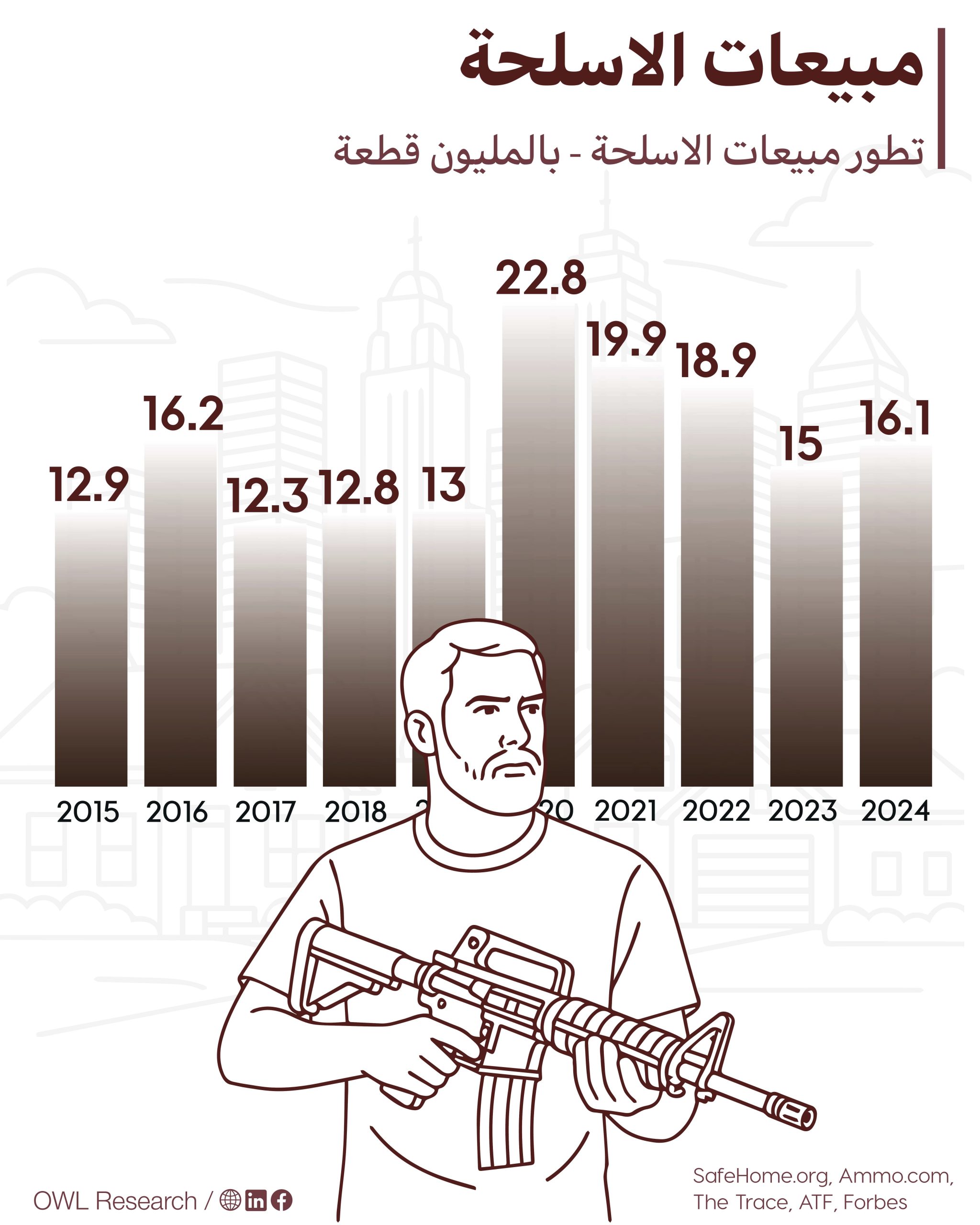

The Surge and Normalization of Sales
The trend over the past decade shows two distinct phases:
- The Peak Years (2020-2021): Sales reached an all-time modern high during the COVID-19 pandemic and the social unrest of 2020. A staggering 22.8 million firearms were sold in 2021, followed by 19.9 million in 2022. This period was marked by unprecedented demand due to fears over personal safety, political uncertainty, and concerns about potential gun control legislation.
- Recent Decline and Stabilization: After the historic surge, the market has undergone a correction. Sales declined to 18.9 million in 2023 and are estimated to be around 16.1 million for 2024. While still high by historical standards (pre-2020), this indicates a return to a more normalized, yet elevated, level of demand.
A Market Still Larger Than the Pre-Pandemic Era
It is crucial to note that even with the recent decline, the current market size remains substantially larger than it was in the late 2010s. For context, annual sales between 2015 and 2019 averaged between 12-16 million units. The 2024 estimate of 16.1 million suggests the “new normal” baseline has been permanently raised.
What Drives the U.S. Gun Market?
Several key factors consistently influence sales volumes:
- Political Elections & Legislation: Fears of new restrictive laws under a potential administration often lead to “panic buying.”
- Social Unrest & Perceived Safety: Periods of civil disorder or high-profile violent crimes can trigger spikes in purchases for self-defense.
- Economic Conditions: While counterintuitive, economic uncertainty can sometimes correlate with increased sales.
- Cultural Factors: Deeply ingrained gun culture and the prominence of recreational shooting and hunting sustain a steady baseline demand.
The data underscores that the U.S. firearms industry is not static; it is a dynamic market that reacts sharply to national events, making it a unique barometer of American social and political anxiety.