Iran’s Missile Arsenal: What the Numbers Mean
Overview
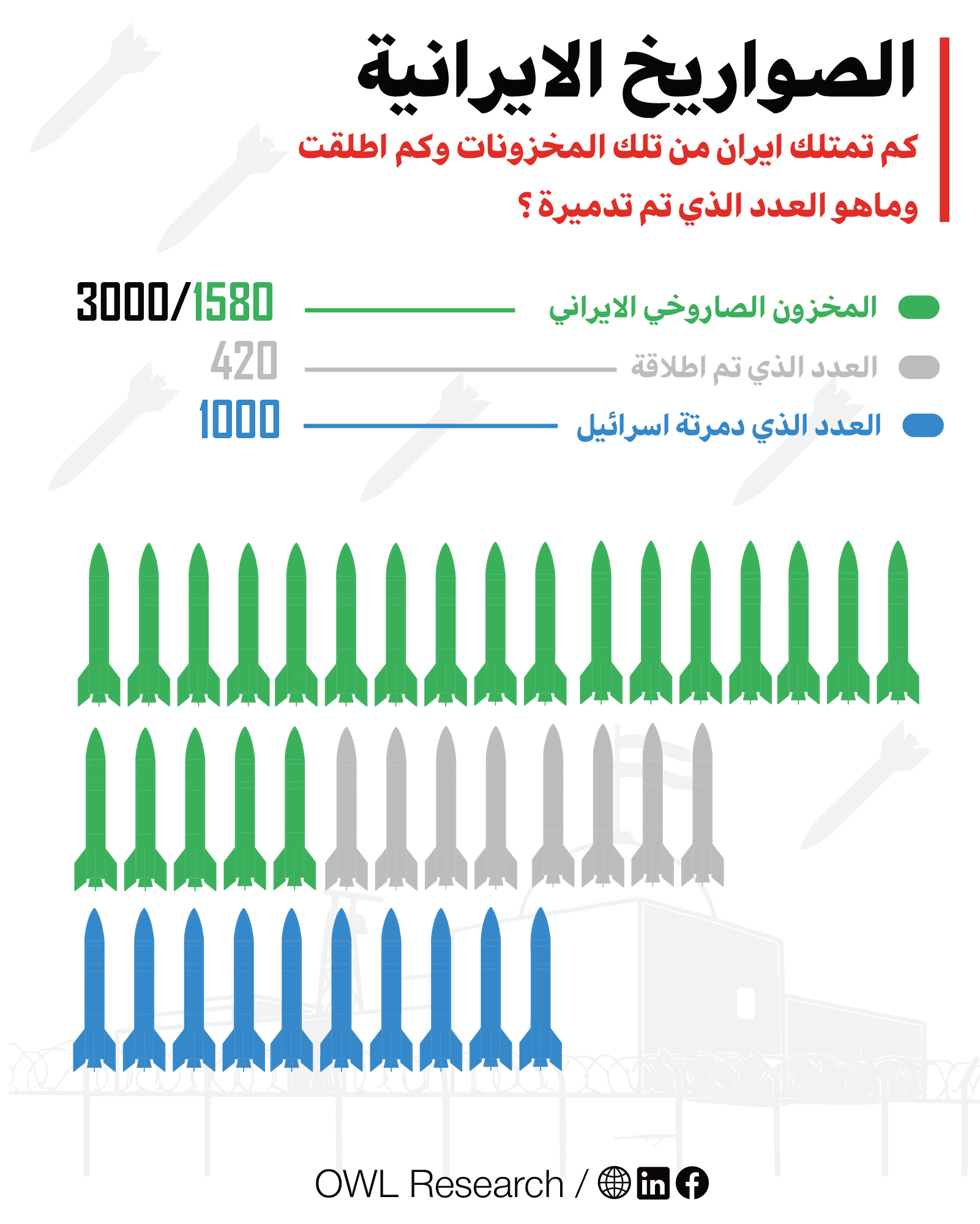
Iran maintains one of the Middle East’s largest missile programs. Open-source assessments place its combined inventory in the low thousands (our working range in the infographic: ~1,580–3,000). Recent escalations showed large salvos across multiple systems and ranges, testing regional air-defense networks.
Recent Barrages at a Glance
- Launched: Our graphic highlights a large volley (~420 projectiles) across waves.
- Intercepted/Neutralized: Regional defenses reported hundreds intercepted in flight (illustrative figure in our chart: ~1,000 airborne threats across waves, including missiles and drones).
- Takeaway: Interception rates can be high for well-defended targets, but volume, coordination, and saturation tactics still pose material risk.
Arsenal Composition
- Short- & Medium-Range Ballistic Missiles (SRBM/MRBM): Core of Iran’s deterrent; road-mobile, capable of rapid dispersal.
- Cruise Missiles & Drones: Lower signatures, varied flight profiles; used to complicate detection and overwhelm defenses.
- Accuracy & Payloads: Improving guidance on select systems increases point-target risk to infrastructure.
Implications for Risk & Markets
- Security Premium: Higher risk premia for energy routes and insurers during flare-ups.
- Defense Posture: Regional actors invest in layered defenses (early warning, interceptors, hardening & redundancy).
- Escalation Dynamics: Even with strong interception, spillover damage and cyber/terror adjuncts can amplify impact.
Data Notes
Figures on stockpiles, launches, and interceptions vary across sources and time. Our infographic uses rounded, illustrative bands to show scale and ratios rather than exact counts. Interpretations should be paired with event-specific reporting and verified defense disclosures.
Owl Research tracks security shocks and their economic spillovers—energy, logistics, insurance, and sovereign risk.
👉 Follow Owl Research for data-driven geopolitical and market insights.