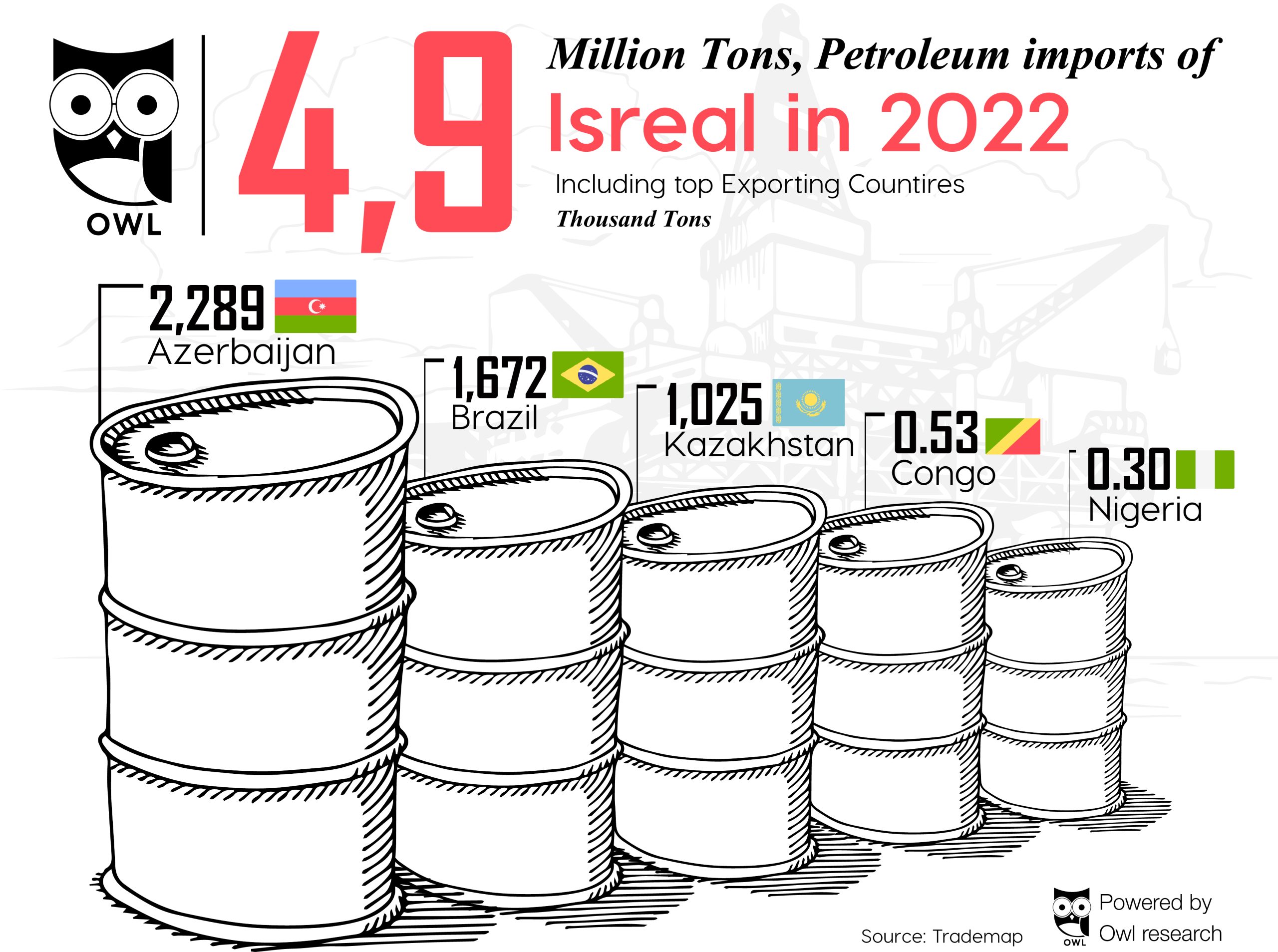
In 2022, Israel imported around 4.9 million tons of petroleum, with a handful of countries making up the majority of its supply. According to Trademap data, the leading exporters to Israel were Azerbaijan, Brazil, and Kazakhstan, with smaller contributions from Congo and Nigeria.
1. Breakdown of Israel’s Petroleum Imports (2022, Thousand Tons)
- Azerbaijan: 2,289
- Brazil: 1,672
- Kazakhstan: 1,025
- Congo: 530
- Nigeria: 300
👉 Combined, these five countries supplied almost all of Israel’s petroleum imports in 2022.
2. Azerbaijan – Israel’s Top Petroleum Supplier
With 2.29 million tons, Azerbaijan accounted for nearly half of Israel’s total petroleum imports. The two countries maintain strong energy ties, with oil exports forming a key component of their economic cooperation.
3. Brazil – A Key Player in Energy Trade
Brazil supplied 1.67 million tons of petroleum to Israel, making it the second-largest exporter. This reflects Brazil’s growing role in the global energy market, particularly in strengthening trade links beyond South America.
4. Kazakhstan – Strategic Energy Partner
At 1.02 million tons, Kazakhstan ranked third among Israel’s petroleum suppliers. Kazakhstan’s abundant oil reserves and geographical position allow it to serve as a strategic supplier for many global markets, including Israel.
5. Minor Suppliers – Congo and Nigeria
- Congo: 530 thousand tons
- Nigeria: 300 thousand tons
Though smaller in volume, both countries contribute to diversifying Israel’s petroleum supply sources, reducing overdependence on a single exporter.
6. Global and Regional Implications
- Energy Security: Israel’s reliance on imports highlights the importance of stable trade partnerships.
- Diversification: While Azerbaijan remains dominant, sourcing from Brazil, Kazakhstan, and Africa ensures supply stability.
- Geopolitical Dynamics: Strong energy ties with Azerbaijan reinforce Israel’s broader regional diplomacy and trade relations.
Final Thoughts
Israel imported 4.9 million tons of petroleum in 2022, primarily from Azerbaijan, Brazil, and Kazakhstan, with Congo and Nigeria supplying smaller volumes. This import mix demonstrates Israel’s strategy of energy diversification and secure partnerships, ensuring a stable flow of petroleum despite global market volatility.