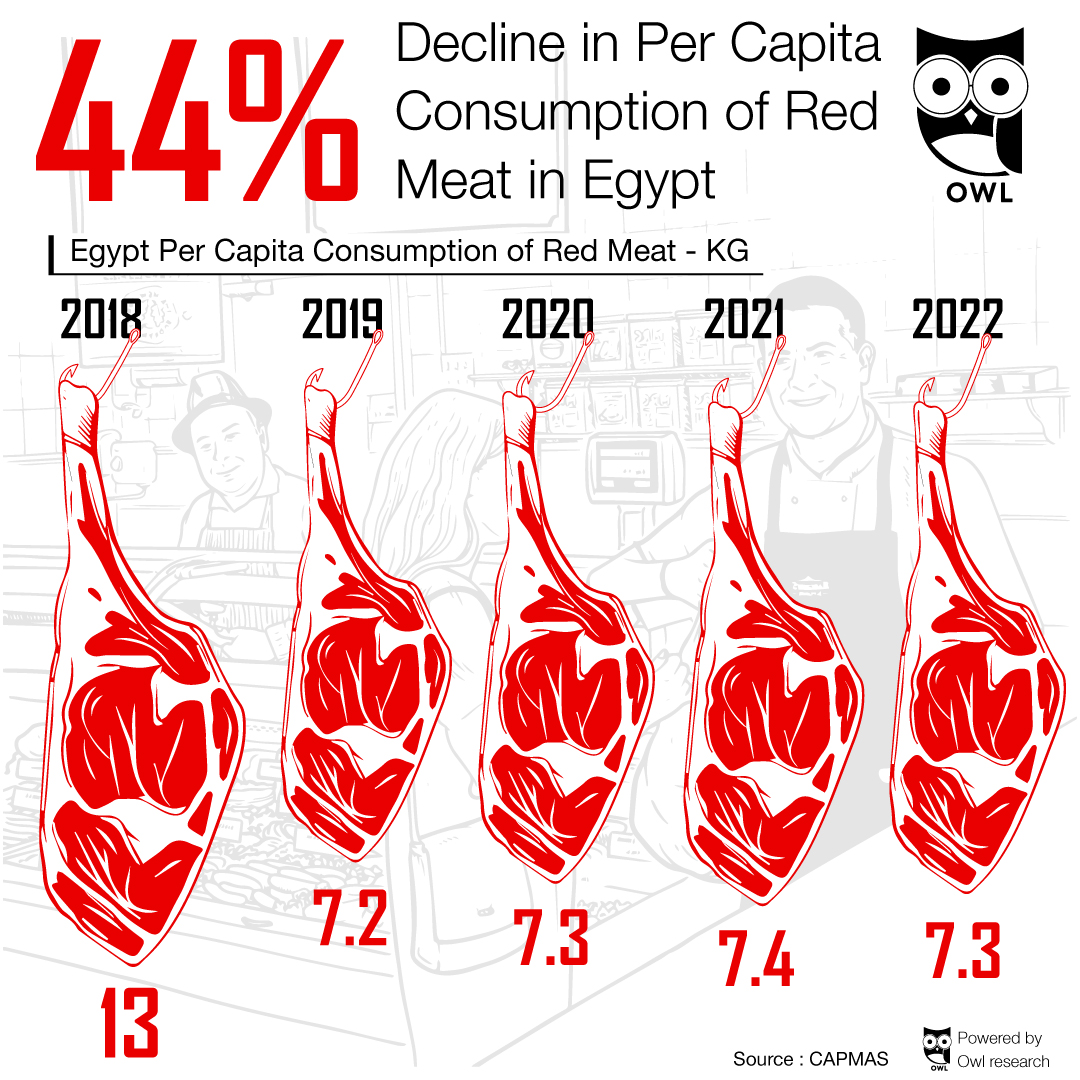
Red meat consumption in Egypt has seen a dramatic decline over the past five years, reflecting rising prices, inflation, and changing dietary habits. According to CAPMAS (Central Agency for Public Mobilization and Statistics), per capita consumption of red meat fell by 44% between 2018 and 2022, marking one of the sharpest drops in food consumption trends in recent history.
1. Per Capita Red Meat Consumption in Egypt (2018–2022)
- 2018: 13 kg per person
- 2019: 7.2 kg per person
- 2020: 7.3 kg per person
- 2021: 7.4 kg per person
- 2022: 7.3 kg per person
👉 The biggest decline occurred between 2018 and 2019, when consumption dropped from 13 kg to just 7.2 kg, a fall of nearly half within a single year. Since then, consumption has remained low, fluctuating around 7–7.4 kg annually.
2. Factors Behind the Decline
Several economic and social factors contributed to the decline in red meat consumption in Egypt:
- Rising meat prices: Red meat prices surged from around 130–160 EGP/kg in 2018–2019 to nearly 300–350 EGP/kg by 2023.
- Currency devaluation: Higher import costs for feed (soy, corn) raised production expenses for local farmers.
- Household budget pressure: Inflation in food, housing, and utilities forced families to cut back on expensive proteins.
- Dietary shifts: Many Egyptians substituted red meat with cheaper proteins such as poultry, fish, legumes, and eggs.
3. Impact on Nutrition and Society
- Nutrition balance: Reduced access to red meat may affect dietary diversity, especially in lower-income households.
- Cultural habits: Red meat, once central to family meals and celebrations, is becoming less frequent on dining tables.
- Economic strain: Butchers and livestock farmers face declining demand, impacting the entire supply chain.
4. Future Outlook
Unless prices stabilize and household incomes improve, Egypt’s red meat consumption is expected to remain below previous levels. Policies that support local livestock production, feed subsidies, and alternative protein development could help restore balance and ease the burden on families.
Final Thoughts
From 13 kg per person in 2018 to 7.3 kg in 2022, Egypt’s sharp decline in red meat consumption highlights the intersection of economic hardship and food security challenges. While poultry and fish may fill part of the protein gap, ensuring affordable access to red meat remains an important priority for Egyptian policymakers.