Suez Canal Traffic: Number of Ships Passing Annually
The Suez Canal is one of the world’s most important maritime routes, connecting the Mediterranean Sea to the Red Sea through the Isthmus of Suez in Egypt. This artificial waterway is a strategic passage for global trade, dividing Africa and Asia while facilitating the movement of thousands of vessels every year. According to the Suez Canal Authority, different types of ships contribute to the canal’s heavy traffic, reflecting its vital role in international shipping.
1. Container Ships Dominate the Suez Canal
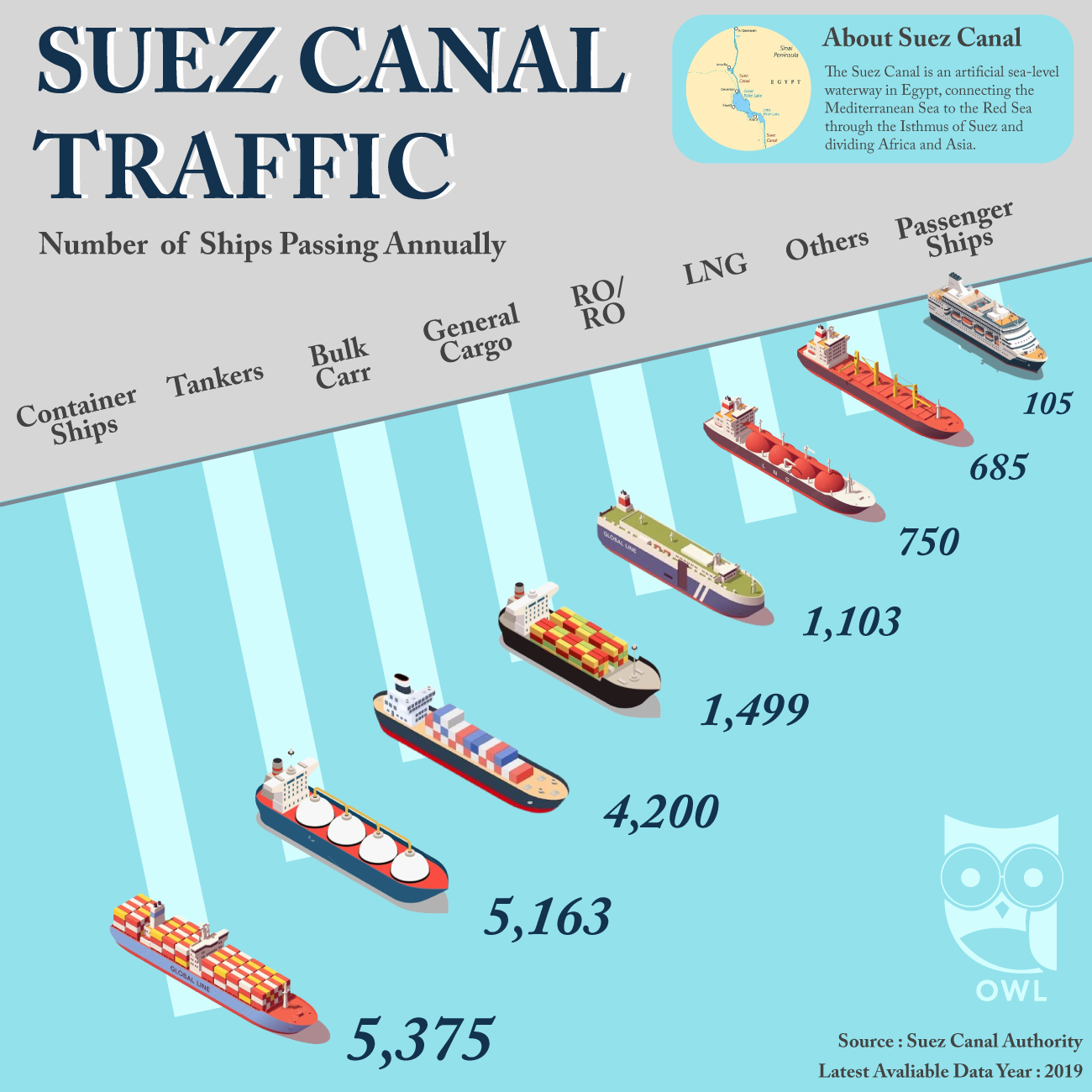
Container ships are the most frequent users of the Suez Canal, with 5,375 vessels passing annually. This category includes large shipping lines transporting manufactured goods, raw materials, and consumer products from Asia to Europe and beyond.
2. Tankers and Bulk Carriers
- Tankers: A total of 5,163 tankers pass through the canal annually, carrying crude oil, petroleum products, and chemicals.
- Bulk Carriers: With 4,200 vessels annually, bulk carriers transport essential commodities such as coal, grain, and ores, underlining the canal’s importance in global resource distribution.
3. Other Cargo Vessels
- General Cargo Ships: Around 1,499 ships pass annually, carrying mixed goods.
- Roll-On/Roll-Off (RO/RO) Ships: About 1,103 RO/RO vessels use the canal to transport vehicles and heavy machinery.
4. LNG and Specialized Ships
- Liquefied Natural Gas (LNG) Ships: A total of 750 LNG carriers pass through the canal each year, reflecting the growing importance of gas in the global energy market.
- Other Ship Types: Around 685 ships fall into the “other” category, which includes specialized and service vessels.
- Passenger Ships: Although smaller in number, about 105 passenger ships cross annually, mainly cruise liners boosting Egypt’s tourism sector.
5. Strategic Importance of the Suez Canal
The Suez Canal is more than just a waterway; it is a global trade artery. Around 12% of world trade passes through it, making it critical for the smooth flow of goods, energy supplies, and raw materials. Its role in reducing travel time between Europe and Asia by avoiding the Cape of Good Hope strengthens its position as a geopolitical and economic asset for Egypt and the world.
Final Thoughts
With over 18,000 ships crossing annually, the Suez Canal remains a lifeline of global trade. From container ships and oil tankers to LNG carriers and passenger vessels, the diversity of traffic highlights the canal’s indispensable role in international commerce and Egypt’s economy.