The United States has reintroduced tariff measures on steel imports, placing Egyptian steel exports under renewed pressure at a sensitive moment for Egypt’s industrial and foreign trade sectors.
While the policy is part of a broader US trade framework, its impact on Egypt is measurable — and significant.
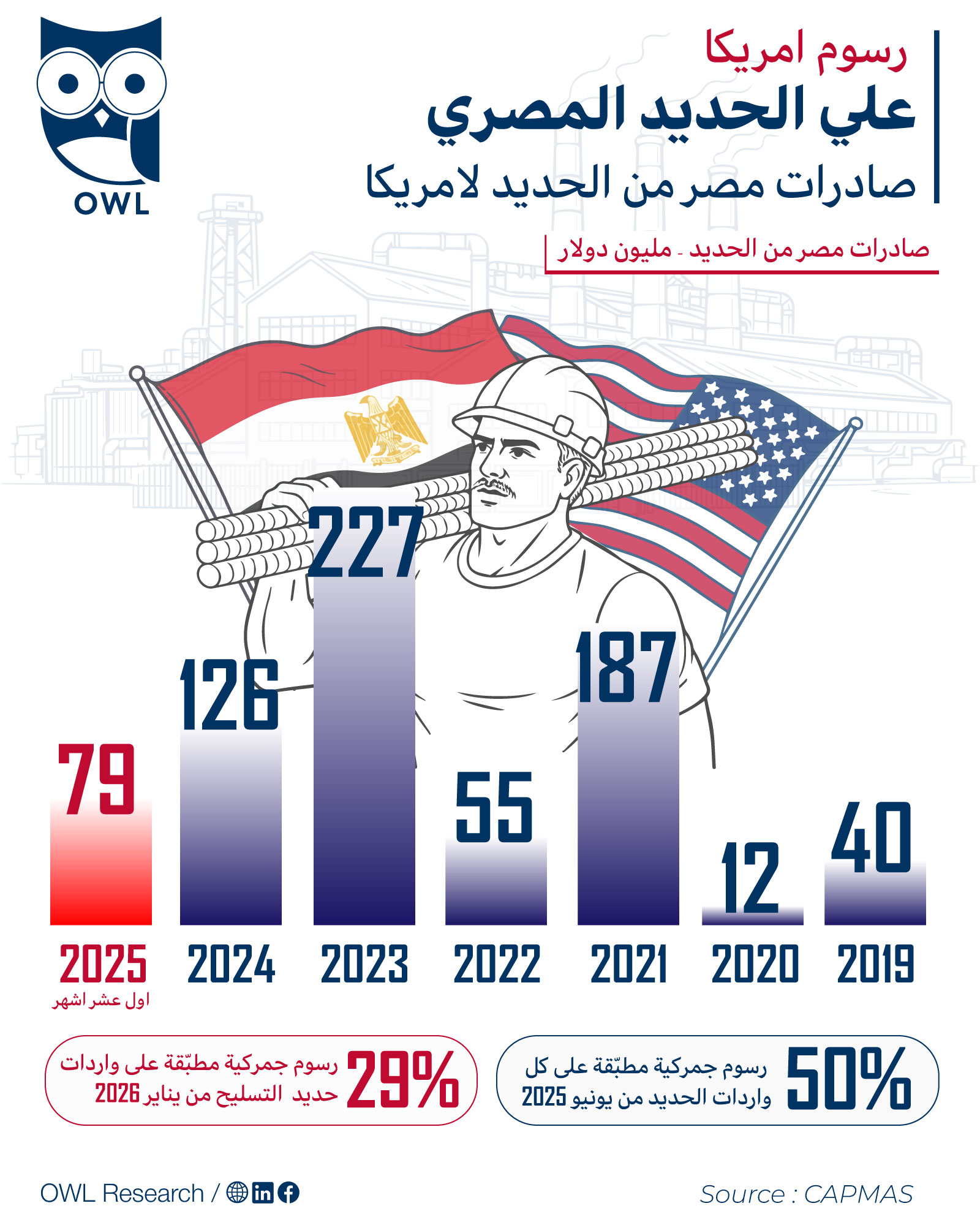
A Volatile Export Relationship
Egypt’s steel exports to the United States have historically fluctuated, reflecting shifts in global demand, trade policy, and competitiveness.
Egypt’s Steel Exports to the US (USD million)
- 2019: 40
- 2020: 12
- 2021: 187
- 2022: 55
- 2023: 227
- 2024: 126
- 2025 (first 10 months): 79
Exports peaked in 2023 before declining in 2024 and 2025, highlighting growing uncertainty in access to the US market.
The New Tariff Structure
The latest measures introduce two layers of customs duties:
- 50% tariff on all iron and steel imports, effective June 2025
- 29% tariff on imported rebar (reinforcing steel), effective January 2026
These rates materially alter the cost competitiveness of Egyptian steel in the US market.
What This Means for Egyptian Exporters
The tariffs increase landed costs for Egyptian steel, making it less attractive compared to domestic US production or alternative suppliers.
Key implications include:
- Margin compression for exporters
- Reduced price competitiveness
- Higher risk of order cancellations or volume reductions
For producers operating on thin margins, even partial exclusion from the US market can have a disproportionate financial impact.
A Broader Trade Signal
Beyond Egypt, the move reflects a wider shift in US trade policy toward protecting domestic steelmakers amid geopolitical uncertainty and industrial policy priorities.
For Egypt, the challenge is structural:
- Heavy reliance on a limited number of export destinations
- Exposure to sudden regulatory shifts
- Limited short-term flexibility in redirecting volumes
What Comes Next?
Mitigating the impact will likely require:
- Diversifying export markets beyond North America
- Strengthening regional and African trade channels
- Enhancing cost efficiency and value-added steel products
Absent these adjustments, tariff-driven volatility will remain a recurring risk for Egypt’s steel sector.