Africa has long been a strategic battleground for global superpowers, with a growing number of foreign military deployments and bases dotting the continent. This scramble for influence and control has profound implications for the continent’s sovereignty, security, and development. As Western nations, particularly the United States, France, and their allies, vie for a stronger military foothold in Africa, the complex web of geopolitical interests and the legacy of colonialism come into sharp focus.
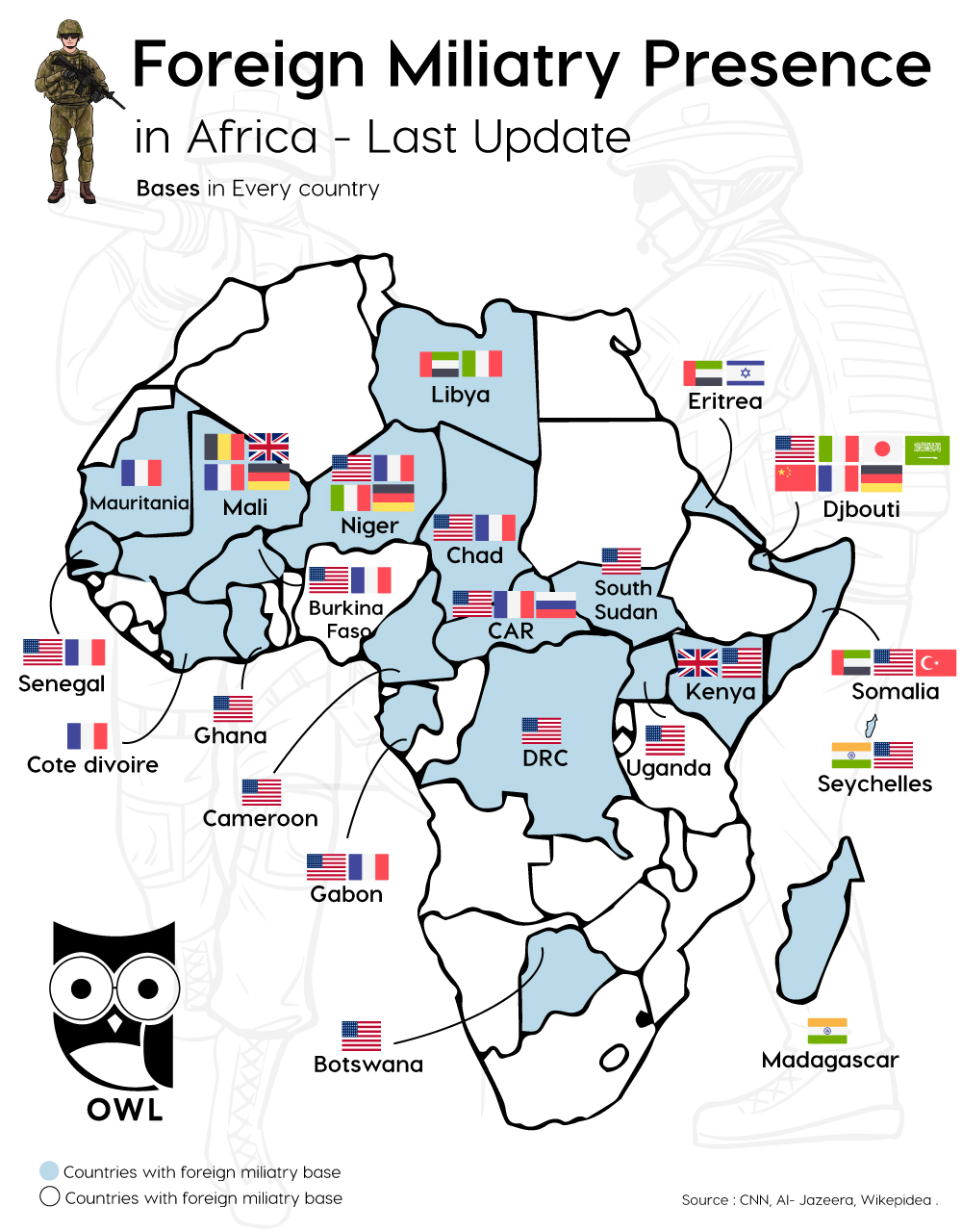
The Proliferation of Foreign Military Bases in Africa
The presence of foreign military forces in Africa is not a new phenomenon, but it has intensified in recent decades. According to a 2019 report by the Institute of Security Studies, at least 13 countries have a military presence on the African continent, with the Horn of Africa emerging as a particularly hotly contested region. The report identified around 11 foreign military bases in this strategic area, with Djibouti serving as a prime example of the intensifying competition.
Djibouti: The Epicenter of Geostrategic Rivalry
Djibouti, a small East African nation, has become a hub for foreign military activity, hosting no fewer than eight foreign bases, including those of the United States, France, Japan, and China. The country’s strategic location at the southern entrance to the Red Sea, serving as a bridge between Africa and the Middle East, has made it a coveted outpost for global powers seeking to project their influence and secure access to vital maritime trade routes.
France’s Foothold in the Sahel
France, as another major Western power with a significant military presence in Africa, has established a crucial base in Niamey, the capital of Niger. This base plays a pivotal role in France’s operations in the troubled Sahel region, where militant activities have been a major concern. The base also serves as a training and equipment hub for local forces, underscoring the French military’s deep involvement in the region.
The Shifting Sands of Military Alliances
The geopolitical landscape in Africa is constantly evolving, with shifting alliances and the withdrawal of foreign troops from certain regions. For instance, France’s decision to pull out its forces from Mali, where they had been stationed for years to combat militants in the Sahel, has raised questions about the future of the French base in neighboring Niger. The recent apparent coup in Niger has further complicated the situation, adding uncertainty to the fate of this strategic military outpost.
The Underlying Motives: Geopolitics, Resources, and the Specter of Colonialism
The proliferation of foreign military bases in Africa is not driven solely by security concerns or the fight against terrorism. Experts argue that these deployments are primarily motivated by the pursuit of geopolitical advantage and the desire to control strategic resources.
Geopolitical Jockeying and the Scramble for Influence
Western powers, particularly the United States and its allies, are engaged in a geopolitical tug-of-war to establish a stronger foothold in Africa. The deployment of military assets is seen as a means to project power, secure access to critical regions, and counter the growing influence of rival powers like China. This competition for influence is not limited to Africa but is part of a broader global strategy to maintain strategic dominance.
The Resource Extraction Nexus
The presence of foreign military bases in Africa is also closely linked to the extraction and control of the continent’s abundant natural resources. Experts argue that these military deployments are often a means to safeguard the economic interests of the foreign powers, ensuring uninterrupted access to valuable commodities and minerals.
The Specter of Colonialism
The drive for military presence in Africa also carries echoes of the continent’s colonial past. Many African experts and scholars argue that Western powers are seeking to maintain their influence and control over the continent, unwilling to relinquish the chains of colonialism. This dynamic is particularly evident in the support given to authoritarian leaders who are willing to host foreign military bases in exchange for political and economic backing.
The Challenges Facing African Sovereignty and Development
The proliferation of foreign military bases in Africa poses significant challenges to the continent’s sovereignty, security, and development. As global powers compete for influence, the interests of African nations and their citizens are often overlooked or compromised.
Compromising Sovereignty and Self-Determination
The presence of foreign military forces on African soil, often without the full consent or participation of local communities, undermines the continent’s sovereignty and its ability to chart its own course. This dynamic perpetuates a sense of external control and limits the agency of African nations in shaping their own futures.
The Dilemma of Security and Stability
While the foreign military presence is often justified in the name of regional security and the fight against terrorism, the reality is more complex. In some cases, these deployments have contributed to the destabilization of local communities, fueling resentment and further conflict.
The Stifling of Economic Development
The economic benefits of hosting foreign military bases, such as job creation and local economic activity, are often touted as justification for their presence. However, experts argue that these benefits are outweighed by the long-term costs of compromised sovereignty, resource extraction, and the diversion of resources away from more sustainable forms of development.
The African Union’s Struggle to Assert Influence
The African Union, as the continent’s premier political and economic organization, has struggled to effectively address the issue of foreign military presence and its implications for African interests. The bloc’s inability to dissuade countries from hosting these bases has been a source of frustration for many African leaders and scholars.
The Limitations of the African Union
The African Union’s limited resources, political divisions, and the reluctance of member states to cede sovereignty have hampered its ability to take a unified and decisive stance against the proliferation of foreign military bases. This has allowed individual countries to continue engaging with foreign powers, often at the expense of the continent’s collective interests.
The Need for a Stronger African Voice
Experts argue that for Africa to truly break the “chains of colonialism,” the continent must take a more assertive and proactive role in shaping its own destiny. This will require the African Union to strengthen its capacity, foster greater unity among member states, and develop a coherent and independent foreign policy that prioritizes African interests over the competing agendas of external powers.
Conclusion: Envisioning a Future of Genuine African Agency
The presence of Western military forces in Africa is a complex and multifaceted issue that goes beyond the immediate concerns of security and counter-terrorism. It is deeply rooted in the legacy of colonialism, the ongoing struggle for geopolitical influence, and the exploitation of the continent’s resources. As Africa navigates this intricate landscape, it must confront the challenges to its sovereignty, security, and development, while charting a course that empowers its people and places their interests at the forefront.
The path forward requires a concerted effort by African nations and the African Union to assert their agency, strengthen regional cooperation, and develop alternative models of security and economic cooperation that are not beholden to the whims of external powers. Only by reclaiming its rightful place in the global order can Africa truly break free from the “chains of colonialism” and forge a future of genuine self-determination and prosperity.