Wheat, one of the most widely cultivated cereal grains, plays a pivotal role in sustaining the world’s food supply. As a versatile crop that thrives in temperate climates, wheat has become a dietary staple for billions of people across the globe. From bread and pasta to cereals and pastries, the diverse applications of wheat have solidified its position as a cornerstone of global agriculture.
The Rise of Wheat: A Historical Perspective
The cultivation of wheat can be traced back thousands of years, with evidence suggesting its origins in the Fertile Crescent region of the Middle East. Over time, the crop has spread to various parts of the world, adapting to diverse climates and soil conditions. The introduction of modern agricultural practices, such as mechanization and the development of high-yielding wheat varieties, has further propelled the growth of global wheat production.
Top Wheat-Producing Countries
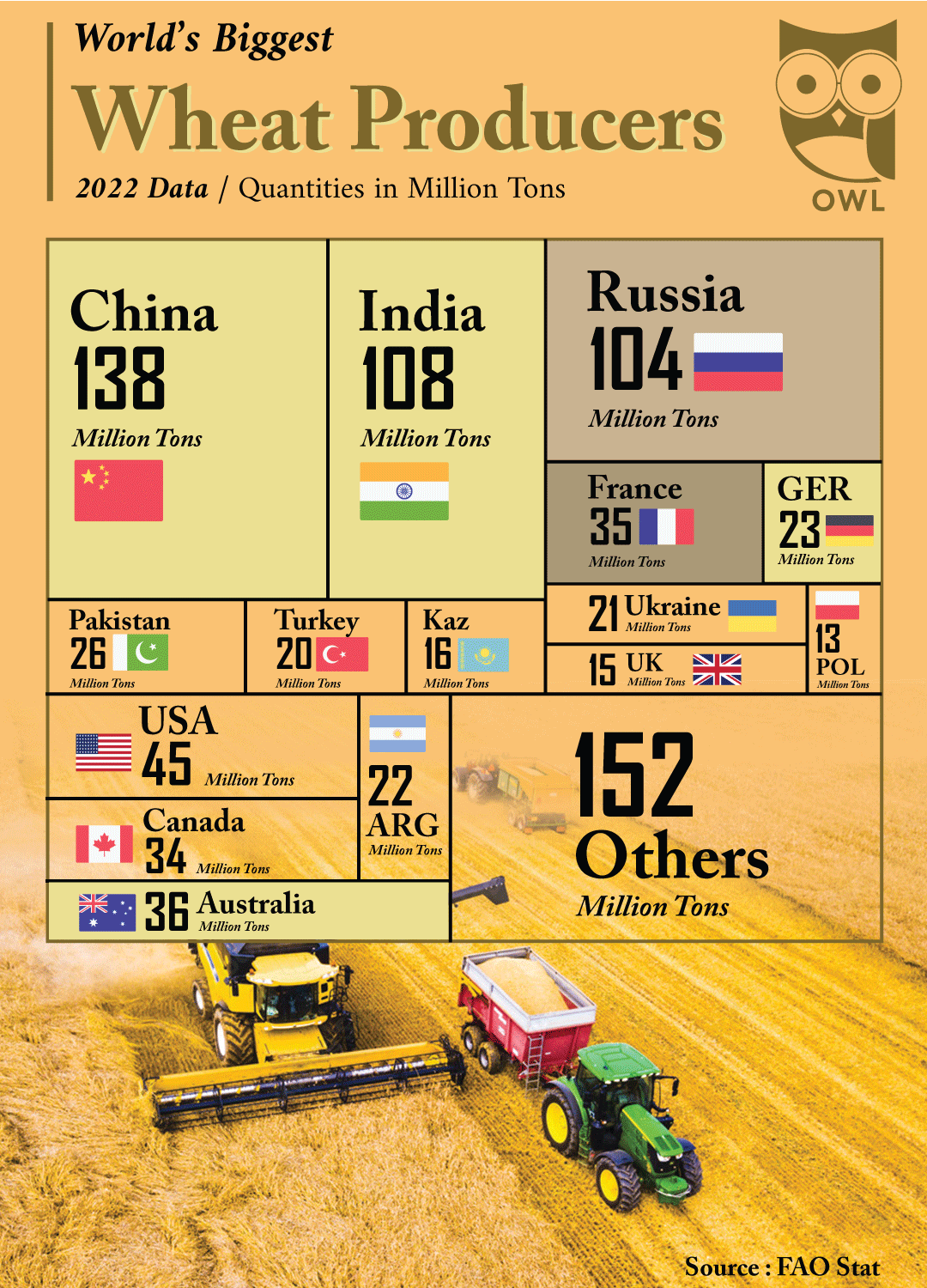
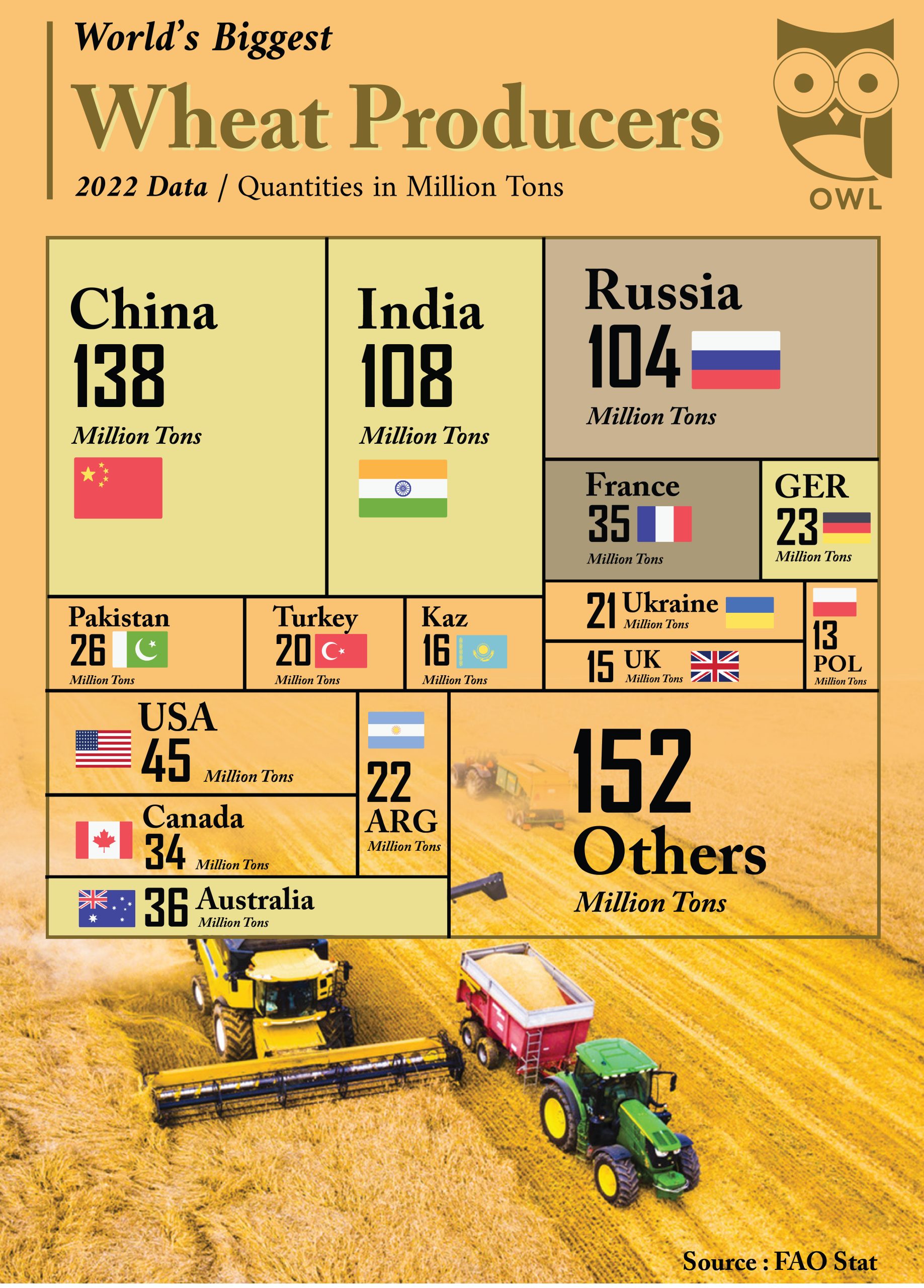
The global landscape of wheat production is dominated by a few key players. China, India, and Russia lead the pack, collectively accounting for over 40% of the world’s total wheat output. The United States, Canada, and major European Union members, such as France and Germany, also rank among the top wheat producers, contributing significantly to the global supply.
The Shifting Dynamics of Wheat Trade
The international trade of wheat is a complex and dynamic landscape, shaped by various economic, political, and environmental factors. The ongoing conflict between Russia and Ukraine, two major wheat exporters, has disrupted global supply chains, leading to price volatility and concerns about food security in regions heavily dependent on wheat imports.
The Versatility of Wheat: Culinary and Nutritional Aspects
Wheat’s versatility extends beyond its role as a staple crop. The grain’s unique properties, particularly the presence of gluten, make it a crucial ingredient in a wide range of food products. From the production of bread and pasta to the creation of baked goods and cereals, wheat’s culinary applications are diverse and far-reaching.
Advancements in Wheat Research and Cultivation
The ongoing efforts to improve wheat cultivation and productivity have led to significant advancements in agricultural research and technology. Plant breeding programs, precision farming techniques, and the development of drought-resistant and disease-resistant wheat varieties have all contributed to enhancing global wheat production.
The Environmental Impact of Wheat Cultivation
While wheat is a vital component of the global food system, its cultivation is not without environmental implications. The extensive use of fertilizers, water resources, and land can have a significant impact on the surrounding ecosystems. Sustainable farming practices, such as the adoption of precision agriculture and the implementation of crop rotation strategies, are crucial in mitigating the environmental footprint of wheat production.
Wheat and Human Health: Navigating Dietary Considerations
Wheat’s nutritional profile, which includes a substantial amount of protein, carbohydrates, and dietary fiber, has long made it a staple in many diets worldwide. However, the presence of gluten in wheat can pose challenges for individuals with gluten-related disorders, such as celiac disease and non-celiac gluten sensitivity. Understanding the nuances of wheat’s impact on human health is essential for promoting informed dietary choices.
The Future of Wheat: Challenges and Opportunities
As the global population continues to grow, the demand for wheat is expected to rise. Addressing the challenges posed by climate change, resource scarcity, and evolving consumer preferences will be crucial in ensuring the long-term sustainability of wheat production. Innovations in agricultural technology, the development of climate-resilient wheat varieties, and the promotion of sustainable farming practices will be instrumental in shaping the future of this vital crop.
The Geopolitical Implications of Wheat Production
The strategic importance of wheat in the global food system has also led to its prominence in geopolitical discussions. Countries with significant wheat production or export capabilities often wield influence in international trade and diplomacy. Understanding the intersection of wheat and geopolitics is crucial for navigating the complex web of global food security.
Wheat and the Circular Economy
As the world increasingly embraces the principles of the circular economy, the role of wheat in this sustainable model is gaining attention. Exploring opportunities to repurpose wheat by-products, such as straw and chaff, can contribute to the development of a more resource-efficient and environmentally-friendly agricultural system.
Wheat and Technological Advancements
The integration of advanced technologies, such as precision farming, data analytics, and automation, is transforming the wheat production landscape. These innovations are enhancing efficiency, reducing waste, and enabling farmers to make more informed decisions, ultimately contributing to the overall productivity and sustainability of wheat cultivation.
Wheat and Global Food Security
Wheat’s status as a staple food crop means its production and distribution have significant implications for global food security. Ensuring equitable access to wheat, particularly in regions facing food insecurity, is a crucial challenge that requires collaborative efforts among policymakers, agricultural organizations, and international development agencies.
By delving into the multifaceted world of wheat production, this article has illuminated the complex dynamics that shape the global landscape of this vital cereal grain. From the historical roots of wheat cultivation to the emerging trends and challenges in the industry, the insights presented here underscore the pivotal role of wheat in sustaining humanity’s food supply and the ongoing efforts to cultivate a more resilient and sustainable wheat-based agricultural system.