While 81% of Egyptian households use the internet, only 17% purchase goods online, highlighting the gap between digital connectivity and e-commerce adoption in Egypt.
Egypt’s digital landscape continues to evolve as internet access becomes increasingly embedded in everyday life. However, the transition from internet usage to online purchasing remains uneven, revealing important insights into consumer preferences, shopping habits, and the opportunities available to businesses operating in the digital economy.
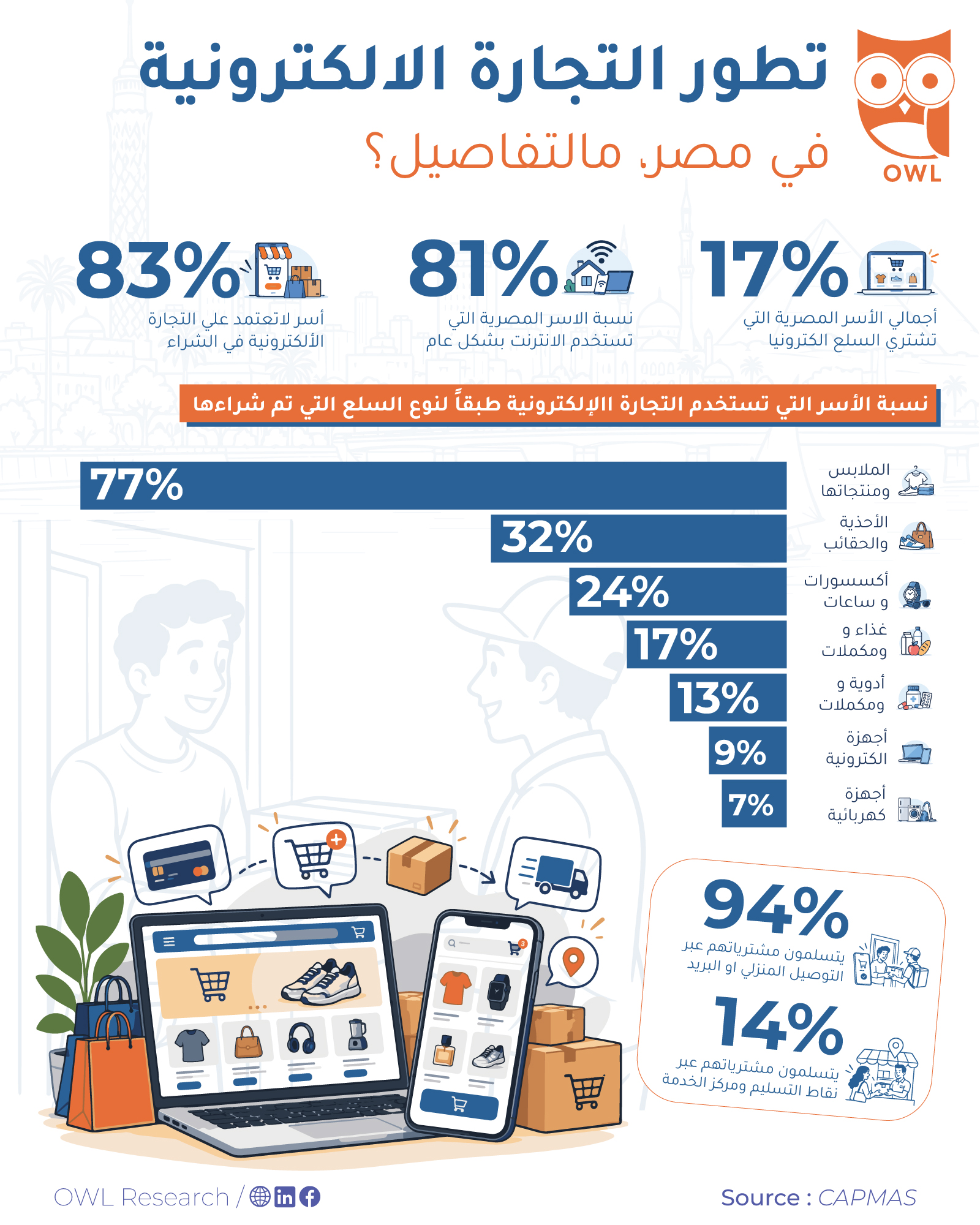
According to figures from CAPMAS presented in the OWL Research infographic, 81% of Egyptian households use the internet, while 17% of Egyptian households purchase goods online.
At the same time, 83% of households reportedly do not rely on e-commerce for their purchases, suggesting that traditional shopping channels continue to play an important role in consumer behavior.
These figures highlight a key distinction: digital connectivity does not automatically translate into online purchasing. Understanding what consumers buy online, how they receive their orders, and which shopping channels they prefer is essential for businesses looking to expand their digital presence.
Internet Adoption Does Not Guarantee Online Purchasing
The difference between internet usage and online shopping represents an important opportunity for Egypt’s e-commerce market.
With 81% of households using the internet, digital platforms have the potential to reach a substantial consumer audience. Yet the reported online purchasing rate of 17% indicates that internet access and e-commerce participation remain distinct behaviors.
Several factors may influence this gap, including consumer trust, payment preferences, delivery convenience, product availability, and the perceived value of purchasing online.
For businesses, the challenge is not simply to attract online visitors. It is to convert digital engagement into transactions by creating a shopping experience that addresses consumer expectations and reduces barriers to purchase.
What Are Egyptians Buying Online?
The infographic highlights clear differences in online purchasing across product categories.
Clothing and related products lead, with 77%, followed by footwear and bags at 32%.
Accessories and watches account for 24%, while food and supplements represent 17%. Medicines and supplements are listed at 13%, electronic devices at 9%, and electrical appliances at 7%.
These figures suggest that online shopping is particularly relevant for fashion-related purchases, while electronics and household appliances have lower reported participation in the categories shown.
The pattern may reflect differences in product discovery, price comparison, the need to physically inspect products, and the complexity of purchase decisions.
Online Shopping by Product Category
| Product Category | Reported Share |
|---|---|
| Clothing and related products | 77% |
| Footwear and bags | 32% |
| Accessories and watches | 24% |
| Food and supplements | 17% |
| Medicines and supplements | 13% |
| Electronic devices | 9% |
| Electrical appliances | 7% |
Source: CAPMAS, as presented in the OWL Research infographic. The original survey definitions and denominator should be verified before publication.
Delivery Convenience Shapes the Online Shopping Experience
Delivery remains an important part of the e-commerce customer journey.
According to the infographic, 94% of online shoppers receive their purchases through home delivery or postal services, while 14% use collection points or delivery centers.
The figures suggest that home delivery is the dominant reported fulfillment method among the surveyed consumers, while collection points provide an additional option for some shoppers.
For retailers, delivery performance can influence the overall customer experience, affecting convenience, confidence in the purchase, and willingness to shop online again.
Reliable delivery times, clear communication, transparent fees, and effective returns processes can therefore play an important role in building consumer confidence.
Note: The delivery percentages may reflect overlapping responses or different survey bases, as they add up to more than 100%. They should not be interpreted as mutually exclusive shares without checking the original CAPMAS methodology.
What Do These Trends Mean for Businesses?
Egypt’s e-commerce landscape presents several opportunities for retailers, consumer brands, and digital platforms.
1. Strengthen online conversion
Businesses should focus on making the transition from browsing to purchasing easier through clear product information, transparent pricing, convenient payment options, and a straightforward checkout process.
2. Prioritize high-engagement categories
Fashion, footwear, bags, and accessories represent important categories in the infographic. Retailers operating in these segments can use digital channels to improve product discovery, showcase collections, and personalize offers.
3. Build trust through better customer experiences
Clear return policies, authentic product descriptions, responsive customer service, and reliable order fulfillment can help reduce uncertainty around online purchases.
4. Optimize delivery and fulfillment
The reported preference for home delivery highlights the importance of dependable logistics. Retailers should monitor delivery times, failed deliveries, return rates, and customer satisfaction to identify opportunities for improvement.
5. Understand differences between digital users and online buyers
Internet usage is a broad indicator of digital access, not a direct measure of e-commerce demand. Businesses should segment consumers based on purchasing behavior, category preferences, and barriers to online transactions rather than assuming that all internet users are equally likely to buy.
The Outlook: Turning Digital Connectivity into E-Commerce Growth
Egypt’s e-commerce opportunity extends beyond increasing internet access. The next stage of market development will depend on how effectively businesses convert digital connectivity into convenient, trusted, and repeatable purchasing experiences.
The figures presented in the OWL Research infographic indicate that online shopping participation remains limited relative to internet usage, while clothing and related products feature prominently among online purchases.
For retailers and consumer brands, the priority is to understand the factors influencing purchase decisions, improve fulfillment experiences, and tailor digital strategies to the needs of different consumer segments.
The key opportunity lies in bridging the gap between being online and buying online, turning Egypt’s growing digital reach into sustainable e-commerce growth.