Egypt Imports from Africa – 2022: Key Insights & Trends
Overview
In 2022, Egypt’s imports from African Union (AU) countries were relatively modest compared to its overall import bill, reflecting both the structure of Egypt’s economy and regional trade patterns. While trade with other continents like Asia and Europe dominate, Africa remains an important source of certain goods—especially raw materials, foodstuffs, and industrial inputs.
Key Data & Figures
- According to the World Bank’s WITS database, Egypt’s total imports in 2022 were about US$104.39 billion, up ~27.4% from 2021.
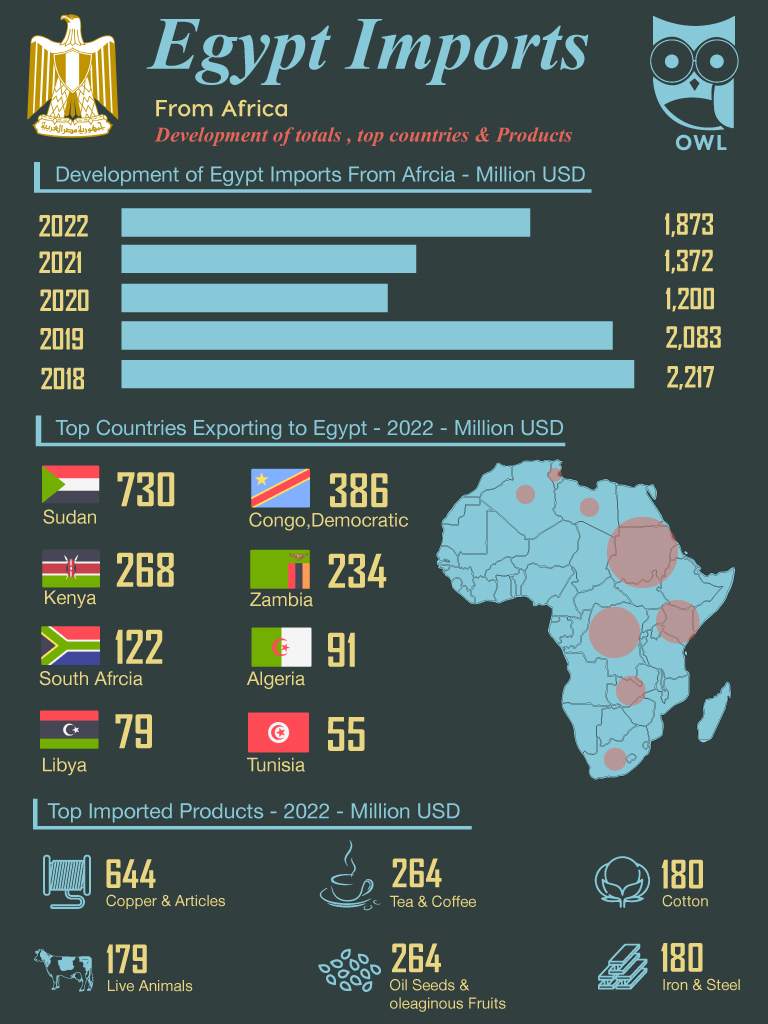
- Trade from AU countries made up a small fraction of that. In 2022, Egypt’s imports from African Union countries were approximately US$2.3 billion.
- By contrast, Egypt’s total trade (imports + exports) with African Union partners was larger, but imports are skewed toward areas where domestic production is insufficient.
Major African Suppliers
Among African countries, those that supplied more goods to Egypt in 2022 include:
- Sudan
- Kenya
- South Africa
- Nigeria
- Libya
These countries export goods like agricultural produce, raw materials, and possibly intermediate goods. However, detailed product-breakdowns are less easily found in public data for some nation-pairs. Business Today+2SIS+2
What Kind of Goods?
Egypt’s imports from AU countries are typically of:
- Agricultural products (grains, fresh produce)
- Raw materials and intermediate goods (that feed into manufacturing)
- Foodstuffs to meet domestic demand where production is insufficient
Because many AU supplier countries are agricultural economies, food and raw commodities make up big portions of this trade. However, higher-value manufactured goods are often imported from Asia, Europe, or the Middle East.
Challenges & Barriers
- Infrastructural & logistical obstacles: Transportation costs, customs clearance delays, and sometimes low capacity at ports or roads make trade less efficient between African nations.
- Tariffs & trade agreements: While the African Continental Free Trade Area (AfCFTA) aims to ease intra-African trade, many bilateral tariff and non-tariff barriers still limit full potential.
- Exchange rates & foreign currency: Egypt’s currency fluctuations and foreign currency shortages make import payments more difficult and unpredictable.
- Quality and standards issues: Importing goods from some African suppliers may raise concerns about standards, processing, or certification, which can slow or block trade.
Significance & Outlook
- Although imports from Africa are not among Egypt’s largest by value, they are strategically important for food security, raw materials, and regional relations.
- As AfCFTA implementation progresses, there is potential for growth in intra-African trade—including more imports from African countries—especially in agriculture, textiles, and intermediate goods.
- For Egypt, increasing imports from Africa can help diversify supply chains, reduce dependency on far-away sources, and build regional economic ties.
Conclusion
In 2022, Egypt’s imports from African Union member states (≈ US$2.3 billion) were a small but non-negligible part of its overall import activity. While most major imports still come from Asia and Europe, trade with African countries plays a key role in agriculture, raw materials, and regional cooperation. Overcoming challenges in logistics, tariffs, and exchange stability could help unlock much more robust trade flows in the future.